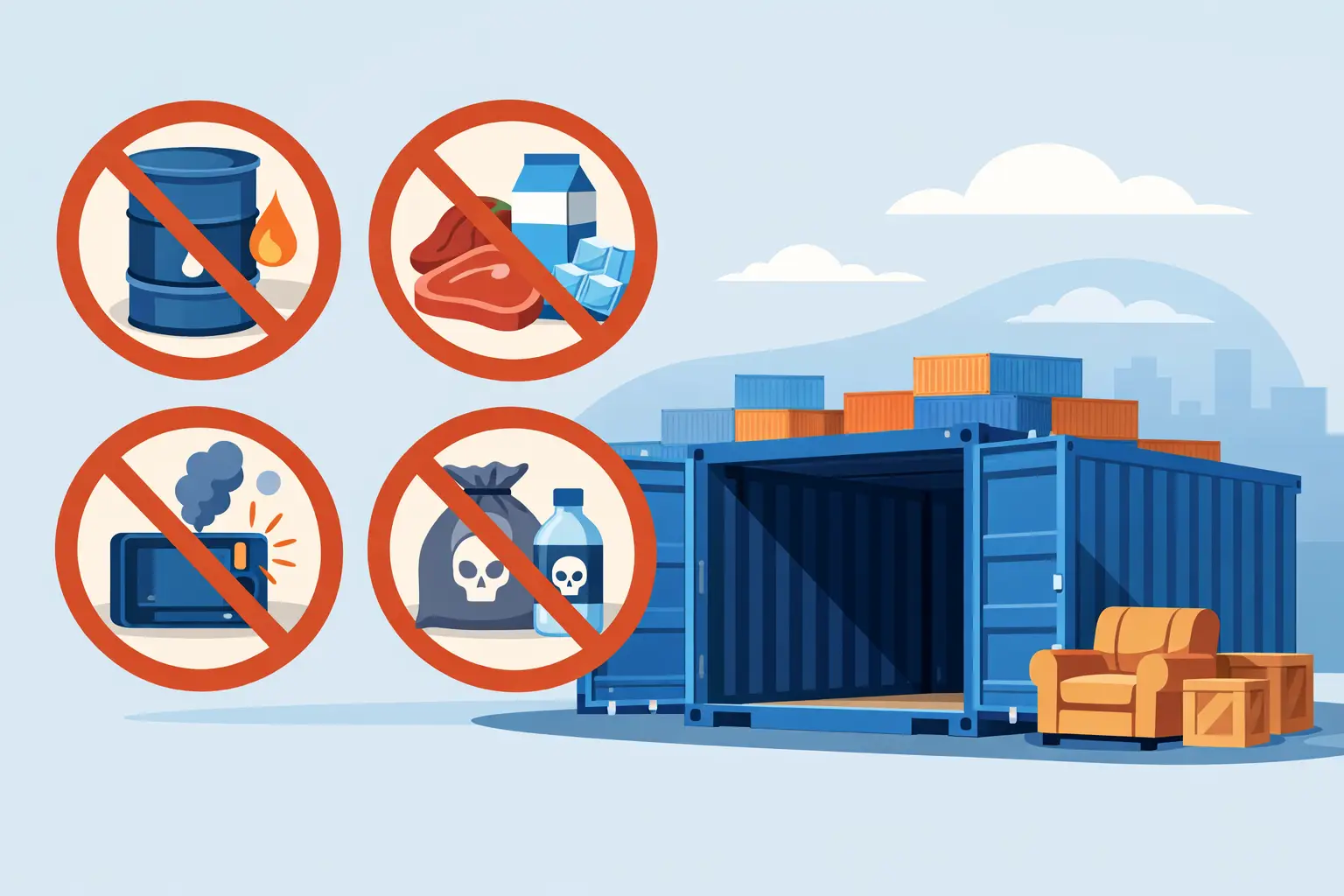
Packing a container feels simple until you realize one wrong item can create a much bigger problem than clutter. If you’re figuring out what not to store in shipping containers, the short answer is this: anything hazardous, perishable, illegal, or highly sensitive to heat and moisture should stay out.
That matters whether you’re storing during a move, keeping materials on-site for a renovation, or using a container to free up space at home or work. Shipping containers are secure and weather-tight, but they are not climate-controlled vaults. What works well in a garage, basement, or spare room does not always belong in a steel container.
What not to store in shipping containers first
The biggest mistakes usually come from treating a storage container like a catch-all. It isn’t. A portable storage unit is excellent for furniture, tools, boxed household goods, seasonal items, and many business materials, but some items create safety risks, legal issues, or preventable damage.
Hazardous materials top the list. That includes gasoline, propane tanks, paint thinners, pool chemicals, pesticides, fireworks, ammunition, and anything flammable, explosive, or corrosive. Even if a container is sealed up and sitting safely on your property, these materials can become dangerous as temperatures rise and fall. Fumes build up. Containers shift with seasonal changes. A small leak can turn into a serious issue fast.
Perishable food is another category that should never go inside unless it is part of a specialized, temperature-controlled setup. Standard storage containers are not built for groceries, pet food, produce, or anything that can spoil, melt, or attract pests. Even shelf-stable foods can be a bad idea if packaging is easy for rodents or insects to get into.
Illegal items should go without saying, but it still matters to be clear. Stolen goods, unregistered weapons where prohibited, illicit drugs, and any banned materials should never be placed in a rental container. The same goes for anything stored in violation of local regulations or your rental agreement.
Items that seem safe but often get damaged
Some belongings are not dangerous, but they are still poor candidates for container storage. This is where people get caught off guard.
Electronics are one example. TVs, computers, printers, gaming systems, speakers, and monitors can be affected by temperature swings, humidity, and condensation. If you need to store them for a short period, they should be packed carefully and kept as protected as possible, but for long-term storage, it depends on the item and the conditions. Sensitive equipment with batteries, screens, or delicate internal components is usually better kept in a more controlled indoor environment.
Important documents also deserve extra thought. Birth certificates, passports, wills, tax records, contracts, and irreplaceable photos are technically easy to box up, but that doesn’t make a container the best place for them. Moisture, heat, and simple human error can all put them at risk. If losing the item would create a major headache, keep it somewhere more secure and easier to access.
Musical instruments, artwork, antiques, and collectibles can be just as tricky. Wood can warp. Glue can weaken. Paint can crack. Fabrics can absorb moisture. A weather-tight container protects against rain and direct exposure, but it does not stop every environmental change. If the item is valuable, fragile, or sentimental, it deserves more protection than standard storage usually provides.
Why heat and moisture change the answer
When people ask what not to store in shipping containers, they are usually thinking about theft or space. The bigger issue is often the environment inside the unit.
Steel containers naturally heat up and cool down with the weather. During warmer months, the interior can get hot. During colder stretches, condensation can become a concern if items are packed improperly or if moisture gets trapped inside. That doesn’t make containers a bad choice. It just means you need to match the contents to the environment. Storbox Mobile units are built specifically for mobile self storage. The units have ventilation in all sides of the unit, anticondensation roofs, marine plywood anti slip floors and tie downs in the units.
Candles, cosmetics, certain cleaning products, vinyl records, pharmaceuticals, and anything that can melt, separate, dry out, or degrade in heat should be stored elsewhere. The same applies to anything moisture-sensitive, such as some fabrics, mattresses stored without protection, and paper goods packed in thin cardboard.
This is also why wet items should never be loaded into a container. Damp lumber, wet clothing, recently used tarps, or furniture that has been cleaned but not fully dried can introduce moisture that affects everything around them. One damp box can create problems far beyond that single item.
What not to store in shipping containers for homes and job sites
Residential and business customers tend to run into different storage mistakes.
At home, people often try to stash paint cans, leftover fuels, barbecue propane cylinders, old household chemicals, and pantry overflow in whatever space is available. Those items may seem harmless because they were already sitting in a garage or shed. But moving them into an enclosed steel container changes the risk.
On job sites, contractors and business owners sometimes need to think beyond theft prevention and ask whether a material is actually suited for storage in that environment. Adhesives, sealants, temperature-sensitive supplies, fuel, and chemical products may not hold up well or may violate storage rules entirely. Certain equipment manuals or manufacturer recommendations will spell this out clearly, and it is worth checking before loading the unit.
If you’re not sure about a specific item, the safest move is to ask before placing it inside. A quick conversation upfront is easier than dealing with damage, cleanup, or a denied claim later.
Better alternatives for the items that should stay out
Not everything belongs in one place, especially during a move or renovation. The easiest storage plans usually split items by risk.
Keep hazardous materials in approved, regulation-compliant storage if you need to retain them at all. In many cases, safe disposal is the better route, especially for half-used chemicals or old fuels you no longer need.
Store valuables, documents, and delicate keepsakes inside your home, in a safe, or in a climate-controlled environment. For food, medication, and daily essentials, set aside a separate area that stays accessible and temperature appropriate. During a move, this can be a small room, closet, or clearly labeled group of bins that never gets loaded into the container.
That approach also makes unpacking easier. You avoid burying important items behind furniture and dozens of sealed boxes.
How to decide if something should go in the container
A simple filter helps. Ask whether the item is dangerous, perishable, irreplaceable, or highly sensitive to temperature and moisture. If the answer is yes, it probably does not belong there.
Then ask how long it will be stored. A boxed lamp for two weeks during a local move is different from a box of electronics sitting through a full season. Short-term and long-term storage are not the same thing, even in a secure unit.
Finally, consider packaging. Many items that are perfectly suitable for container storage still need to be packed well to stay that way. Furniture should be clean and dry. Mattresses should be covered. Boxes should be sturdy. Fragile items should be cushioned, elevated if needed, and kept away from obvious pressure points inside the load.
For most households and small businesses, storage containers work best for the durable middle category – items that are useful, bulky, and not especially sensitive. Think couches, shelving, tools, inventory that can handle normal seasonal changes, renovation materials that are approved for that kind of storage, and well-packed household goods.
A practical rule that saves trouble
If you would worry about the item sitting in a secure metal space through a hot afternoon, a cold night, or a damp week, don’t load it without checking first. That one rule can prevent a lot of expensive mistakes.
At Storbox Mobile, that kind of planning is part of keeping storage simple. The right container makes moving and temporary storage much easier, but the right container still needs the right contents.
A little sorting before you pack is what protects the things that matter and keeps the whole process running the way it should.
