
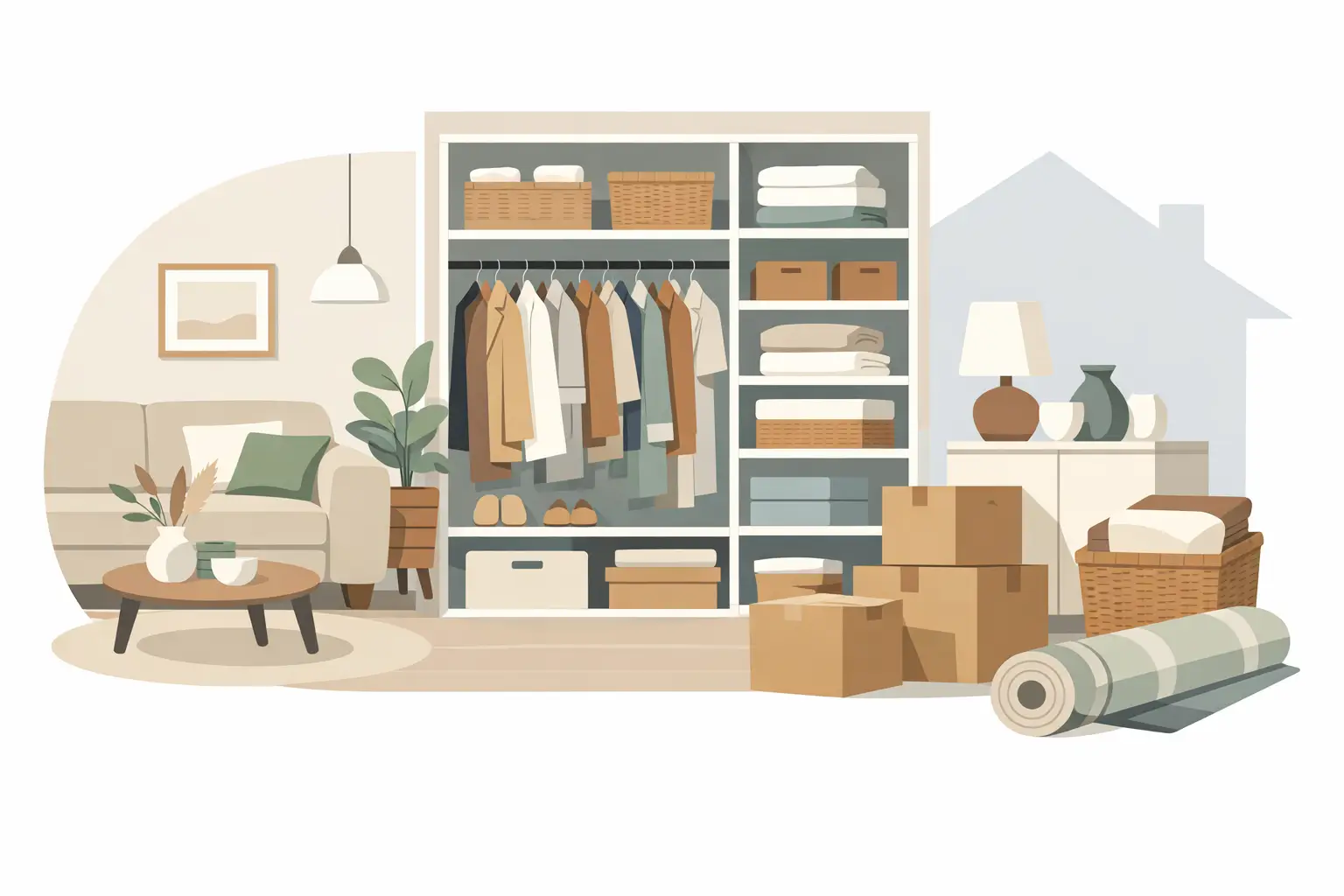
The hallway bench is full, the closets are packed, and every countertop seems to collect one more thing by the hour. That is usually the moment sellers realize home staging storage solutions are not a nice extra – they are part of the sale strategy. A staged home needs to feel open, calm, and easy to imagine living in. That gets a lot harder when daily life is still sitting in every room.
Good staging is not about making a house look empty. It is about making the space look bigger, cleaner, and more functional without creating chaos for the people still living there. The right storage plan helps you remove what buyers should not see while keeping what you still need within reach.
Why storage matters so much during staging
Buyers do not just look at finishes and square footage. They look for signs of how the home lives. If the front closet is crammed, they notice a lack of storage. If the bathroom cabinets are overflowing, they assume the space is tight. If toys, paperwork, off-season clothes, and extra kitchen gear are squeezed into every corner, the home can feel smaller than it is.
That is why home staging storage solutions work best when they support the full showing process, not just one photo day. You need a setup that helps the house stay presentable for days or weeks, depending on the market. A few decorative baskets can help, but they are not enough when you are trying to clear an office, simplify a basement, and make room for buyers to walk through without distraction.
There is also a practical side. Many sellers are staging while packing for a move, preparing for a renovation, or juggling family routines. In those cases, the question is not whether you need storage. It is which kind of storage makes the process easier instead of adding more work.
What should leave the house first
The first wave of items to remove is usually personal and nonessential. Family photos, collections, paperwork, extra chairs, overflow pantry goods, seasonal decor, and hobby equipment tend to take up visual space without helping the home show well. The same goes for bulky items that make rooms feel smaller, even if you use them every now and then.
Bedrooms often need the biggest edit. Buyers want to see floor space, wall space, and easy movement around the bed. That oversized dresser, exercise bike, or stack of storage bins may fit your routine, but it can make the room look crowded. Closets matter too. A half-full closet suggests capacity. A packed closet suggests a problem.
Kitchens and bathrooms need restraint. Counters should look clean and simple, not like active workstations. Small appliances, extra dish racks, duplicate toiletries, and cleaning supplies can all be packed away. You are not trying to hide the fact that people live there. You are trying to remove anything that competes with the room itself.
The best home staging storage solutions for real life
Not every storage option fits every home sale. It depends on how much you need to remove, how quickly you need access, and whether you are still living in the property.
Portable storage containers make a lot of sense when staging overlaps with moving. You can pack furniture, boxes, and nonessential items once, on your own schedule, without making trips back and forth to a facility. That is a major advantage if you are trying to keep the home show-ready while also preparing for the next step. A ground-level container is especially useful for heavy furniture, decor, and packed bins because loading is simpler and there is less strain than dealing with ramps and truck rentals.
Off-site storage can be the better choice when you need the property completely clear or you do not want a container at the home for long. This is often helpful for tighter lots, shorter listing timelines, or sellers who want everything out of sight during active showings. The trade-off is access. If you store items away from the property, think carefully about what you may still need day to day.
Garage storage works in limited cases, but it is not always the easy answer people think it is. If the garage is already neat and spacious, it may absorb a few labeled bins. If it becomes a holding zone for furniture and packed boxes, buyers may see it as lost parking or lost storage. That can work against the overall impression of the home.
Indoor hidden storage can help maintain the staged look, but only for lightweight daily items. Under-bed containers, tidy linen closet bins, and a small number of matching baskets can keep essentials organized between showings. They should support the staging plan, not replace real decluttering.
How to choose the right storage approach
Start with volume. If you are removing a few boxes, small decorative extras, and some clothing, a light home-based solution may be enough. If you are clearing out whole rooms, downsizing furniture, or starting to pack for a move, you likely need a larger and more flexible option.
Next, think about access. Some sellers need regular access to kids’ gear, work files, or seasonal items. Others want everything gone until moving day. Be honest about that early. If you store frequently used items too far away, you will end up repopulating the house with clutter.
Timeline matters too. If the home will be listed for a month or more, convenience becomes a bigger factor. Repeated loading, unloading, and facility runs add up fast. A simple plan that saves time every week is often worth more than the cheapest short-term option.
A simple room-by-room staging storage plan
In the living room, remove extra seating, hobby items, visible cords, and anything that makes traffic flow feel tight. Keep enough furniture to define the space, but not so much that buyers have to walk around obstacles.
In the kitchen, pack away duplicates, specialty appliances, surplus pantry stock, fridge magnets, and paperwork. Leave the room looking functional, not busy.
In bedrooms, reduce clothing volume, simplify surfaces, and clear underused furniture. Nightstands, beds, and one or two useful pieces are usually enough.
In bathrooms, put away personal care overflow, laundry piles, medication, and anything highly personal. Aim for a clean, hotel-like feel without making the room look sterile.
In entryways and mudrooms, limit shoes, coats, pet gear, backpacks, and sports equipment. These spaces shape first impressions quickly.
Basements are where many staging plans fall apart. Sellers often push clutter downstairs and hope buyers will focus on the upper levels. Most buyers will check the basement closely. If it feels crowded, unfinished, or overloaded, it can shrink the perceived value of the entire home. Move out whatever you can so the space reads as usable square footage.
Common mistakes that make staging harder
One mistake is waiting too long. Sellers often plan to declutter right before photos or the first open house, then realize there is far more to sort than expected. Storage works better when it starts early enough to reduce pressure.
Another mistake is storing without organizing. If everything gets tossed into random boxes, you may solve one problem and create another. Label clearly. Group by room or category. Keep essentials separate from true pack-away items.
A third mistake is choosing a solution based only on price. The cheapest option can become expensive in time, fuel, stress, and extra handling. If you have to load items multiple times, drive across town repeatedly, or rent additional equipment, the savings disappear fast.
There is also the issue of over-staging. Removing too much can make a home feel cold or awkward. Buyers still need enough furniture and decor to understand how a room functions. The goal is edited and spacious, not vacant and flat.
When portable storage is the practical answer
If your home is being staged while life is still happening, convenience matters. That is where portable storage often stands out. You can pack at your own pace, keep the loading process simple, and avoid the stop-start hassle of moving things in small batches. For families, busy homeowners, or anyone balancing staging with work and moving plans, that kind of flexibility can make the whole process feel manageable.
For sellers in Belleville and surrounding areas, a local portable storage company like Storbox Mobile can be especially helpful when timing is tight and you want straightforward support. The real benefit is not just the container itself. It is the ability to clear the home without adding truck rentals, repeated loading cycles, or one more complicated errand to your week.
The best home staging storage solutions are the ones that make your house easier to show and your life easier to manage at the same time. If buyers can walk in and notice the space instead of your stuff, you are on the right track. A little room to breathe can change how a whole home feels.
