
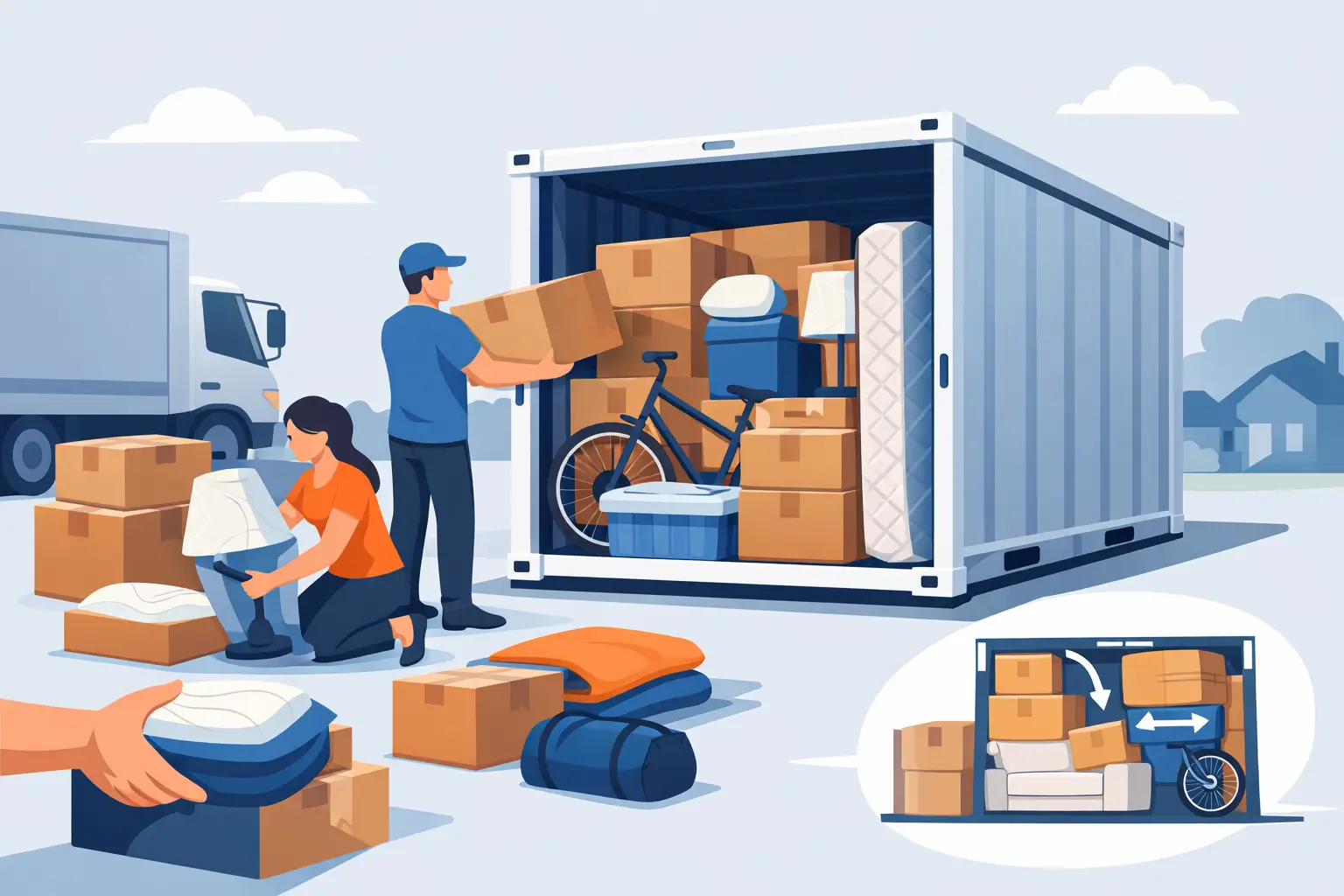
Packing usually feels easy for the first 20 minutes. Then the heavy boxes show up, the furniture starts taking more room than expected, and suddenly the container doesn’t seem quite as big as it did on delivery day. If you’re wondering how to pack a mobile storage container without wasting space or risking damage, the right approach is simple: plan the layout first, load heavy items with purpose, and build stable layers from front to back.
A mobile storage container gives you a major advantage over traditional self-storage because you can load at ground level and work on your own schedule. That convenience matters, but it also means the way you pack the container makes a real difference. A well-packed unit protects your belongings, makes pickup smoother, and saves you from opening the door later to find a shifted wall of boxes.
How to pack a mobile storage container without wasting space
The biggest mistake people make is treating the container like a garage and just placing things wherever they fit. That works for a few small items, but not for a full household move, a renovation, or business storage. You want the container packed with balance and structure, not just filled.
Start by thinking in zones. Put the heaviest and largest items in first, usually along the front wall of the container. Appliances, dressers, sofas, mattresses, and packed book boxes should create the foundation. Lighter and more fragile items come later. This gives you a stable base and helps prevent shifting during transport or while the unit sits on-site.
It also helps to decide early whether you’ll need access to anything before the container is emptied. If you’re storing renovation tools, seasonal stock, business files, or a few key household items, leave a narrow walkway or place those items near the door. If everything is going straight to a new home and won’t be touched until unloading, pack more tightly for maximum space.
Prep before you load
A little prep saves a lot of rearranging. Before the first item goes in, group your belongings by weight, size, and fragility. That makes it easier to build a solid load instead of constantly moving things around.
Boxes should be fully packed and sealed, with heavier items in smaller boxes and lighter items in larger ones. Uniform box sizes stack better than a random mix, so when possible, keep a few standard sizes in circulation. Overfilled boxes are a problem because they bulge and collapse. Half-empty boxes are no better because they crush under weight unless they’re filled properly.
Furniture should be cleaned, emptied, and protected. Remove table legs if practical, wrap delicate surfaces, and keep hardware in labeled bags taped securely to the item it belongs to. Drawers can often stay in dressers if they’re not overloaded, but loose contents should be packed separately if there’s any risk of movement.
If you’re packing for short-term storage during a move, your setup can be more straightforward. If you’re storing longer term, protection matters more. Use covers for upholstered furniture and mattresses, and avoid trapping moisture with improper wrapping. Weather-tight containers help, but your packing still needs to account for temperature changes and time in storage. Storbox Mobile has moving blankets and tie down straps available for extra protection.
Load heavy items first and keep the weight even
This is the part that determines whether the whole container feels organized or chaotic. Put your heaviest items in first and distribute the weight evenly from side to side. If all the dense items are loaded on one side, you create imbalance. If all the heavy items are near the door, you lose stability and make the load harder to secure.
Start at the front of the container and work your way back toward the door. Large furniture should go in upright when safe to do so, especially couches and mattresses, because that saves floor space. Dressers, washers, dryers, and similar items should be placed flat and stable. If there are gaps between heavy items, fill them with sturdy boxes or soft items that won’t be damaged by pressure.
Think of each section as its own wall. Once one area is stable, move to the next. That method keeps the load tight and reduces shifting. Random placement may feel faster in the moment, but it usually costs space and creates weak points.
Stack smart, not just high
One of the best ways to maximize a 16 x 8 container is to use vertical space well. That does not mean stacking everything to the ceiling without a plan. It means building secure layers.
Boxes with similar size and strength should be stacked together, with the heaviest on the bottom and the lightest on top. Fragile boxes should never support weight. If a box is marked kitchen or decor, that tells you what’s inside, but it doesn’t always tell you whether it can bear weight. Be honest about what each box can handle.
Try to keep stacks level. Uneven towers waste space and tip more easily. If you have awkward gaps above shorter furniture, that’s a good spot for lighter sealed boxes, cushions, or bagged linens. Soft items are useful for filling spaces, but they should not be the main support structure for stacked loads.
You also want to avoid building all the way up in one area while leaving low open space elsewhere. A container packs best when height is used consistently across the load.
How to pack fragile items in a mobile storage container
Fragile items do best when they’re packed in boxes that are clearly labeled and surrounded by stability. Dishes should be wrapped individually and packed vertically when appropriate. Glassware needs internal cushioning, not just a label on the outside. Mirrors and framed artwork should be wrapped, protected at the corners, and stored upright, not flat under weight.
The safest place for fragile boxes is usually on top of sturdy stacks or in protected spaces where they won’t shift. They should never be the first thing loaded and almost never belong on the floor under heavier items. If something is especially valuable or sentimental, give it extra protection and place it where it can be monitored during loading.
Leave no dead space if you can help it
Empty pockets inside a packed container create movement. Movement leads to leaning, sliding, and broken items. As you load, look for the spaces between furniture legs, under tables, beside appliances, and above lower items.
Those gaps can often hold smaller boxes, lampshades, packed linens, or other light pieces. The goal is not to jam every inch full. The goal is to reduce open space that allows the load to shift. There’s a difference between a tight, well-supported pack and an overstuffed one that presses awkwardly on everything around it.
If you know the container will be transported after loading, tighter is generally better, as long as fragile items are protected and weight is distributed properly. For on-site storage where you may need periodic access, you may choose a little less density in exchange for convenience.
Protect what you’ll need first
A lot of people pack as if unloading will be someone else’s problem. Then move-in day arrives, and the coffee maker, work tools, or bed frame hardware are buried at the very front.
Before you close the container, think about first-access items. That might include cleaning supplies, basic tools, important documents, children’s essentials, inventory, or renovation materials. Keep those near the door and clearly marked. If you need the container for staged access over time, label sections well enough that you won’t have to dig through everything to find one thing.
This is where a little planning pays off. A mobile storage container gives you flexibility, but only if you pack for the way you actually plan to use it.
Common packing mistakes to avoid
The most common issue is mixing heavy and fragile items without a real system. The second is leaving furniture unprotected, which leads to scratches, fabric damage, and dusty surfaces. The third is underestimating how much room loose items take up.
Loose bags, open bins, and unboxed small items create disorder fast. They slide, snag, and get crushed. If an item can go in a box, tote, or secured container, it usually should. Another mistake is rushing the last 10 percent of the load. That final section near the door often determines how secure the entire container stays.
If you’re dealing with a move, renovation, or temporary business storage in the Belleville and Quinte area, this is where working with a local company that understands timing and container placement can make the whole process easier. Storbox Mobile is built around that kind of flexibility, which matters when schedules shift and access still needs to stay simple.
A practical way to think about the whole job
The best packing method is not complicated. Build a strong base, keep the load balanced, protect what matters, and use the full height and depth of the space. If something feels unstable while packing, it usually is. Fix it before moving on.
You do not need a perfect moving-day diagram to get this right. You just need a clear order of operations and enough patience to pack the container once instead of repacking it halfway through. A little structure now makes unloading easier later, and that’s usually when people are happiest they took the time.
