
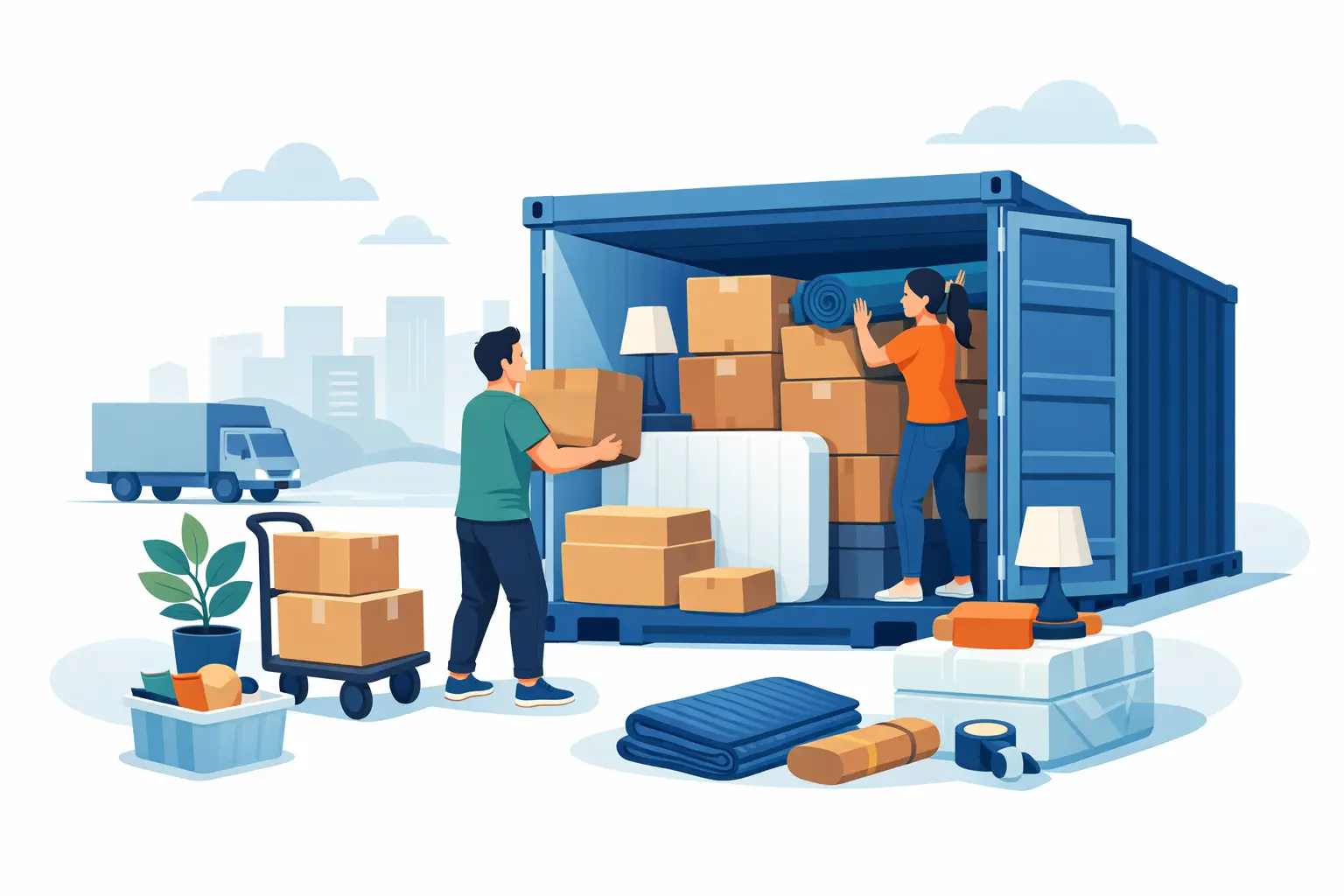
A moving container gives you something a rental truck rarely does: time. You can load room by room instead of trying to finish an entire home in one exhausting day. But that flexibility only pays off when you pack a moving container efficiently. A smart loading plan protects your belongings, uses the full footprint of the container, and keeps the final few items from becoming a stressful game of Tetris.
For most households, the best approach is simple: prepare before delivery, load heavy items first, build stable sections from floor to ceiling, and keep essentials out of the container. The goal is not to cram in every last loose item. It is to create a secure load that stays put during transportation and arrives ready to unload.
Start With a Plan Before the Container Arrives
Take a walk through your home, garage, basement, or business space and decide what is actually going into storage or moving with you. This is the right time to donate, sell, recycle, or discard items you no longer need. Loading things you meant to sort later uses valuable space and adds work at the other end.
Measure your largest pieces, especially sectionals, wardrobes, appliances, shelving, and mattresses. A 16 x 8 mobile storage unit provides substantial room, but bulky furniture can create wasted pockets of space if it goes in without a plan. Think of the container in layers: dense, heavy items form the base, while lighter boxes and soft goods fill higher spaces and gaps.
Make a quick loading map. You do not need a detailed diagram, but it helps to know which large pieces are going in first and where they will sit. Items you may need soon, such as seasonal business supplies or renovation tools, should be loaded near the door. Items headed directly to long-term storage can go farther inside.
Gather the Right Packing Materials
Strong boxes matter. Use small boxes for books, tools, dishes, and other heavy belongings so they remain liftable. Medium and large boxes work well for linens, lampshades, toys, clothing, and lightweight kitchen items. Avoid loading damaged grocery boxes or boxes with weak bottoms, even if they seem fine at first.
Keep packing tape, markers, furniture pads, stretch wrap, bubble wrap, mattress covers, and tie-down straps within reach. Furniture pads are especially useful because hard surfaces can rub together when a load shifts. Wrap wood furniture, glass-front cabinets, mirrors, and appliances before they enter the container.
Label every box on at least two sides. Include both the room and a short description, such as “Kitchen – serving dishes” or “Office – files.” If you are storing rather than moving, labels make it much easier to find what you need without unloading half the container.
How to Pack a Moving Container Efficiently From the Floor Up
Start at the far end of the container and work your way toward the door. Place your heaviest and largest items against the walls whenever possible. Appliances, dressers, solid wood furniture, and tightly packed book boxes create a stable base. Keep the weight balanced from left to right. Loading all heavy items on one side can make the container harder to pack safely and can put unnecessary pressure on individual items.
Stand sofas and mattresses on end only if they can be properly protected and secured. This can save a great deal of floor space, but it is not always the best choice. Delicate furniture, older mattresses, or pieces that cannot be strapped safely may be better loaded flat. The right choice depends on the item, its condition, and how much room you have.
Build each section as tightly as practical. Fill the floor area first, then stack sturdy, same-size boxes on top. Keep the heaviest boxes on the bottom and the lightest boxes on top. Do not stack boxes so high that they lean or bow. A lower, stable stack is better than a tall stack that can collapse while the container is moved.
Use furniture pads between hard surfaces and along the walls where furniture may rub. Stretch wrap can hold drawers and cabinet doors closed, but do not rely on it as the only protection. Wrap corners, edges, and glass separately. Remove table legs when possible and bundle hardware in a labeled bag taped securely to the underside of the furniture piece.
Fill Empty Spaces Before They Become Problems
Open spaces are where shifting starts. Once a section is loaded, look for gaps between furniture, under tables, inside wardrobes, and beside large appliances. Use soft items such as blankets, pillows, comforters, cushions, and bagged linens to fill those spaces. They protect your belongings while making better use of the available room.
Avoid putting loose, heavy items into gaps. A small box of books can become a problem if it slides beneath a dresser or presses against a fragile table leg. Light, compressible items are better gap-fillers.
For furniture with hollow areas, use the space. A dresser drawer can hold lightweight clothing if it is secured shut. The inside of a wardrobe can hold pillows or boxed linens. Just do not overfill drawers or cabinets, as added weight can damage the piece or make it difficult to move.
As you load, pause every few feet to add straps or rope across the section. Tie-down points help keep furniture and stacked boxes from shifting during transport. Secure each completed wall or row before moving on to the next one. Waiting until the end often means there is no clear place to run straps.
Protect Fragile and Awkward Items
Mirrors, framed artwork, glass tabletops, TVs, and electronics need more than a blanket tossed over them. Wrap each item with padding, protect corners, and place it upright against a stable surface. Never lay a flat-screen TV flat under boxes or heavy furniture. If you still have the original TV box and inserts, use them.
For glass tabletops and large mirrors, use a rigid sheet of cardboard or another protective panel on both sides before wrapping. Mark the outside clearly as fragile, but pack as though no one will see the label. Proper padding and placement do the real work.
Do not pack hazardous or prohibited items inside a moving container. This generally includes gasoline, propane tanks, fireworks, paint thinner, chemicals, aerosols, and anything flammable or corrosive. Empty and clean appliances before loading them, and make sure refrigerators and freezers are completely dry to prevent odors and moisture problems.
Keep an Essentials Zone Outside the Container
One of the easiest moving mistakes is loading the items you need immediately. Keep a separate essentials area in your car or home until the container is picked up. This should include medications, important documents, chargers, keys, basic cleaning supplies, toiletries, a change of clothes, and items your children or pets need for the first day or night.
If you are renovating or using the container for on-site business storage, apply the same idea. Keep daily-use tools, safety gear, permits, and frequently needed supplies accessible. A container is convenient because it can be where you need it, but it is still faster to keep high-use items near the entrance rather than buried behind furniture.
Avoid the Most Common Loading Mistakes
The biggest mistake is loading without securing. Even a carefully packed container can shift if sections are not strapped in place. The next is leaving large vertical gaps between furniture or box stacks. Those gaps invite movement, especially when the container is transported.
Overloading boxes is another common issue. A box that is too heavy may tear, injure the person lifting it, or crush lighter boxes underneath. Finally, do not stack mismatched box sizes carelessly. A solid base of uniform boxes creates much more stability than a tower of random shapes.
If you are unsure whether you have enough space or need a second container, ask before loading day becomes a deadline. Storbox Mobile can help you think through container placement, timing, and the amount of storage that makes sense for your move, renovation, or jobsite.
Give Yourself Time for a Final Check
Before closing the door, walk through the container from front to back. Check that heavy pieces are balanced, fragile items are protected, and straps are tight. Look for loose boxes, unfilled gaps, and items that could fall when the door opens. Take a few photos of the finished load for your records, particularly if you are storing items for an extended period.
A well-packed container is not about moving faster for the sake of it. It is about making the move easier on your belongings, your back, and your schedule. Load in sections, secure each one as you go, and leave yourself enough time to make adjustments before pickup.
