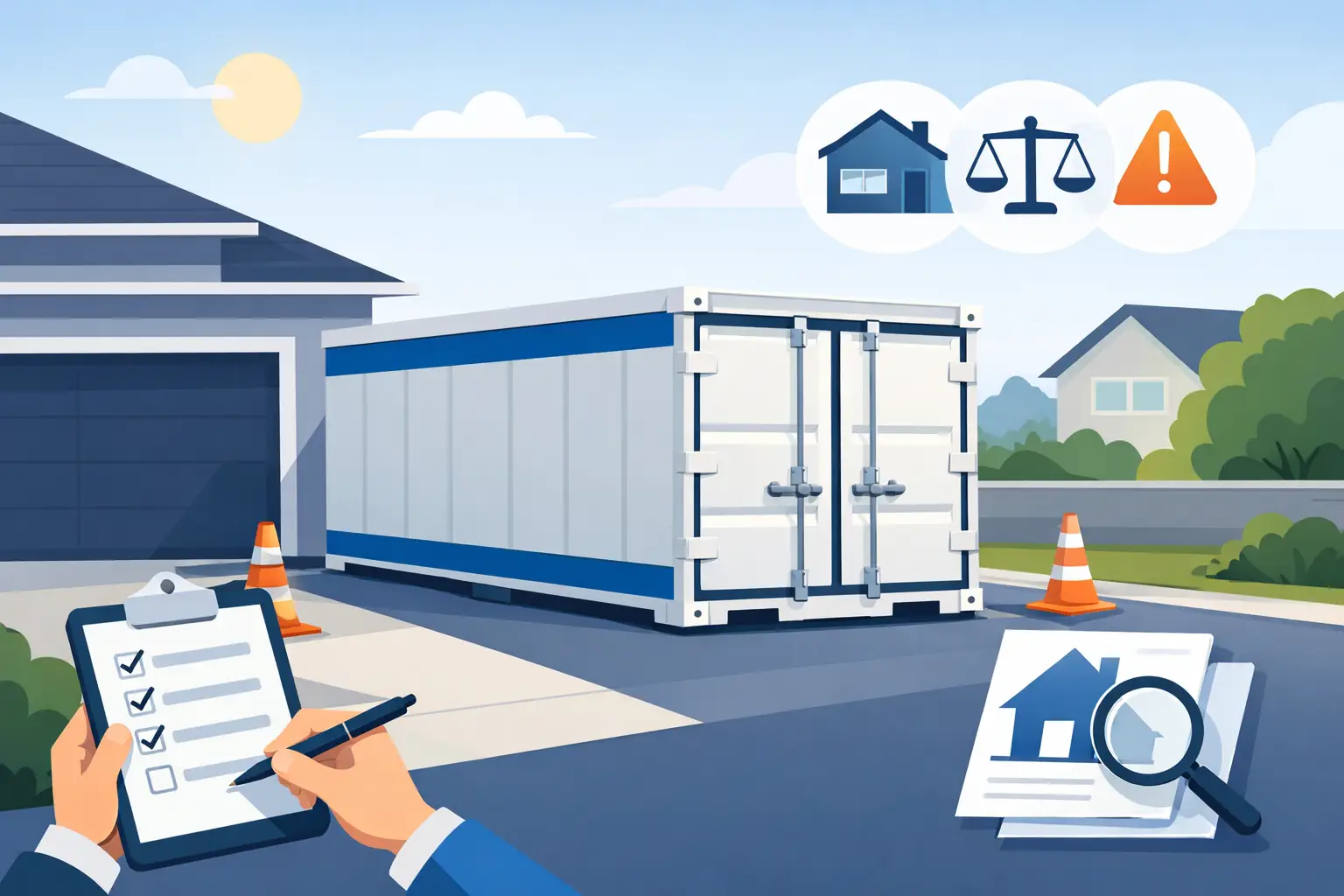
A storage container can make a move, renovation, or cleanup far easier – but it should not be the first surprise your neighbors or municipality see. Before delivery day, take a few minutes to confirm the driveway storage container rules that apply to your property. A quick check can prevent a delayed delivery, a complaint, or having to move a fully loaded unit sooner than planned.
For most homeowners, the main questions are simple: Can a container sit in the driveway? How long can it stay? How close can it be to the street, property line, sidewalk, or neighboring home? The answer depends on your municipality, the type of property, and sometimes the reason you need storage.
Why driveway container rules vary
Portable storage containers are temporary by design, but local bylaws do not always treat every temporary item the same way. One municipality may permit a container for a short moving or renovation period. Another may classify it as outdoor storage or a temporary structure and set limits on placement, duration, or size.
Your zoning can matter, too. Residential, rural, commercial, and mixed-use properties may have different standards. A container that is reasonable at a construction site may not be allowed in the front yard of a residential lot for an extended period.
Rules can also change by neighborhood. A condominium corporation, homeowners association, landlord, or property management company may have restrictions beyond municipal bylaws. If you rent, get your landlord’s approval in writing before arranging delivery. It protects everyone from confusion later.
Driveway storage container rules to check before booking
Start with your local municipal bylaw or building and planning department. Explain that you are arranging a ground-level portable storage container for a move, renovation, or temporary on-site storage. Ask direct questions rather than relying on assumptions.
Confirm whether a permit is required, whether there is a maximum rental period, and where the container may be placed. Ask if there are setback requirements from lot lines, streets, sidewalks, fire hydrants, or intersections. If your driveway is near a corner or a narrow road, sightlines for drivers can be a particular concern.
Also ask whether the container must remain on private property. A driveway is generally private, but the section close to the road may fall within a road allowance or right-of-way. Even if that area looks like part of your lawn or driveway, placing a container there may require separate permission.
Keep a record of the guidance you receive, including the date and the name of the department or representative. Bylaws can be interpreted differently depending on the property, and clear notes make it easier to plan confidently.
Choose a location that works for delivery and daily life
Legal placement is only part of the job. The container needs a practical, safe place to sit while you use it.
A level, firm driveway is usually the best option. It gives you easy, ground-level access while helping the unit remain stable. Avoid soft ground, steep slopes, low branches, overhead wires, and areas where water tends to collect after rain. A weather-tight container protects your belongings, but the access route still needs to be safe in wet or icy conditions.
Leave enough room for normal household routines. Think about where vehicles will park, how garbage and recycling bins reach the curb, whether a caregiver or delivery driver needs access, and how people will get from the driveway to the front door. If the container blocks a garage, that may be fine for a short renovation but frustrating during a long-term project.
Do not place a unit where it obstructs a sidewalk, shared lane, emergency access route, or fire exit. For businesses and job sites, keep loading areas, customer entrances, and accessible parking clear as well.
Protect the driveway before the unit arrives
A portable storage container is built to carry real weight. Once loaded with furniture, tools, renovation materials, or business inventory, it can put pressure on the surface below. Older asphalt, decorative pavers, and cracked concrete deserve extra attention.
Tell your storage provider what type of driveway you have and point out any known weak spots, slopes, or tight turns. Depending on the property and delivery setup, protective boards or other load-distribution measures may be appropriate. No provider can guarantee against pre-existing surface issues, but sharing accurate details helps avoid preventable problems.
Measure the space, too. A 16 x 8 storage unit needs more than its own footprint because delivery equipment needs room to maneuver. Account for vehicles, fences, gates, trees, and overhead clearance. A quick measurement and a few photos taken before booking can save time on delivery day.
Keep your neighbors in the loop
You may not need a neighbor’s permission to place a container on your own driveway, but a brief conversation is often worthwhile. Let immediate neighbors know the expected delivery date, approximate rental period, and whether the unit will affect shared access or parking.
This is especially useful on narrow streets, shared driveways, and closely spaced homes. Most concerns come from uncertainty: whether the container will block views, create noise, or remain for months. A straightforward heads-up keeps the project neighborly and can help you spot access issues before the truck arrives.
Use the container responsibly while it is on-site
Temporary storage still needs basic housekeeping. Keep the container locked whenever it is unattended, and do not store prohibited or hazardous materials. Fuel, propane cylinders, chemicals, explosives, and flammable items can create safety risks and may be restricted by your rental agreement.
Keep the area around the doors clear. Overpacking the entrance can make it difficult to retrieve items safely, and loose materials outside the container can become a trip hazard or attract complaints. If you are storing materials for a renovation, keep waste, lumber, and equipment organized rather than letting the driveway become an open work zone.
It also helps to revisit the expected timeline. A container used for a weekend move may need little coordination. A unit staying through a multi-month renovation deserves a more careful review of municipal time limits, seasonal snow clearing, and driveway access.
When a permit or alternative placement may make sense
If your project will last longer than a typical move, ask whether a temporary-use permit is available. This can be relevant for major renovations, insurance repairs, construction work, or business inventory storage. Do not wait for a complaint to find out whether a permit is required.
An alternate location may be the better choice when a driveway is too narrow, steep, fragile, or close to the road. In some cases, arranging pickup and storage at a secure facility makes more sense than keeping the container on-site. You still get the benefit of loading once at ground level, without sacrificing parking or dealing with a long-term driveway placement.
For local homeowners and businesses, Storbox Mobile can help assess the delivery setup before a unit is scheduled. That practical conversation is valuable because a good storage plan considers both the container and the property around it.
Common questions about driveway container placement
Can I put a storage container in my front driveway?
Often, yes, for a temporary period, but do not assume it is automatically permitted. Check municipal rules for outdoor storage, temporary structures, setbacks, and road allowances. Private community rules or rental agreements may also apply.
How long can a container stay in a driveway?
There is no single answer. Some areas allow short-term placement connected to moving or renovations, while others set a specific number of days or require approval for longer use. Confirm the limit before you book, especially if your timeline could change.
Does a portable storage container need to be on concrete?
Not always, but it needs a stable, accessible surface appropriate for the delivery method and the loaded weight of the unit. A level driveway is often ideal. Discuss gravel, slopes, soft ground, pavers, and other site conditions before delivery.
A storage container should take pressure off your move or project, not add another problem to solve. Check the rules early, choose a clear and solid placement area, and give yourself enough room to load at your own pace. That little bit of planning keeps delivery day simple – where you want it, when you want it.
