A ground-level loading review should answer one practical question: will the container arrive where you need it without creating more work, risk, or damage? For a move, renovation, or jobsite storage need, how a container is delivered matters just as much as its size, security, and rental rate.
Most people picture a storage container being set down and assume every delivery method works the same way. It does not. Some trucks need a long, straight approach and slide the container off at an angle. Others like Storbox Mobile use level placement equipment that keeps the container steady while it is moved into position. That difference can affect your driveway, your belongings, and the amount of usable space on your property.
What Ground-Level Loading Actually Means
Ground-level loading means you can walk directly into a storage container from the ground. There is no ramp to climb, no elevated truck bed, and no need to lift boxes up to a raised platform. For families packing a home or contractors storing tools, that makes loading easier to manage over several days or weeks.
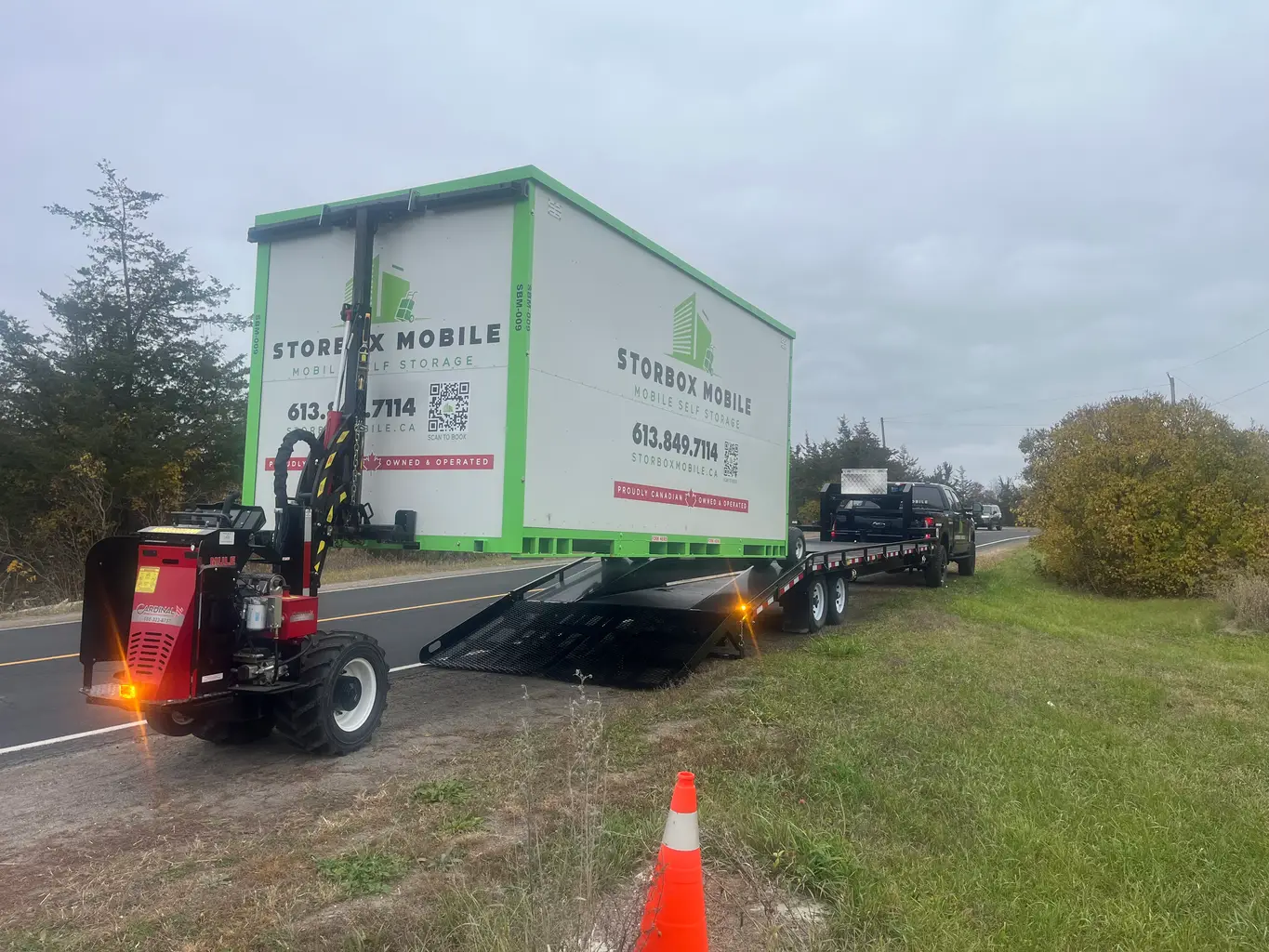
Storbox Mobile loading goes one step further. The container stays level during delivery and pickup, rather than tipping as it slides from a truck. This matters when the unit is already packed. Furniture, boxed dishes, equipment, and stacked supplies are less likely to shift when the container is kept on an even plane.
A 16 x 8 mobile storage unit provides room for household contents, renovation materials, inventory, or jobsite equipment while keeping the loading process simple. You pack at your own pace, at ground level, then decide whether to keep the unit on-site or have it picked up for storage.
Ground-Level Loading Review: The Details That Matter
A useful review is not just about whether a container can be delivered. It is about whether it can be delivered safely and placed where it is genuinely useful. These are the details worth checking before you book.
Placement access
Traditional roll-off delivery trucks often require a straight approach of roughly 70 feet to unload a container. That can be a problem on a narrow driveway, a property with a sharp turn, or a site with parked vehicles, trees, fencing, or overhead lines.
A self-propelled placement system used by Storbox Mobile can make a major difference in these situations. Instead of relying on the truck to line up perfectly, the operator can walk the unit into its final position. This is especially helpful for residential neighborhoods, downtown properties, and construction sites where open space is limited.
Before delivery, think beyond the spot where you want the unit to sit. Consider the full path from the street or access point to that location. A good provider will discuss the route, slope, width, turning room, and obstacles with you rather than making assumptions on delivery day.
Protection for driveways and surfaces
Driveways are a common concern, and for good reason. Heavy equipment and containers can put pressure on asphalt, pavers, gravel, or older concrete. Sliding a container off a truck can also create scraping or uneven contact, particularly if the ground is not flat.
Level placement reduces those risks because the container is carried into position rather than dropped or dragged into place. It does not mean every surface is identical or that no planning is needed. A soft lawn after heavy rain, a steep grade, or a deteriorating driveway may still require a different location or added protection. But equipment designed for controlled placement gives you more options and more confidence.
If you are unsure about a surface, mention it when requesting your quote. Clear photos and a brief description of the access area can help your storage specialist recommend a practical setup before the truck arrives.
A level container for easier packing
A container that sits level is simply easier to use. Boxes stack better, shelving stays stable, doors operate as intended, and rolling items are less likely to move unexpectedly. This is useful for household storage, but it can be even more important for businesses storing supplies, documents, fixtures, or tools.
Level loading also helps when you are using the container over time. During a renovation, for example, you may go in and out of the unit daily as rooms are cleared and completed. A stable, ground-level entry makes that routine less tiring than repeated trips up a ramp or into a truck.
The condition of your belongings at pickup
This is where the delivery method becomes easy to overlook. You might carefully pack a container, secure furniture, and stack boxes correctly, only to have the load shift if the unit is tilted during pickup.
No delivery method replaces smart packing. Heavy boxes should stay low, fragile items need protection, and furniture should be secured. Still, keeping a loaded container level from start to finish reduces an avoidable source of movement. If you plan to have your unit transported to a storage facility after loading, ask specifically how it will be handled during pickup and placement.
When Ground-Level Delivery Is the Better Choice
Ground-level loading is a strong fit for most residential moves because it removes the need to rent and drive a moving truck. You load once at your property, rather than loading a truck, unloading it at a facility, then loading again when it is time to move.
It is also practical for renovations. Keep furniture and boxes protected on-site while work is underway, with easy access when you need something. For staging or downsizing, a container gives you breathing room without forcing quick decisions about what to sell, donate, or keep.
For contractors and small businesses, on-site storage keeps tools and materials close to the work. The right placement can save repeated trips across a property and keep equipment out of the way of customers, crews, and deliveries.
There are cases where another option may make sense. If you need climate-controlled storage for sensitive items, have no safe place for a container, or only need to store a few boxes, a traditional indoor storage unit may be more suitable. The point is to match the storage method to the property and the job, not to pay for features you will not use.
Questions to Ask Before Scheduling Delivery
Ask how much clear access is required, whether the container can be maneuvered around turns, and what happens if the preferred location is not accessible. You should also ask whether the container remains level during delivery and pickup, how your surface will be protected, and whether you can choose delivery and pickup timing that works with your schedule.
It also helps to confirm what is included in the quoted price. Delivery distance, rental length, and the number of units can affect the total. Straight answers upfront make it easier to compare options fairly and avoid surprises later.
Storbox Mobile uses its Superior Mule Placement System to bring secure, weather-tight containers into tight spaces with controlled, level placement. That is valuable when a standard roll-off delivery is too restrictive for your driveway, property layout, or jobsite.
A Better Setup Starts Before Delivery Day
The best container location is usually close enough to be convenient but far enough from daily traffic to stay out of the way. Leave room for doors to open fully, avoid blocking garages or walkways, and think ahead about snow, rain, deliveries, and contractor access. If the unit will be on-site for several weeks, convenience on day one should not create frustration on day twenty.
Before you book, walk the route from the street to the intended placement area and take a few photos. Share any concerns about slopes, narrow passages, low branches, gates, or surface conditions. A short conversation before delivery can prevent a long list of problems afterward and help ensure the container is placed where you want it, when you want it.
