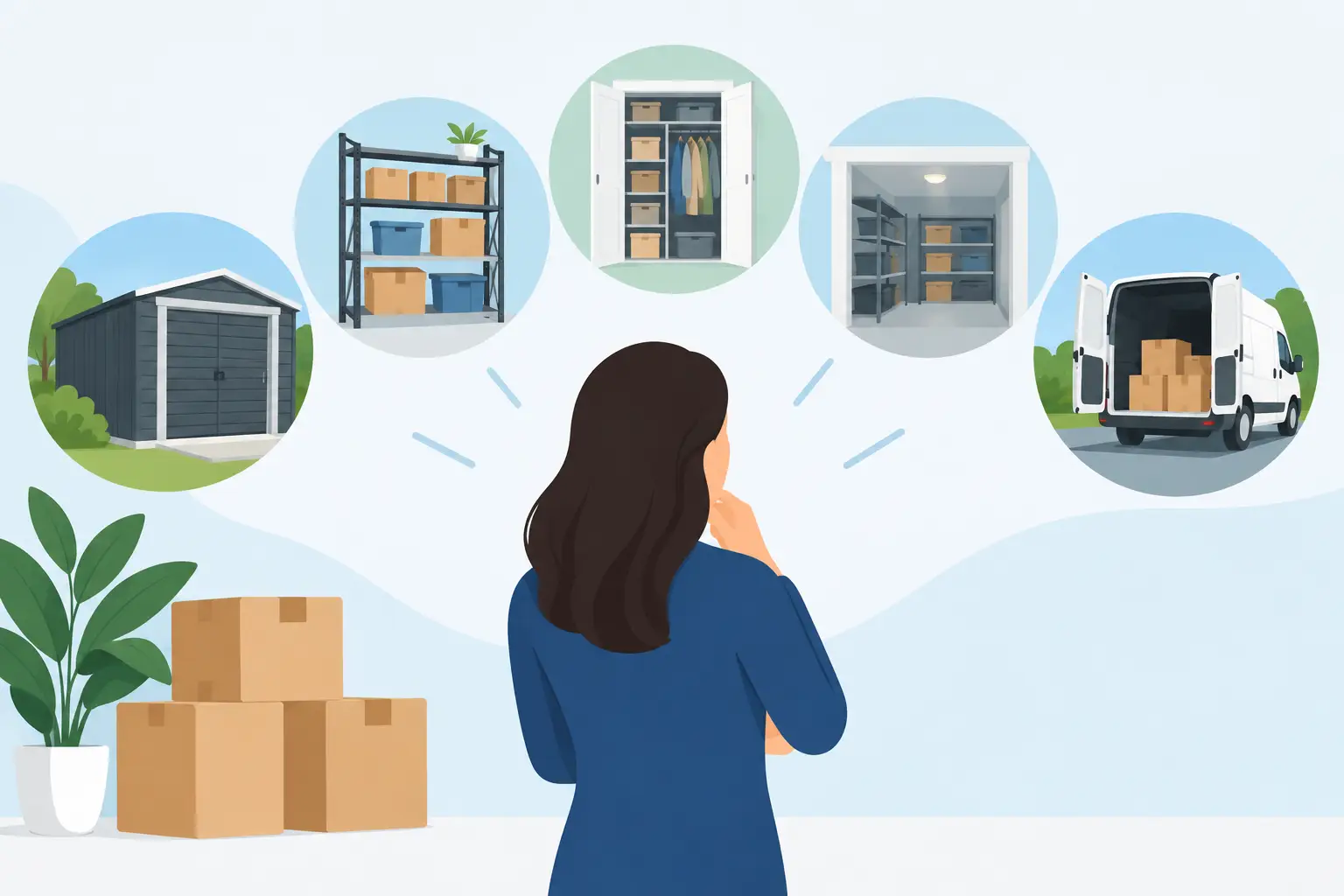
A storage container at your driveway can make a move or renovation far less complicated, but it is not the only choice. The best storage pod alternatives depend on what is creating the pressure in the first place: a closing date, a kitchen renovation, a lack of room at the jobsite, or a move that cannot be finished in one day.
The right option should reduce handling, fit your timeline, and keep your belongings accessible when you need them. Before booking the first service you find, compare how each choice handles loading, transportation, access, and rental time.
1. Mobile Storage Containers
A mobile storage container is often the closest alternative to a traditional storage pod, and the terms are sometimes used interchangeably. The key difference is in the provider, container size, delivery process, service area, and flexibility offered.
With mobile storage, a weather-tight container is delivered to your home, business, or jobsite. You load it at ground level on your own schedule. When you are ready, the provider can leave it on-site or move it to a secure storage facility. That means your belongings are loaded once, rather than packed into a vehicle, unloaded at a storage facility, and then loaded again later.
This is a strong fit for local moves, staging a home before listing it, renovations, downsizing, and temporary business storage. It is especially useful when your dates are still moving around. A locally owned provider such as Storbox Mobile can coordinate delivery around your actual schedule and give you a direct point of contact when plans change.
Mobile container storage may not be the best choice if you only need to store a few boxes or if your property does not have safe space for delivery. Ask about driveway clearance, surface conditions, local access restrictions, and how long the unit can remain on-site before you commit.
2. Traditional Self-Storage
Self-storage works well when you want a fixed place to keep belongings and expect to visit them regularly. You rent a unit at a storage facility, bring your items there, and access them during the facility’s operating hours or gate hours.
For long-term storage of seasonal items, business inventory, records, or belongings you do not need at home, this can be a practical option. You can also choose a unit size based on the volume you need, rather than having one container delivered to your property.
The trade-off is the work involved. You will need a truck, trailer, or several vehicle trips. You also need to carry items from your home into the vehicle and then from the vehicle into the unit. If you are moving, that process happens again at the other end. For heavy furniture, appliances, and packed rooms, repeated loading can add time, fatigue, and the risk of damage.
Self-storage makes the most sense when access matters more than convenience at the start. If you expect to retrieve inventory every week, for example, a facility may be easier than opening a container at a separate location.
3. Truck Rental and DIY Moving
A rental truck gives you full control over moving day. You choose the truck size, pick it up, load it, drive it, unload it, refuel it, and return it. For a short, direct move with a firm date and a reliable group of helpers, this can be an economical route.
It becomes harder when the move has multiple stages. Maybe your new home is not ready, your renovation runs over, or you need to clear rooms before the flooring crew arrives. A truck rental is built for transportation, not flexible storage. Keeping a loaded truck for several days can be expensive, and unloading into a temporary storage unit means handling everything again.
There is also the driving question. Large trucks take confidence, particularly on unfamiliar roads, narrow driveways, or busy moving days. Factor in mileage charges, fuel, insurance options, equipment rentals, and the time needed for pickup and return. The advertised daily rate is only one part of the cost.
4. Full-Service Movers
Full-service movers are a valuable option when you need labor as much as transportation. A moving crew can pack, carry, load, transport, and unload your belongings. For seniors, busy families, large households, or anyone with limited ability to lift heavy items, that support can be worth the cost.
The limitation is timing. Full-service moves are usually planned around a scheduled pickup and delivery window. If you need several weeks to sort through a house, gradually pack, or keep items nearby during a renovation, a one-day moving service may not match how the project actually unfolds.
Some moving companies offer storage between homes, but ask how your belongings will be handled. Will they remain in the same container, or be transferred into a warehouse? Can you access them if you need something? Are you paying for packing or labor you do not need? Clear answers help you compare the real value of the service.
5. Garage, Basement, or Spare-Room Storage
Using space at home costs nothing in rental fees, which makes it tempting. A garage, basement, guest room, or shed can work for a small number of items during a quick project. It is also convenient because everything stays close by.
But home storage can quickly take over the area you were trying to improve. Renovation materials, furniture, boxes, and equipment compete for room, and clutter can slow contractors down. Garages and sheds may also have moisture, temperature, pest, or security concerns depending on the space and the items stored.
This choice is best for short-term overflow that you can keep organized and protected. It is less practical for a full household move, a major renovation, or a business that needs its workspace to stay clear.
6. Warehouse or Commercial Storage
For businesses, warehouse space can be a useful alternative when inventory is growing beyond the office, storefront, or workshop. It may offer room for pallets, equipment, records, or seasonal stock, and some facilities can support regular deliveries and shipping needs.
Still, warehouse arrangements often come with longer commitments, more formal access procedures, and more distance from your operation. A contractor who needs tools and materials at the jobsite each morning does not benefit much from inventory sitting across town.
On-site mobile storage is often the more practical answer for construction crews, retailers refreshing their space, and service businesses managing a temporary project. A container placed where the work is happening reduces trips and keeps essential items close without filling the work area.
7. Portable Storage Bags or Small Containers
Portable storage bags and compact containers can be useful for smaller moves, college belongings, apartment transitions, or a limited number of boxes. They generally require less driveway space than a large container and may be easier to arrange in areas with tight access.
Their capacity and protection can be limited compared with a steel storage container. They are not always suited for heavy furniture, appliances, jobsite equipment, or long outdoor storage periods. If you have more than a room or two to move, using multiple small units can become less efficient than one properly sized container.
How to Choose Between Storage Pod Alternatives
The best decision usually comes down to four practical questions:
- Do you need storage, transportation, or both?
- Can you complete the job in one day, or do you need time to load gradually?
- How often will you need access to your belongings?
- Are you willing and able to drive a truck and handle multiple loading cycles?
If your dates are fixed and you have help, a truck or moving crew may be a good fit. If access to belongings is your top priority, traditional self-storage may make sense. If you want to pack at your own pace, avoid truck rental, and keep items on-site or have them stored securely, mobile storage can remove several moving-day problems at once.
A good storage plan should make your next step easier, not create another pile to manage. Choose the option that gives you enough room, enough time, and a clear path forward when your home or business is ready for it.
