A moving truck in the driveway for one rushed weekend can turn an already stressful move into a race against the clock. A portable storage container gives you another option: load at ground level, keep your belongings close, and work at your own pace. But can portable storage stay onsite? In many cases, yes. The key is having a suitable place for the container and checking any local property rules before delivery.
For homeowners, renters, contractors, and small businesses, onsite storage can be one of the simplest ways to create space without moving everything to a storage facility. You load once, access what you need while the container is on your property, and decide later whether it should remain there or be picked up for secure offsite storage.
Can Portable Storage Stay Onsite at Your Property?
Portable storage can often stay onsite for as long as your project requires, subject to the rental agreement, available space, and any municipal, neighborhood, or property-management requirements that apply to your location. A 16 x 8 storage container needs a level, accessible surface and enough clearance for safe delivery and pickup.
For a home move, that may mean placing the unit in a driveway while you pack room by room. During a renovation, it may sit beside the garage so furniture, tools, and materials are out of the work area but still nearby. At a jobsite, it can provide practical storage for equipment and supplies that crews need each day.
The biggest advantage is control. You are not limited to a facility’s access hours, and you do not have to load a truck, unload it into storage, then repeat the process when it is time to move. Your belongings stay in one container from the moment you pack them.
Check These Details Before Delivery
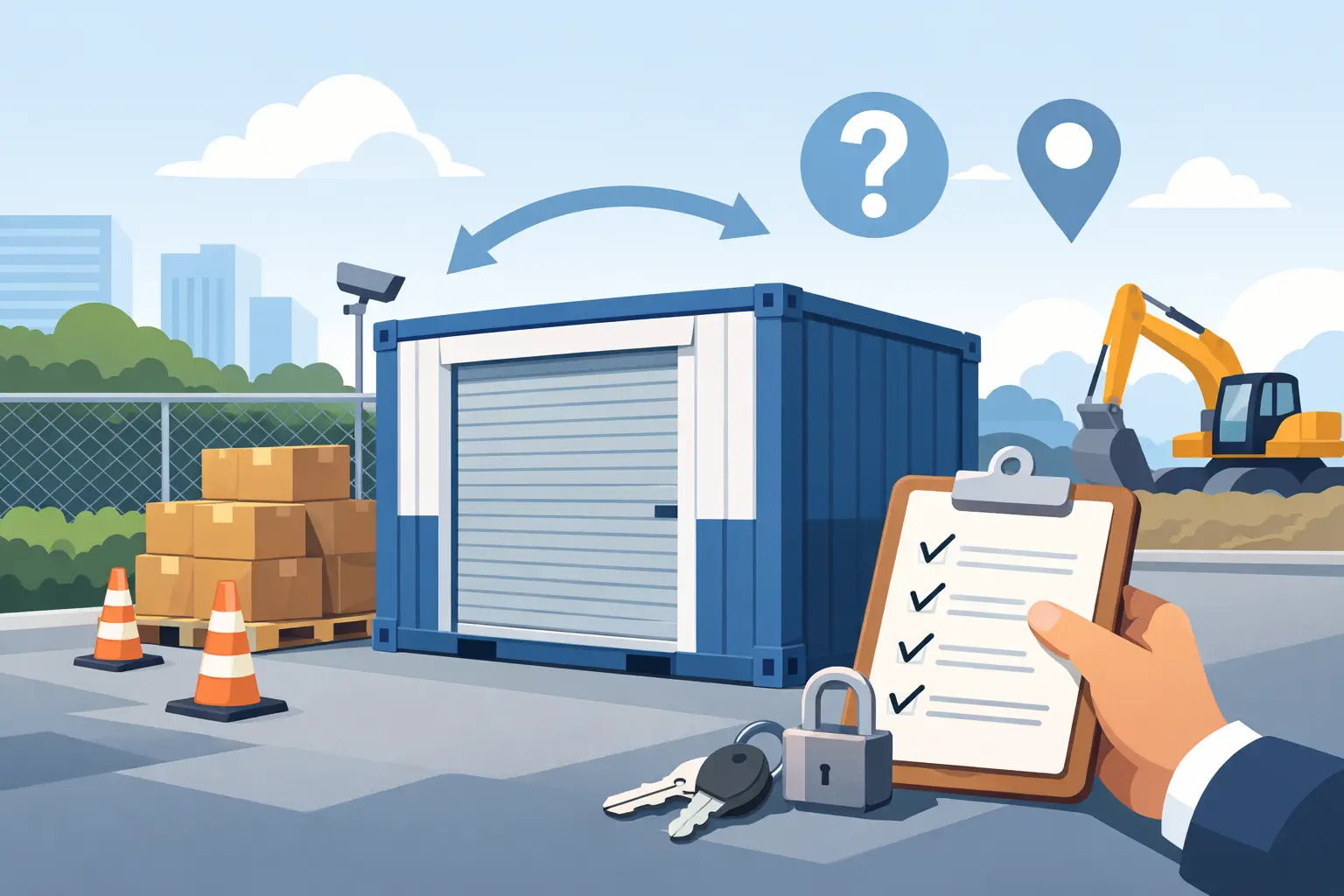
A quick site check prevents most delivery-day surprises. Start with the surface. A paved driveway is often ideal, but a firm, level gravel area may also work. Soft ground, steep slopes, or uneven areas can make placement difficult, especially after rain or during spring thaw.
Measure the space with the container’s 16-foot length and 8-foot width in mind. Leave room for the delivery vehicle to maneuver and for doors to open safely. Consider overhead clearance as well. Low tree branches, power lines, carports, and roof overhangs can affect where a container can be placed.
You should also think about daily access. A container that blocks every vehicle in the household may be workable for a short project but frustrating for a month-long renovation. If the unit will be used by a contractor or business team, choose a location that keeps traffic flow clear and allows workers to reach the container without creating a safety issue.
Rules, permits, and HOA requirements
Rules vary by community and property type. Some municipalities regulate the temporary placement of storage containers, particularly if they are placed on a street, near a sidewalk, or in a visible front-yard location. Rental properties, condominium communities, and homes with a homeowners association may have additional rules.
Before scheduling delivery, ask whether a permit is needed, how long a container may remain on the property, and whether there are placement restrictions. This is especially useful for longer renovations, commercial projects, and properties with limited parking.
Do not assume a container can be placed on the road because there is no room in the driveway. Street placement can require special permission and may not be allowed. A storage specialist can help you consider practical placement options, but approval from the relevant local authority or property manager is still your responsibility.
Driveway protection and delivery access
Customers often ask whether a storage container will damage a driveway. Proper delivery matters. Ground-level storage containers are designed to be placed and retrieved carefully, but every surface has different conditions. Older asphalt, decorative pavers, soft ground, and cracked concrete deserve extra attention.
Tell your provider about any site concerns before delivery. Share details about a narrow driveway, a sharp turn, a steep grade, or landscaping that limits access. Clear communication gives the driver the best chance to plan a safe placement and helps avoid unnecessary delays.
When Onsite Storage Makes the Most Sense
Onsite portable storage works best when you need frequent access to your belongings or supplies. It is particularly useful during a move with uncertain closing dates. Instead of rushing to have every box out by a fixed truck-return time, you can pack gradually, then arrange pickup or delivery when your timeline is confirmed.
It also makes sense for renovations. Keeping furniture in a weather-tight container can protect it from dust, paint, and work-zone clutter while freeing up rooms for contractors. You can keep seasonal items, boxed décor, and nonessential furniture out of the way without filling the garage or basement.
For home staging, onsite storage can help make a house feel more open without forcing you to give up access to personal items right away. For downsizing, it creates breathing room. You can sort, donate, sell, or pass along belongings without making every decision in a single weekend.
Businesses and construction crews use onsite units differently. A container can hold tools, supplies, inventory, or equipment close to where work happens. That can reduce repeated trips to a warehouse or storage facility. The trade-off is that you need a secure, accessible spot that does not interfere with customers, staff, deliveries, or active work areas.
When Offsite Storage May Be the Better Choice
Keeping a container onsite is convenient, but it is not always the best fit. If your driveway is too tight, your property rules do not allow a unit, or the container would interfere with parking and daily routines, offsite storage may be the easier answer.
Offsite storage is also helpful between homes. If you have sold one property but your new place is not ready, the container can be picked up and stored at a secure facility until you are ready for delivery. You still avoid the repeated loading that comes with traditional self-storage.
There is also a practical security consideration. A locked, weather-tight container is a strong storage solution, but some customers prefer having their belongings stored at a secure facility when they will be away for an extended period or when a vacant property has limited oversight. The right choice depends on access, space, timeline, and your comfort level.
Pack an Onsite Container for Easy Access
Packing with access in mind makes onsite storage much more useful. Load heavy, less-needed items first and place frequently used boxes or equipment closer to the door. Keep a clear path through the container if you expect to retrieve items during your project.
Use sturdy boxes, label each side, and avoid stacking fragile items under heavy ones. Furniture covers and moving blankets help protect larger pieces. Keep moisture-sensitive items elevated when possible, and do not store hazardous materials, perishable food, or items that are not permitted under your storage agreement.
For a renovation, group belongings by room so unpacking is easier later. For a contractor, organize tools and materials by trade or project phase. A little planning at the loading stage can save a great deal of searching when you need one specific item halfway through the job.
A Flexible Option for Local Moves and Projects
The value of portable storage is not just the container. It is the ability to choose what happens next. Keep it onsite while you pack, have it moved to your next address when you are ready, or arrange pickup for secure storage if your plans change.
Storbox Mobile delivers 16 x 8 ground-level units for customers across Belleville, the Quinte area, and surrounding communities. With flexible rental periods and local support, you can get storage where you want it, when you want it, without adding another truck rental or another loading cycle to your to-do list.
Before delivery, take a few minutes to assess your space, confirm any local rules, and think through how long you will need access. Once those details are handled, onsite storage can give your move, renovation, or business project the room to move forward on your schedule.
