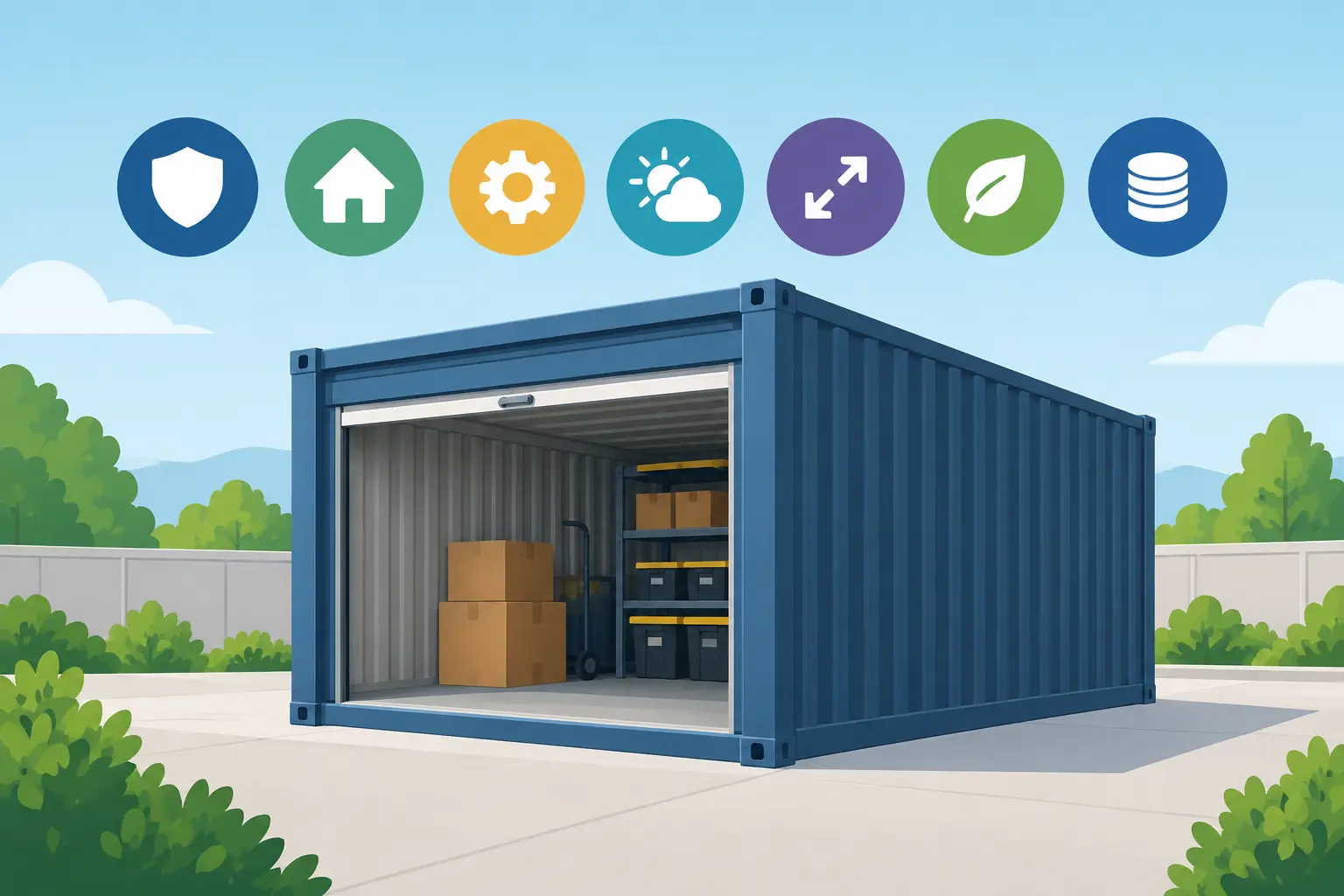
A move rarely happens in one clean day. Closing dates shift, renovations run long, and the new place may not be ready when the old one has to be cleared. The ground level storage container benefits become clear in those moments: you get a secure place to pack at your own pace, right where you need it, without making repeated trips to a storage facility.
For homeowners, renters, contractors, and small businesses, portable storage changes the usual storage routine. Instead of loading a truck, unloading at a facility, then loading everything again later, a container is delivered to your driveway, property, or jobsite. You load once. When you are ready, you can keep it on-site or arrange to have it picked up and stored at a secure facility.
1. Load at Ground Level, Not Up a Ramp
The most immediate benefit is simple: your belongings stay close to the ground. A ground-level container lets you walk items directly inside rather than carrying them up a narrow truck ramp or lifting them into a high cargo area.
That matters when you are moving heavy furniture, appliances, boxes of books, tools, or renovation materials. It can reduce strain and make loading feel more manageable for family members and friends helping on moving day. Dollies and hand trucks also work more easily on a level path.
Ground-level loading does not make every item light, so safe lifting still matters. Large safes, oversized appliances, and unusually heavy commercial equipment may need professional moving help. But for most household and jobsite items, removing the steep ramp is a real improvement.
2. Avoid the Double and Triple Handling
Traditional self-storage usually creates extra work. You pack your home, load a rental truck, drive to the facility, unload into a unit, then repeat the whole process when you need your belongings back. Every handling stage takes time and creates another opportunity for scuffs, dropped boxes, and damaged furniture.
With a portable container, the storage unit comes to you. You can fill it directly from your home, garage, office, or work area. If the container is picked up for facility storage, it stays loaded until you are ready to receive it again.
This single-load approach is especially useful during a local move with a gap between homes. It is also practical for people downsizing, helping a parent transition to a smaller home, or clearing rooms before listing a property for sale.
3. Pack on Your Schedule
Moving truck rentals tend to put the clock in charge. You may have a limited pickup window, a return deadline, mileage to consider, and a long day of loading before the truck must be brought back. That pressure can turn an already demanding move into a rushed one.
A storage container gives you breathing room. You can pack room by room over several days or weeks, depending on your rental arrangement. Start with seasonal items, extra furniture, decor, and anything you will not need immediately. Keep daily essentials in the house until closer to move day.
This slower approach can make organizing easier. Label boxes clearly, place frequently needed items near the door, and leave a path through the container as you load. You are not trying to make every decision in a single exhausting afternoon.
4. Keep Storage Where the Work Is Happening
On-site storage is one of the strongest ground level storage container benefits for renovation projects and businesses. When a container is placed at your property, your items remain close by instead of being locked away across town.
During a kitchen remodel, for example, you can move dishes, small appliances, dining furniture, and pantry supplies out of the work zone while keeping them available. During a basement renovation, you can protect furniture from dust and make room for tradespeople without permanently giving up access to your belongings.
Contractors and small business owners can use an on-site container for tools, materials, equipment, inventory, or seasonal supplies. The right setup reduces clutter in active work areas and limits the time spent driving back and forth for needed items. Before delivery, make sure there is enough accessible, reasonably level space for the container and that local property or site rules are understood.
5. Protect Belongings From Weather and Clutter
A good portable storage container provides a clean, enclosed space for items that should not sit in a crowded garage, damp basement, or exposed work area. Weather-tight construction helps protect packed belongings from rain, wind, and everyday outdoor conditions while they are stored.
It is still smart to pack for storage carefully. Use sturdy boxes, wrap furniture, keep mattresses covered, and avoid placing loose items where they can shift. Do not store hazardous, flammable, illegal, or perishable materials. If you are storing sensitive items such as fine art, antiques, electronics, or documents, ask about appropriate storage conditions before making a plan.
The container also helps restore order quickly. Clearing a room can make it easier to paint, repair flooring, stage a home, or simply regain usable space while life is in transition.
6. Choose On-Site Storage or Facility Storage
Not every customer needs the same arrangement. Some want their container outside the home for quick access during a renovation. Others need the container removed because they are moving, selling a property, or do not have space to keep it on-site.
Portable storage gives you a choice. Keep the loaded container at your location for as long as it serves the project, or arrange for pickup and storage at a secure facility. That flexibility is valuable when timelines are uncertain.
For example, a family may keep a unit on-site while preparing their Belleville home for sale, then have it stored while they wait for possession of their next home. A contractor may keep a container at a jobsite through a project, then schedule pickup when the work is complete. The storage plan can follow the job rather than forcing the job to fit a facility schedule.
7. Reduce the Cost and Hassle of a Truck Rental
Truck rentals can involve more than the advertised daily price. There may be mileage charges, fuel costs, insurance options, pickup and return timing, and the stress of driving a large vehicle you do not normally operate. You also need enough people available for loading, unloading, and another round of loading later.
A delivered storage container simplifies those logistics. The unit is brought to you and picked up when arranged, so you do not need to drive a rental truck or coordinate a separate trip to a storage center. For many moves, that convenience is as valuable as the physical storage itself.
Pricing still depends on the number of containers needed, delivery location, rental period, and whether storage is on-site or at a facility. Ask for a clear quote that covers the service you need. A local provider such as Storbox Mobile can also help you think through unit quantity, placement, timing, and the best option for your situation.
When Ground-Level Storage Is the Right Fit
Ground-level portable storage works best when you need flexibility, want to avoid repeated handling, or have a project that will take more than a day or two. It is a practical fit for moving between homes, renovating, staging, decluttering before a sale, downsizing, and keeping business or construction supplies close at hand.
It may not be the best option if your property has no suitable delivery space, building rules do not allow a container, or you need frequent access to a large number of items in a facility setting. In those cases, confirm access requirements before booking so there are no surprises on delivery day.
The easiest storage plan is usually the one that removes steps instead of adding them. If your move, renovation, or business project needs more room and less running around, a ground-level container gives you a straightforward place to start.
