A sofa that barely clears the doorway. A solid wood dresser that needs two people to move. Boxes of books that seemed manageable until you lifted the third one. Loading heavy belongings is one of the most demanding parts of a move, renovation, or downsizing project – especially when the work involves stairs, long carries, a rental truck ramp, or repeated loading and unloading.
The goal is not to prove how much you can carry. The goal is to get your belongings packed safely, protect your home, and avoid turning moving day into an injury or a damaged-item claim. A portable storage container can help because it gives you time to load at ground level and organize the space at your own pace.
Start With the Loading Path, Not the Heavy Item
Before moving anything large, walk the complete route from the room to the container. Measure doorways, hallways, turns, and any low overhead clearances. Remove rugs that could slide, secure pets in another room, and move smaller items out of the path. A clear route matters more than an extra pair of hands if that extra pair is forced to step around clutter.
Look closely at the surface underfoot. Wet grass, loose gravel, ice, uneven pavers, and a steep driveway can change a straightforward move into a risky one. If conditions are poor, wait until the path is safer or adjust the plan. Saving 20 minutes is not worth a fall, a strained back, or a dropped appliance.
Ground-level loading is a major advantage here. Traditional moving trucks often require lifting items up a ramp or carrying them to a raised cargo floor. With a container placed level and close to the home, you can reduce the distance and elevation involved in each carry.
Measure First and Make a Simple Plan
Do not wait until the container arrives to decide where the heaviest items will go. Sketch a rough floor plan or make a quick list of large pieces: appliances, couches, dressers, bed frames, tools, filing cabinets, and exercise equipment. Identify which items should be loaded first and which need to remain accessible.
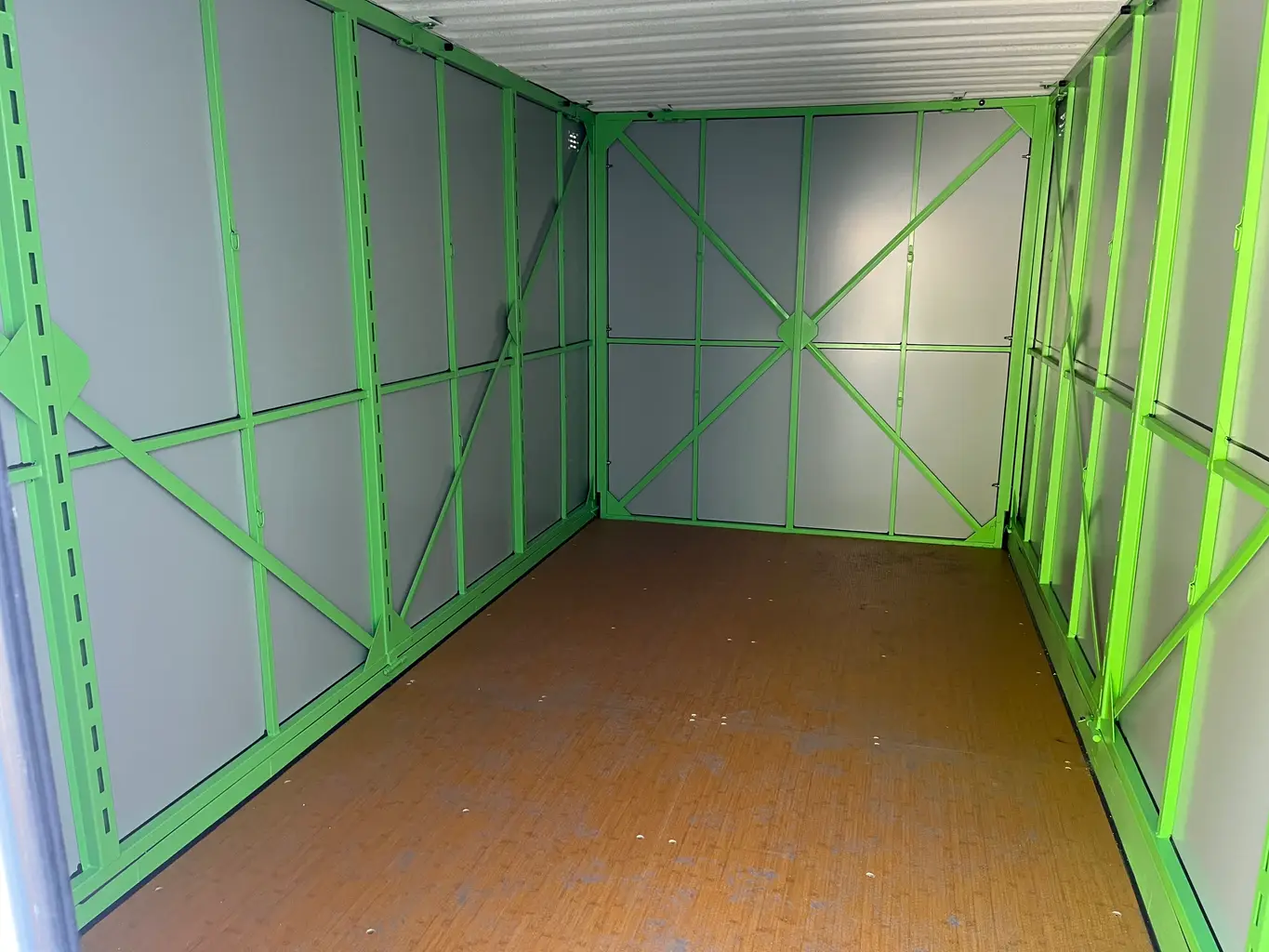
In most cases, large, heavy pieces belong along the walls of the container. This creates a stable perimeter and leaves room for lighter boxes toward the center and upper spaces. If you will need a specific item during a renovation or temporary move, place it near the door rather than burying it behind a wall of boxes.
How to Load Heavy Belongings Safely
Heavy items require control more than speed. Plan each lift before your hands touch the item. Decide who will lead, which direction the item will travel, where you will stop if someone needs a break, and how it will be set down inside the container.
Use proper lifting habits: keep the load close to your body, bend at the knees, keep your back as straight as possible, and avoid twisting while carrying weight. Turn with your feet instead. If an item is too heavy or awkward for the people available, do not force it. Bring in experienced help or use the right moving equipment.
For large or difficult items, basic equipment can make a meaningful difference. Furniture sliders can protect floors while helping shift a dresser or couch into position. A hand truck or appliance dolly can reduce the effort required for washers, dryers, and stacked boxes. Moving straps can improve control when used correctly. Blankets, stretch wrap, and corner protectors help prevent scratches, dents, and shifting during transport.
There is a trade-off with any moving tool: it is only helpful when used by someone who understands its limits. An appliance dolly is excellent for a refrigerator on a level surface, but it does not make stairs harmless. If a job includes narrow staircases, sharp turns, or bulky items with fragile components, professional moving help may be the safer choice.
Keep the Container Balanced
A container should be loaded evenly from front to back and side to side. Avoid building a tall stack of dense boxes on one side while leaving the other side mostly empty. Uneven loading makes it harder to move around safely while packing and can allow contents to shift during transportation.
Load the heaviest items first, placing them against the walls when possible. Keep tall items upright if they are designed to stand that way, and secure them with straps or tie-downs. Protect wood furniture and finished surfaces with moving blankets. Wrap glass doors, mirrors, and framed artwork separately, then keep them upright and protected from pressure.
Boxes deserve more attention than they usually get. A large box filled entirely with books, tools, or dishes becomes difficult to lift safely and may fail at the bottom. Pack dense materials in smaller boxes, and use larger boxes for lighter items such as linens, pillows, lampshades, and clothing. Clearly label boxes that are fragile, heavy, or needed first.
Protect Your Home While You Move
Damage often happens before an item reaches the container. Door frames get scraped, hardwood floors get gouged, and walls take the impact when a heavy dresser is turned too quickly. Cover vulnerable areas before the first major item moves. Cardboard, moving blankets, floor runners, and corner guards can provide inexpensive protection where it counts.
Take doors off hinges only when necessary and only if you can reinstall them safely. For some tight spaces, removing a door can provide the few extra inches needed for a couch or appliance. For other spaces, it creates more work without solving the real issue. Measure first instead of making assumptions.
It also helps to assign roles when several people are loading. One person can guide the route and watch for clearances while two others carry the item. Good communication prevents the common problem of one mover stepping backward without knowing what is behind them. Use short, clear directions such as “stop,” “down,” “left,” and “clear.”
Give Yourself Time Instead of Rushing the Job
The pressure of a truck rental window encourages people to load too quickly. That is when items get stacked poorly, boxes go unlabeled, and heavy furniture is moved after everyone is already tired. Portable storage changes the pace. You can load room by room, take breaks, and revise the layout as needed.
That flexibility is particularly useful during a renovation. You may need to clear a living room today, access tools tomorrow, and store furniture for several weeks. It also helps families who are moving between homes and do not want to complete every part of the move in a single exhausting day.
Storbox Mobile delivers weather-tight containers directly to homes, businesses, and job sites, then places them level with its Mule placement system. Rather than relying on a long, straight truck approach, the system can place a container more precisely in narrow driveways, tight properties, and other spaces where conventional delivery is difficult. We have optional dollies, packing blankets, tie down straps and locks available if requested. That means less carrying distance and a more practical place to load.
Know When to Ask for Help
Some belongings should not be treated as a weekend lifting challenge. Safes, pianos, commercial equipment, large gun cabinets, oversized stone tabletops, and very heavy appliances may require specialized movers. The same applies when you have a medical limitation, no reliable lifting partner, or a route involving multiple flights of stairs.
Asking for help is not an added complication. It can be the decision that protects your health, your belongings, and your schedule. You can still control the packing plan, container layout, and timing while leaving the highest-risk lifts to people with the proper equipment and experience.
A well-loaded container is not about cramming every inch full. It is about creating a stable, protected space where your belongings can remain secure until you are ready for them. Clear the path, load the heavy pieces with intention, and give yourself enough time to do the job right. That is how moving starts to feel manageable again.
