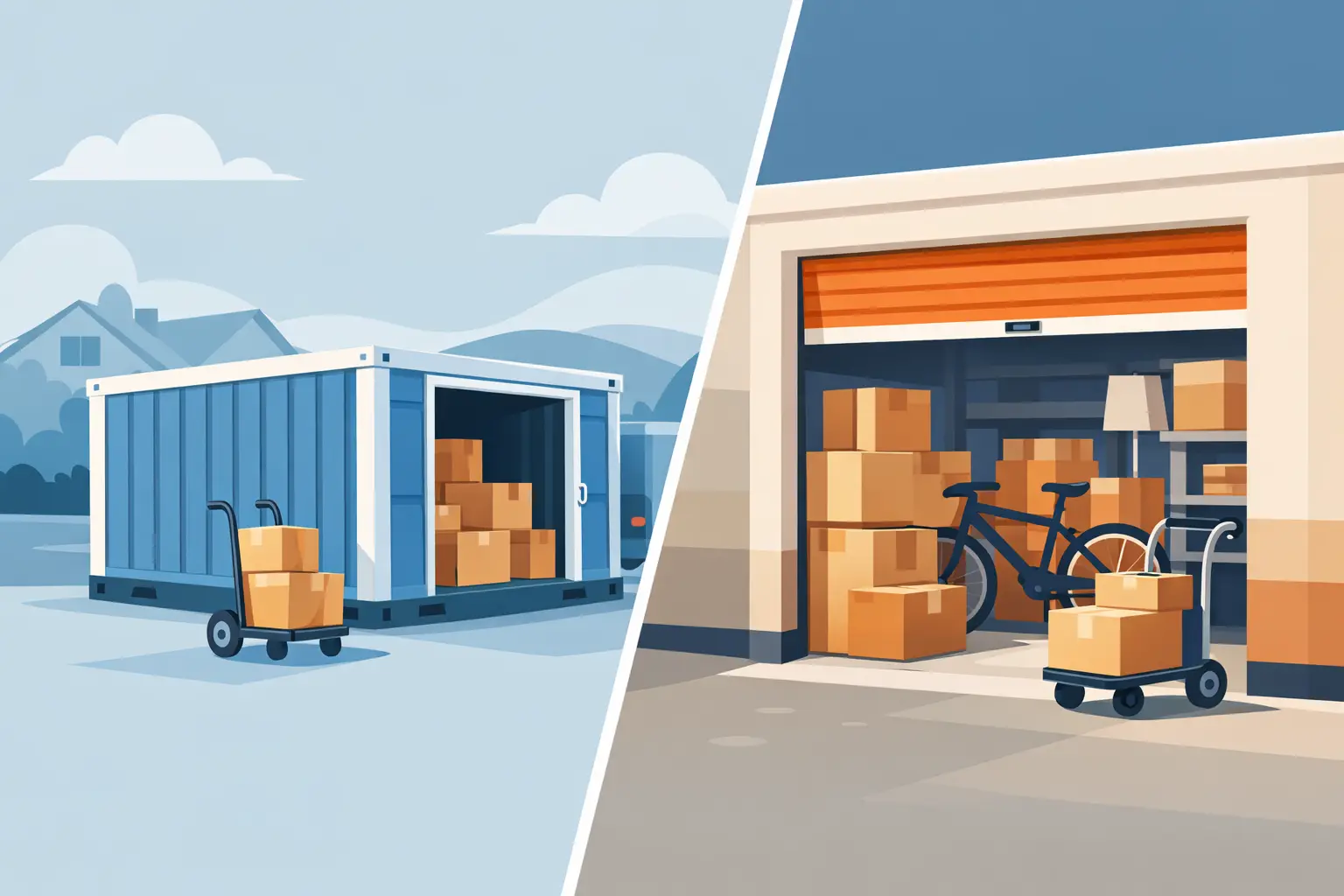
A moving container vs storage unit decision usually comes down to one question: do you want to bring your belongings to storage, or have storage brought to you? That difference affects your time, the amount of lifting involved, and how smoothly your move, renovation, or business project goes.
A traditional storage unit can be a practical choice when you need frequent access and do not mind driving to a facility. A mobile storage container is often the easier fit when you are moving, clearing space at home, or storing equipment right where you are working. Neither option is automatically better. The right choice depends on how you need to use the space.
Moving Container vs Storage Unit: The Main Difference
With a conventional storage unit, you rent space at a storage facility. You load your belongings into a vehicle, drive to the property, unload, and return when you need access. If you are moving homes, you may repeat that process again when it is time to take everything out.
A moving container is delivered to your driveway, property, or jobsite at ground level. You load it on your own schedule. When you are ready, the container can stay on-site for convenient access or be picked up and stored at a secure facility. For a move, it can also be delivered to your new location.
The key advantage is simple: your belongings are loaded once instead of being moved from house to truck, truck to storage unit, storage unit to truck, and then into the next home. Fewer handling steps can mean less physical strain and less chance of damage.
When a Traditional Storage Unit Makes Sense
A storage unit may be the better option if you need to visit your belongings often and prefer a dedicated facility location. For example, a small business owner who regularly picks up inventory, files, or supplies may appreciate being able to drive to a unit during the facility’s access hours.
It can also work well when there is no practical place for a container at your home or business. Tight urban lots, building restrictions, shared driveways, or limited parking may make delivery difficult. In those cases, a facility-based unit provides storage without taking up space on your property.
Traditional storage can be a straightforward choice for long-term items you rarely need, such as seasonal decor, extra furniture, or archived records. Just be realistic about the work involved. You will need a truck or several vehicle trips, and you will need to handle every item each time it moves.
When a Moving Container Is the Better Choice
A mobile storage container is designed for situations where timing matters and moving feels like more than a one-day job. Instead of rushing to load a rental truck before a return deadline, you can pack room by room as your schedule allows.
This works especially well for home moves with uncertain closing dates. You can load the container before possession day, keep it on-site if appropriate, or arrange for it to be stored until your new place is ready. That flexibility can take pressure off a move that already has plenty of moving parts.
It is also useful during renovations. A container in the driveway gives you a nearby place for furniture, appliances, and boxed belongings while crews work inside. Your items remain close enough to access without crowding another room, garage, or basement.
For contractors and small businesses, on-site storage can cut down on daily loading and unloading. Tools, materials, and equipment stay at the jobsite rather than being transported back and forth. A weather-tight container also helps keep the work area more organized.
Compare the Work, Not Just the Monthly Price
The listed monthly price is only one part of the cost. A storage unit may appear less expensive at first, but the total can rise once you add a rental truck, fuel, mileage, moving equipment, insurance, and time away from work or family responsibilities.
A moving container combines several logistics steps into one service. The container arrives, you load it at ground level, and it is picked up or left on-site based on your plan. That does not mean it is always the lowest-cost option for every situation. If you only have a few boxes and a vehicle that can carry them, a small storage unit may be more economical.
For a whole-home move, a large renovation, or a project with heavy items, it is worth comparing the full picture. Consider what it costs to rent a truck, how many trips you would need, and whether you would have to hire help for extra loading and unloading. Convenience has value, particularly when it eliminates an entire moving day.
Access and Timing Can Change the Answer
Access is one of the biggest trade-offs in a moving container vs storage unit comparison. A storage facility may provide access during set hours, while an on-site container is right outside your door. If you need to grab a tool, check a box, or move one piece of furniture during a renovation, on-site access is hard to beat.
On the other hand, a container stored at a secure facility is not meant for casual daily visits. It is a good option when you need your belongings stored safely between homes or while you clear space, but you do not need frequent access. Ask about access arrangements before choosing any storage service so there are no surprises later.
Timing matters, too. A truck rental requires you to work around a pickup and return window. A delivered container gives you more room to pack deliberately, which can be especially helpful for families, seniors downsizing, and business owners who cannot pause operations for a full day.
What Can Fit in a Mobile Storage Container?
A 16 x 8 mobile storage container can hold the contents of several rooms, depending on how you pack and what you are storing. It is well suited for furniture, appliances, boxed household goods, renovation materials, business inventory, and jobsite equipment.
Packing carefully makes a major difference. Place heavy items on the floor, distribute weight across the container, and keep frequently needed items near the door. Use moving blankets or protective wrap for wood, glass, and finished surfaces. Fill gaps with boxes or soft items so furniture does not shift during transport.
Before delivery, measure the driveway or placement area. You need a reasonably level, accessible location with enough clearance for the delivery vehicle. If you live in a neighborhood with restrictions or have concerns about placement, ask before booking. A local moving and storage specialist can help you plan for the site and the timing.
Choose Based on Your Project, Not a One-Size-Fits-All Rule
Choose a storage unit when you have limited space for delivery, need regular facility access, or are storing a smaller number of items long term. Choose a moving container when you want to avoid truck rental, pack at your own pace, reduce repeated lifting, or keep storage where you are working.
For many households in the Belleville and Quinte area, the most practical option is the one that removes the most friction from an already busy transition. Storbox Mobile delivers secure, ground-level containers where you want them, when you want them, with flexible options for on-site or facility storage.
Before you commit, map out your actual moving path. Count the trips, lifting, rental deadlines, and access needs involved. The option that lets you load once, stay organized, and keep your schedule under control is usually the one that will make the whole project feel more manageable.
