If you have ever typed storage container delivery near me while staring at a half-packed house, a garage full of renovation dust, or a jobsite with tools scattered everywhere, you are probably not looking for theory. You want a simple answer to a practical problem: how do you get secure storage brought to your property without turning the process into another full-time job?
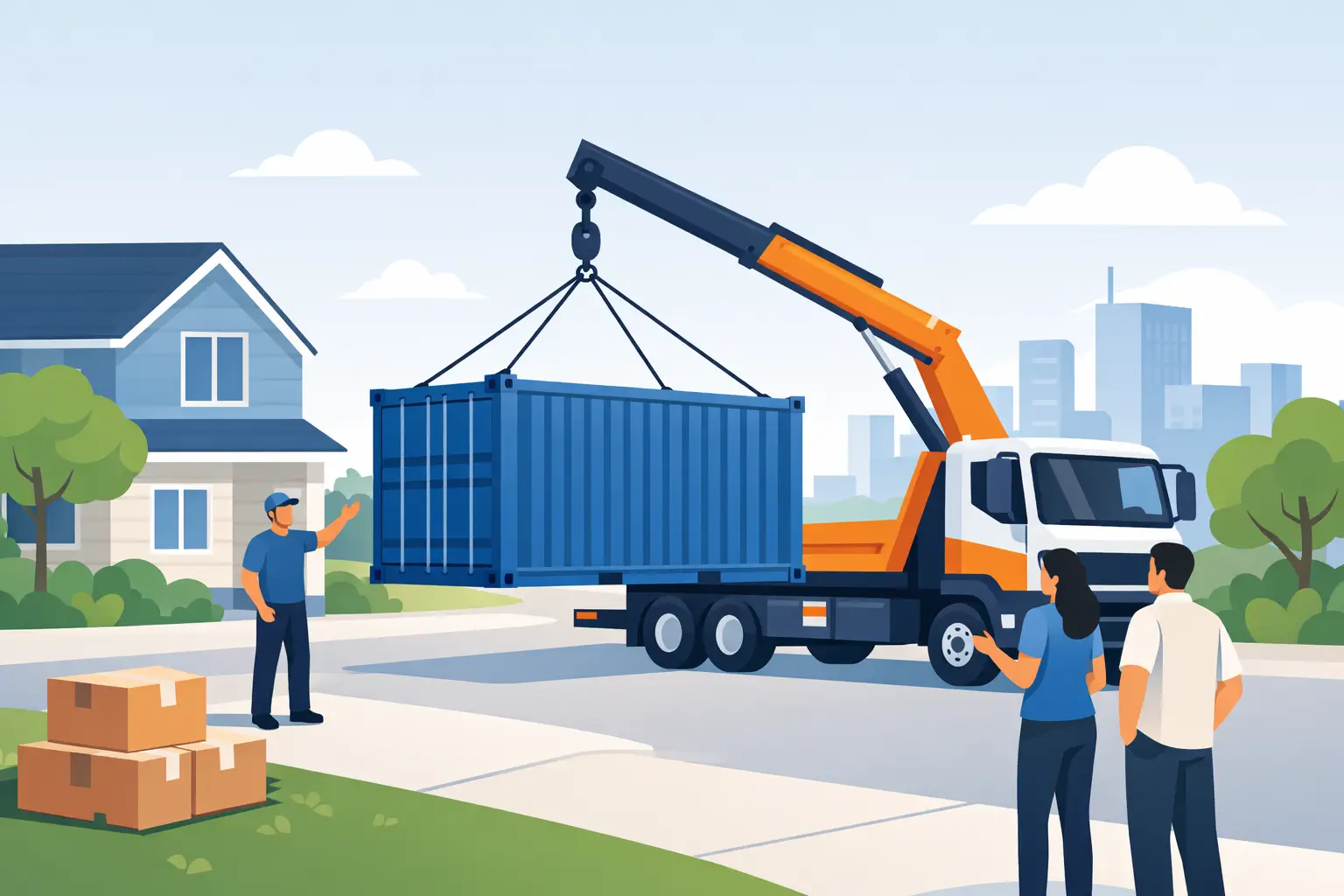
That is exactly why portable storage has become the easier option for many homeowners, renters, and small businesses. Instead of renting a truck, rushing through a loading window, and unloading everything again at a facility, you have a container delivered to you. You load it on your own time. Then you keep it on-site or have it picked up and stored elsewhere.
What storage container delivery near me actually means
When people search for storage container delivery near me, they are usually trying to solve one of a few common situations. They may be moving and need time between homes. They may be renovating and need to clear rooms without filling the driveway with tarps and boxes. They may be downsizing, staging a home for sale, or managing overflow for a business or construction project.
The key difference from traditional self-storage is location and timing. With portable storage, the container comes to your home, business, or jobsite. That cuts out one of the biggest pain points in storage: moving your belongings multiple times.
A ground-level container also changes the experience. You are not walking up a ramp into a truck or trying to fit a schedule around a facility’s office hours. You pack where you are, when it works for you.
Why local delivery matters more than most people think
A search for nearby container delivery is often really a search for predictability. Local service tends to matter because delivery timing, route familiarity, and responsive support can make a stressful project much easier.
If a company knows the area, it is usually better equipped to handle real-world details like rural driveways, tighter residential streets, jobsite access, and delivery timing that fits around your day. That is especially helpful when your plans are already shifting, which is common during moves, renovations, and construction work.
There is also the service side. A locally owned and operated provider is more likely to offer direct communication and practical guidance instead of pushing you through a call center script. When you need to adjust timing, ask about placement, or add more storage, that kind of support matters.
How the delivery process usually works
The basic process is simple, which is a big part of the appeal.
First, you request a quote based on your location and how many containers you need. Pricing usually depends on delivery distance, rental length, and whether the unit stays on your property or goes to a secure storage facility after loading.
Next, the container is delivered to your location. Ground-level placement makes loading easier for furniture, boxes, business inventory, tools, and equipment. You do not need to coordinate a truck rental or ask everyone to show up for a single frantic moving day.
After delivery, you load at your own pace. Some customers need only a few days. Others need longer because renovations run behind schedule, closing dates move, or projects expand. Flexible rental terms are valuable here because real life rarely fits into rigid timelines.
Once the container is packed, you usually have two options. You can keep it on-site for easy access, or you can have it picked up and stored at a secure facility until you need it returned.
When a portable container makes the most sense
This option is not just for moving. In fact, some of the best use cases have nothing to do with changing addresses.
For homeowners, portable storage works well during remodeling projects, flooring replacements, kitchen updates, basement cleanouts, and home staging. It creates usable space without forcing you to pile furniture into every spare room.
For families in transition, it can help bridge awkward timing. If your closing dates do not line up, or you are combining households, a container gives you breathing room without requiring repeated loading and unloading.
For businesses and contractors, on-site storage can keep tools, materials, records, or overflow inventory close at hand. That convenience saves time, but it also helps keep projects organized. A secure, weather-tight unit on location is often more practical than sending staff back and forth to an off-site facility.
What to look for when comparing providers
Not all portable storage services are equally useful. The container itself matters, but the service around it matters just as much.
Start with the basics: size, security, and condition. A common size for residential and business use is 16 x 8, which gives enough room for many moving and storage needs without taking over the entire property. You also want a weather-tight container that protects contents from rain and changing conditions.
Then look at how delivery and pickup are handled. Ground-level loading is a major advantage because it reduces lifting strain and makes bulky items easier to move. Ask how placement works and whether the company can position the unit where it will be most convenient.
Flexibility is another big factor. If a company only works within narrow windows or uses fixed rental terms, that can create problems fast. Good service means the container fits your schedule, not the other way around.
Finally, pay attention to pricing clarity. Quote-based pricing is normal because distance and rental needs vary, but the process should still feel straightforward. You should know what affects the total and what options are available before you commit.
The trade-offs to know before you book
Portable storage is often the simpler option, but it is still worth looking at the trade-offs.
If you have very limited driveway space or strict property rules, placement may require more planning. Some urban or tightly packed properties can be harder to service than open suburban or rural locations. That does not mean delivery is impossible, only that site access needs to be discussed early.
On-site storage is convenient, but not everyone wants a container at home for an extended period. If appearance matters because you are showing a house or managing a customer-facing business, off-site storage after loading may be the better fit.
There is also the question of frequency of access. If you need daily access to inventory or equipment, on-site use usually makes the most sense. If you are storing items for a gap between moves, off-site pickup may be more practical.
How to get the right container for your situation
The best choice depends less on the search term and more on what you are trying to accomplish.
If you are moving, think about timing first. Are you loading over a weekend, or over several weeks? Do you need storage only until move-in day, or longer? Those answers shape the rental period and pickup plan.
If you are renovating, think about where the unit should sit so it stays accessible without interfering with contractors. If you are using it for a business or jobsite, think about security, daily access, and how close the container needs to be to the work area.
It also helps to be realistic about volume. People often underestimate how much space furniture, seasonal items, inventory, and boxed household goods will take. A quick conversation with a moving and storage specialist can save you from ordering too little capacity or paying for more than you need.
A better question than near me
Storage container delivery near me is a useful place to start, but it is not the only question worth asking. A better question is whether the service will actually make your project easier.
That means looking for a provider that offers dependable delivery, flexible timing, secure containers, and support from someone who understands the logistics. In the Belleville and Quinte area, that practical, local approach is exactly why many customers choose Storbox Mobile Belleville.
When storage shows up where you need it, when you need it, the whole job feels more manageable. That is often the difference between a stressful project and one that finally starts moving in the right direction.
