
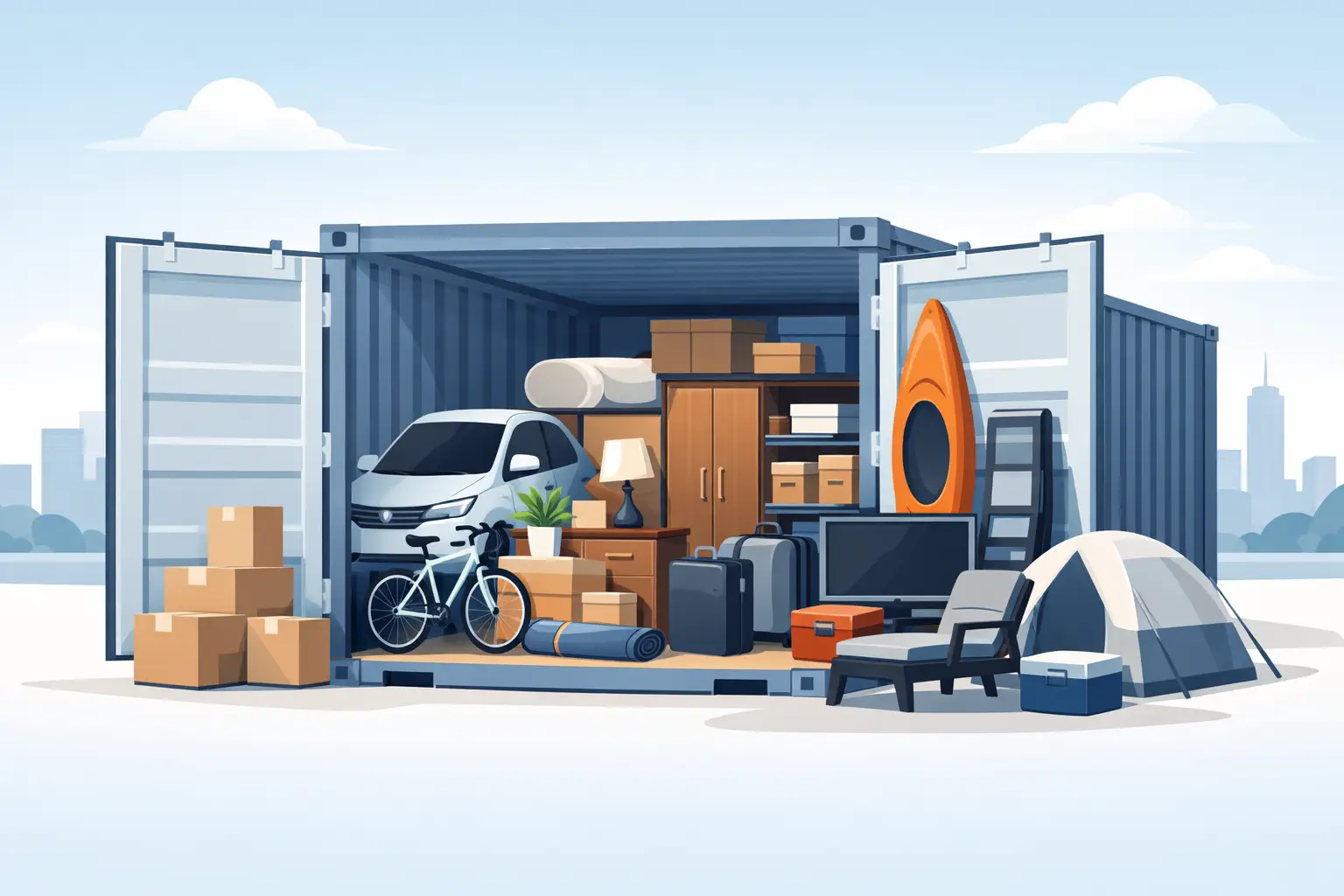
A storage unit can sound spacious on paper, but the real question is what fits in a 16×8 container once you start looking around your home. For most households, this size is a practical middle ground: large enough to handle the contents of several rooms, but compact enough to place conveniently on many driveways, properties, and jobsites.
A 16 x 8 container has a 128-square-foot footprint. How much it holds depends on the interior height, the size and shape of your furniture, and, most of all, how you load it. A carefully packed container can hold far more than one loaded in a hurry. The goal is not to squeeze in every last item. It is to protect your belongings, keep essential items accessible, and avoid needing a second container unexpectedly.
What Fits in a 16×8 Container for a Move?
A 16×8 portable storage container is often a good fit for a one- or two-bedroom home, apartment, condo, or a partial household move. It can also work well for a larger home when you are storing only selected rooms during a renovation, staging a property for sale, or making space while you sort and downsize.
As a general planning example, one container may hold the furniture and packed boxes from a living room, one or two bedrooms, a dining area, and a portion of a kitchen. Think sofas, chairs, mattresses, dressers, tables, boxed household goods, lamps, and seasonal items. If your home is full of oversized furniture, heavy workshop equipment, large appliances, or an extensive garage collection, capacity changes quickly.
A typical load might include a sofa and loveseat, a dining table with chairs, two mattress sets, a few dressers or shelving units, a television stand, side tables, and 40 to 70 well-packed moving boxes. The exact number of boxes is never a promise because box sizes and furniture profiles vary widely. A sectional sofa, king-size bed frame, or large entertainment center uses space differently than standard furnishings.
For a three-bedroom house, a 16×8 container can still be useful, but it is more likely to be part of a plan rather than the entire solution. You may need a second unit if you are moving all furniture, appliances, garage items, and outdoor equipment at once. That is especially true when there is little time to sort, donate, sell, or discard unwanted items before packing.
Think in Rooms, Not Just Boxes
The easiest way to estimate your needs is to walk through your home room by room. Start with large items because they set the capacity limit. Boxes can fill gaps, but a bulky sofa or upright freezer cannot.
Living room and dining room
A standard living room is usually manageable in a 16×8 unit. Sofas, chairs, coffee tables, end tables, lamps, media consoles, rugs, and packed décor can be loaded efficiently when soft furniture is protected and tables are disassembled where possible.
Dining rooms are also straightforward. Remove table legs when practical, wrap chair frames, and use the space beneath or around a tabletop for flat-packed items. Keep glass shelves, mirrors, and artwork upright rather than laying them flat under weight.
Bedrooms
One or two bedrooms commonly fit alongside shared living-area furniture. Mattresses should be stored on their sides only when they can be properly supported, while bed frames should be disassembled and hardware labeled in sealed bags. Dressers can often stay assembled, but emptying drawers reduces weight and prevents damage during handling.
Bedroom closets can take up more room than expected. Clothing, shoes, linens, books, and personal items add up fast. Use consistently sized boxes whenever possible, since they stack securely and make better use of the container walls.
Kitchen, garage, and basement items
Kitchen contents are dense and heavy, not necessarily bulky. Pack dishes, pantry goods, and small appliances in smaller boxes that can be lifted safely. Avoid loading every heavy kitchen box in one area of the container.
Garages and basements are the wild cards. Tool chests, tires, shelving, lawn equipment, bins, sports gear, and project materials can consume a surprising amount of space. Before booking, decide whether every garage item truly needs to move or whether some can be sold, donated, recycled, or safely disposed of.
Renovation and Home-Staging Storage
A 16×8 container is not only for moving. It is an effective way to clear space without repeatedly hauling belongings to a storage facility and back.
During a kitchen renovation, for example, a container can hold your dining furniture, small appliances, pantry overflow, and nearby living-room items while work is underway. For flooring, painting, or drywall projects, you can clear entire rooms and protect furniture from dust, traffic, and accidental damage.
For home staging, many sellers use portable storage to remove extra furniture, personal décor, seasonal clothing, and overflow from closets. A cleaner, less crowded home is easier for prospective buyers to picture as their own. Because the container is delivered to your property, you can load at a pace that works around showings and preparations.
Business and Construction Uses
Small businesses and contractors often need storage where the work is happening, not across town. A 16×8 container can hold boxed inventory, display fixtures, records, tools, non-hazardous materials, and equipment that needs to stay organized and out of the way.
On a construction or renovation site, the unit can provide secure storage for tools, supplies, and protected materials. It is also useful during an office refresh, retail renovation, or seasonal inventory changeover. Before loading business property, consider who needs access and which items should stay closest to the door. Daily-use materials should not be buried behind long-term storage.
Do not store hazardous, flammable, perishable, illegal, or otherwise restricted items. If you are unsure about a particular item, ask before packing. The same applies to unusually heavy equipment or materials that may affect safe loading and transport.
How to Make One Container Go Further
Packing strategy matters as much as container size. Start by placing heavy, sturdy furniture and boxed items along the walls. Spread weight evenly from side to side so the load remains stable. Fill hollow furniture, such as dressers or cabinets, with light and soft items only if drawers and doors are secured.
Take apart beds, tables, shelving, and other furniture that can be safely disassembled. Wrap wood, metal, and upholstered pieces with moving blankets or suitable protective materials. Use mattress covers, corner protectors, and sturdy boxes for fragile items. This preparation protects your belongings and creates cleaner stacking surfaces.
Build tiers as you load. Put heavier boxes on the bottom and lighter boxes on top, keeping stacks square and stable. Fill open spaces with cushions, bags of linens, or other soft items so things cannot shift. Tie-down points and straps can help secure sections of the load, especially furniture that is tall or narrow.
Leave a narrow access path only if you will need items during storage. That path costs capacity, so it is best reserved for situations where you truly need regular access. If the container is being loaded for a direct move, pack it tightly and place items needed first at the door end.
When a Second Container Makes More Sense
A second unit can be a better value than trying to force a difficult load into one container. Consider additional space if you are moving a fully furnished three- or four-bedroom home, storing major appliances, combining two households, or including a packed garage, shed, workshop, and outdoor furniture.
It can also make sense when you need to separate belongings. One unit might hold items headed to your new home, while another holds belongings you plan to keep in storage after the move. Separating renovation materials from household furniture can make access safer and more organized, too.
If you are on the fence, make a quick inventory of your largest pieces, estimate your box count, and include the garage and basement honestly. A moving and storage specialist can help you choose a setup that fits the job instead of leaving you short on loading day.
Common Questions About 16×8 Storage Containers
Can a 16×8 container hold a two-bedroom apartment?
In many cases, yes. It is often suitable for a typical two-bedroom apartment or condo, particularly when furniture is standard-sized and the load is packed efficiently. Very large sectionals, king bedroom suites, extensive storage lockers, or bulky hobby equipment may require more space.
Will a 16×8 container fit in my driveway?
Placement depends on your driveway length, width, surface, overhead clearance, turning room, and local conditions. Measure the intended area and look for low branches, wires, parked vehicles, gates, and tight corners before delivery. A level, accessible location makes delivery and loading easier. Storbox Mobile superior delivery system utilizes a remote controlled mule and is able to place a unit in difficult property locations like beside or behind your house with the unit loaded and unloaded level. Other providers need a straight 70 foot area and slide the unit off a truck.
Is it better to store on-site or have the container picked up?
It depends on your project. On-site storage is convenient when you need regular access during a renovation, cleanup, or business project. Facility storage may be a better choice when you need your driveway or jobsite clear, or when your move timeline changes. Storbox Mobile can help you plan around the option that works best for your schedule.
The best way to use a 16×8 container is to plan for the belongings you need to keep, not simply the belongings you happen to have. A quick room-by-room inventory before delivery gives you more control, more usable space, and a far less stressful loading day.
