A Friday afternoon office move can quickly become a Monday morning problem. Desks may be disconnected, files may be split between vehicles, and the one item someone needs first can end up at the back of a truck. Mobile storage for office relocation gives your team a more controlled way to move: load at ground level, keep the container at your location while you prepare, then have it moved when the new space is ready.
For small businesses, professional offices, retail operators, and project teams, that flexibility can be the difference between a short transition and several days of disruption. You are not forced to load everything in one rushed window, return a rental truck, unload at a storage facility, and load it all again later. You pack once, at your own pace.
Why office moves get complicated so fast
An office relocation is rarely just about moving furniture. It involves technology, paperwork, supplies, inventory, signage, equipment, and the personal belongings of every employee. Some items need to stay accessible until the last day in the old office. Others need to arrive first at the new one.
Traditional moving methods can make those different timelines harder to manage. A moving truck is usually booked for a specific day and time. A self-storage unit requires a trip to the facility, then another trip when it is time to move out. If your new lease start date changes, renovations run long, or internet installation is delayed, your plan can unravel quickly.
A portable storage container creates a buffer between leaving one location and fully opening the next. It gives you a secure place to stage items without filling hallways, meeting rooms, or employee vehicles.
How mobile storage for office relocation works
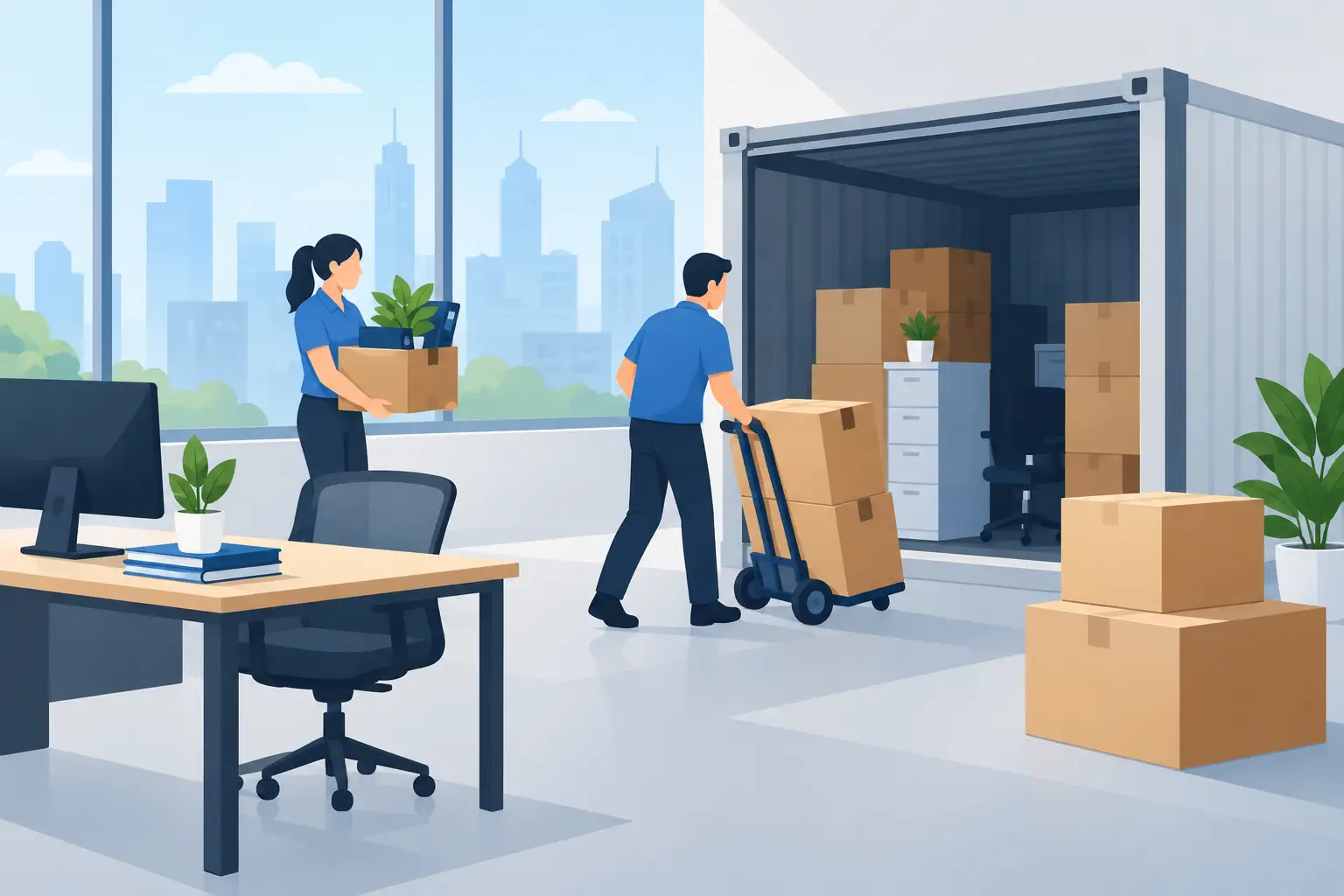
The process is straightforward. A container is delivered to your current office, job site, or approved loading area. Your team loads it when it makes sense for the business. Once it is ready, the container can remain on-site for short-term access or be transported to a secure storage facility until your next location is available.
When the new space is ready, the container is delivered there for unloading. This eliminates repeated handling. Furniture, cartons, and supplies are loaded once and unloaded once, which saves labor and reduces opportunities for damage or misplaced items.
Storbox Mobile provides 16 x 8 weather-tight containers that are well suited to office furniture, boxed records, seasonal materials, non-perishable supplies, and many types of business equipment. A moving and storage specialist can help determine how many containers fit the size of your move and the timing of your relocation.
Keep the workday moving while you pack
The biggest advantage is not simply storage. It is control over the schedule.
With a container outside the office, employees can pack departments in stages instead of trying to do everything after hours in one exhausting push. Start with archived files, surplus furniture, promotional materials, and seasonal inventory. As moving day approaches, pack items that are used less often. Leave daily workstations, essential files, and critical equipment for last.
This approach is especially useful for businesses that cannot pause operations completely. A bookkeeping office may need client records available through the end of the month. A contractor may need tools and materials accessible while changing yard locations. A retail business may need to keep receiving inventory until its new back room is set up.
Packing in phases also gives you time to label clearly. Mark cartons with both the department and the destination area, such as “Reception – New Front Desk” or “Sales – Office 3.” At the new location, unloading becomes a placement job rather than a search job.
Build a simple move sequence
Before delivery, identify what should be loaded first and what needs to come out first. That may sound obvious, but it prevents a common mistake: packing the new office’s essential setup items behind old furniture and long-term archives.
Place heavy furniture and sturdy cartons toward the front and along the sides. Keep a clear path where possible. Load frequently needed items last so they are easiest to reach. Electronics should be packed in labeled, protected boxes and kept dry, while confidential records should be boxed, sealed, and tracked by the person responsible for them.
A container is not a substitute for an inventory plan. For valuable equipment, legal files, or specialized devices, assign ownership and record where each item is packed. The right storage method makes organization easier, but your labels and packing order still matter.
Placement matters more than most people expect
Not every office has a wide, empty lot with easy truck access. Downtown properties, medical offices, small commercial buildings, and construction sites often have narrow driveways, tight turns, slopes, parked vehicles, and limited loading space.
That is where delivery equipment matters. Conventional roll-off trucks often need a long, straight approach to slide a container off the back. In a confined location, that can limit where the container goes and create concerns about uneven placement or property damage.
Storbox Mobile uses the Superior Mule Placement System for precise, level placement. The operator walks the compact, self-propelled unit into position rather than relying on a long straight truck approach. That helps place the container where it is useful to your team, whether that means near a side entrance, in a restricted lot, or at a job site with limited room to work.
Before booking, consider the available access, overhead clearance, surface condition, and where employees or customers park. A quick conversation about the property can prevent avoidable surprises on delivery day.
When on-site storage is the right choice
Keeping the container at your current or new office works well when the move is happening in stages. It is practical during a renovation, a lease overlap, a furniture replacement project, or a workplace reorganization. You can access stored items without making repeated trips across town.
On-site storage is also useful when you are clearing space before a move. A container can hold boxed files, unused desks, display fixtures, or temporary supplies while painters, flooring crews, or installers work inside.
There are trade-offs. You need an appropriate placement area, and you should think about access around the container during business hours. If space is tight or you do not need regular access, off-site storage may be the better fit.
When secure off-site storage makes more sense
A gap between locations is common. Your current lease may end before your new build-out is complete, or the new office may be waiting on permits, furniture delivery, or utility work. In that situation, the container can be picked up and stored at a secure facility until you are ready.
This option keeps your property clear while protecting the contents from weather and unnecessary handling. It also avoids the expense and hassle of moving everything into a warehouse or self-storage unit only to move it again shortly afterward.
For businesses across Belleville, Prince Edward County, and the surrounding area, local support can make a real difference when a moving date shifts. Flexible rental terms are valuable because office relocations do not always follow the original calendar.
Plan for the details that protect your downtime
A successful office move starts several weeks before the container arrives. Notify vendors and clients of the address change, schedule internet and phone installation early, and confirm who is responsible for keys, alarms, access cards, and loading access. If you have a building manager, ask about delivery restrictions, elevator reservations, parking rules, and approved loading times.
It also helps to separate items that should not go into storage. Perishable food, hazardous materials, flammable products, and anything prohibited by your storage provider need another plan. For computers and sensitive electronics, use appropriate packing materials and avoid leaving equipment exposed to extreme conditions longer than necessary.
Most importantly, give employees clear instructions. Tell them what they are packing, when it needs to be ready, and how every box should be labeled. A calm, organized move is easier to achieve when nobody is guessing where their equipment went.
The right relocation plan does more than move desks from one address to another. It gives your business room to make decisions, adapt to delays, and arrive at the new office ready to work.
