A storage container can make a move, renovation, or job site far easier – until delivery day arrives and someone asks whether it is allowed to sit there. Container permit requirements are not the same everywhere, and the answer often depends on one simple detail: Will the container be placed on private property or in a public right-of-way?
For most customers, a quick call to the local municipality before booking prevents the kind of last-minute delay nobody needs. A permit may not be required at all, but it is better to confirm the rules before the container is on the truck.
What Determines Container Permit Requirements?
Municipal rules for portable storage containers usually focus on placement, length of stay, safety, and neighborhood impact. A container in a private driveway may be treated differently than one placed at the curb, on a sidewalk, or partially in a road allowance.
Local zoning rules may also affect where a container can sit on a property. Some areas have minimum setbacks from property lines, limits on how long temporary structures can remain outside, or rules that protect access for emergency vehicles. Downtown locations, shared parking areas, and properties governed by a homeowners association can have additional restrictions.
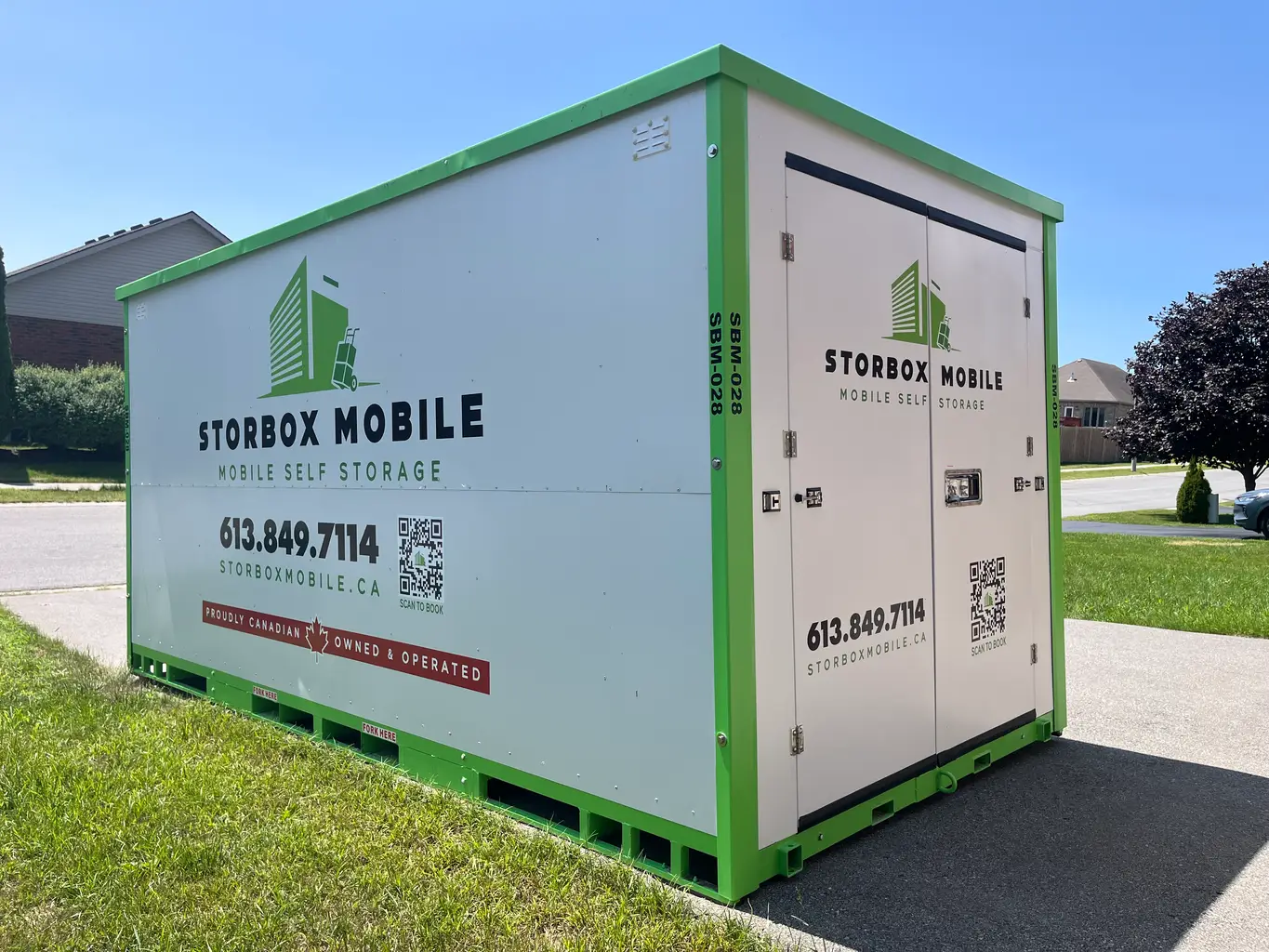
The container itself matters, too. A 16 x 8 mobile storage unit needs a clear, stable location with room for safe placement and access. It should not block a fire route, hydrant, sidewalk, neighbor’s driveway, utility box, or visibility at an intersection.
A permit is not necessarily a sign that your plan is complicated. It is simply the municipality’s way of ensuring temporary use of property remains safe and orderly. Requirements can also change, so do not rely only on what a neighbor did last year.
Containers on Private Property
Placing a portable storage container entirely on your own driveway or other private, accessible area is often the simplest option. In many communities, short-term placement for moving or renovation work is allowed without a permit. Still, “often” is not the same as “always.”
Before arranging delivery, ask your local planning, zoning, bylaw, or code enforcement office whether a temporary portable storage container is permitted at your address. Explain that it is for short-term storage and provide the unit dimensions and anticipated rental dates. This gives the office the details it needs to provide a useful answer.
You should also confirm whether the property has rules beyond municipal regulations. Condominium boards, homeowners associations, landlords, and property managers may limit driveway storage or require written approval. Renters should obtain the property owner’s permission before scheduling delivery.
Even when no permit is needed, placement still needs to work in the real world. Consider gate widths, low branches, overhead wires, parked vehicles, soft ground, slopes, and the turning space needed to reach the chosen spot. A container that technically fits on a driveway may not be practical if it blocks daily parking or prevents garbage collection.
Storbox Mobile uses a Mule placement system that keeps the container level while it is moved into position. That can make a meaningful difference on narrow driveways, tight turns, and confined properties where a conventional roll-off delivery would need a long, straight approach. It does not replace local approval, but it can give you more workable placement options once you know where the container is allowed to go.
Container Permit Requirements for Streets and Curbs
If any part of the container will sit on a street, curb lane, sidewalk, boulevard, public parking space, or road allowance, assume a permit may be required. This is commonly called a right-of-way, street occupancy, or encroachment permit. The name varies by municipality, but the purpose is similar.
Public-space permits are more likely to involve conditions. The municipality may limit the number of days, require reflective markings or safety cones, specify where the container can sit, or prohibit placement near intersections, transit stops, hydrants, and storm drains. Some areas require proof of insurance or a traffic plan for commercial projects.
Do not place a container in the street first and plan to sort out permission later. The result can be a complaint, a fine, a required removal, or disruption to your move or project. Permit processing can take several business days and sometimes longer during busy construction seasons.
If curb placement is your only practical choice, apply early and ask clear questions. Find out the allowed dates, maximum container size, placement restrictions, required safety measures, and whether parking spaces must be reserved in advance. Keep any approval available during the rental period.
How to Prepare Before You Request Approval
A permit application is easier when you have the details ready. Start with the delivery address, the proposed container location, and the dates you expect to use it. A simple photo of the driveway or curb area can help the municipal office understand the site.
Be prepared to share the unit dimensions: 16 feet long by 8 feet wide. Measure the planned location, including clearance for doors to open and room for people to safely carry items in and out. If the unit will be near a road, measure its distance from the curb, corner, fire hydrant, and driveway entrances.
It is also smart to think through daily access. Will family members need to park? Does a contractor need room for materials? Will a delivery truck, snowplow, garbage truck, or emergency vehicle still be able to pass? A good placement plan protects your schedule and helps avoid neighbor concerns.
For renovation and construction projects, check whether the container will be used only for secure storage or also as part of an active work area. A permit for a container does not automatically cover dumpsters, fencing, equipment, or parking restrictions. Each item may have separate rules.
Give Yourself Time Before Delivery
The best time to check permit requirements is before selecting a delivery date. A few minutes of planning gives you time to adjust the location if the first option is not approved. It also helps your storage provider prepare for the safest, most efficient placement.
When speaking with a municipal office, ask whether an application must be submitted by the property owner, tenant, contractor, or container provider. Ask about fees, processing times, and whether the permit needs to be displayed. Write down the name of the person you spoke with and any reference number they provide.
If you are moving on a fixed closing date, do not leave this until the final week. A private-driveway placement may be easy to arrange, while a street permit can take longer and may depend on local events, road work, or seasonal restrictions.
Common Questions About Portable Storage Permits
Do I need a permit for a storage container in my driveway?
It depends on your local rules, how long the container will remain there, and the type of property. Many municipalities allow short-term driveway placement, but you should confirm before delivery. Approval from a landlord, condo board, or homeowners association may still be required.
How long can a container stay on my property?
Temporary-use limits vary widely. Some municipalities allow a few days or weeks, while others may permit longer periods for active construction. If you need on-site storage for an extended renovation or business project, ask about renewal options before the original period expires.
Can a container be placed on a sloped driveway?
A slope does not automatically prevent placement, but it must be assessed for safe loading, access, and stability. Ground conditions, surface material, overhead clearance, and the direction of the slope all matter. A level-placement system can help position a unit precisely, but the final location still needs to be safe and permitted.
Who is responsible for the permit?
Usually, the customer or property owner is responsible for confirming and obtaining permits, especially for use of public streets or sidewalks. Check the local process and ask your storage provider what delivery details they can supply for your application.
A little advance planning keeps portable storage convenient – where you want it, when you want it, without an avoidable interruption on delivery day.
