A house can hold decades of family history, and an estate cleanout rarely happens on a convenient timeline. When a property needs to be prepared for sale, emptied after a move to assisted living, or cleared following a loss, portable storage for estate cleanouts creates something families often need most: room to make decisions without rushing.
Instead of hauling everything away in one exhausting weekend or filling every room with sorting piles, a storage container can sit right at the property. You load it as you sort, keep what needs more consideration protected, and deal with donations, sales, and disposal at a manageable pace.
Why estate cleanouts need more than a dumpster
A dumpster has a place when materials are clearly headed for disposal. Estate cleanouts are different. Many items need to be sorted before anyone can decide what belongs in the trash, what should be donated, what has value, and what family members may want to keep.
That decision-making process takes time. Documents may need review. Furniture may need to be cleaned or photographed for sale. Family members may live out of town and need a chance to look through personal belongings. If the home is being listed, you may also need to clear rooms quickly while keeping selected items safe until the next step is clear.
A portable storage container gives you a designated, weather-tight space for those items. It helps separate the keep, sell, donate, and discard decisions without turning the garage, porch, or spare bedroom into a long-term holding area.
How portable storage for estate cleanouts works
The process is straightforward. A mobile storage unit is delivered directly to the home, where you want it and when you need it. You load belongings on your schedule, without making repeated trips to a storage facility or loading a rental truck only to unload it again.
Once the container is loaded, there are two practical options. Keep it on-site if you need regular access while the cleanout continues, or arrange for it to be picked up and stored at a secure facility. That flexibility can make a major difference when a real estate closing date changes, a home needs staging, or family decisions take longer than expected.
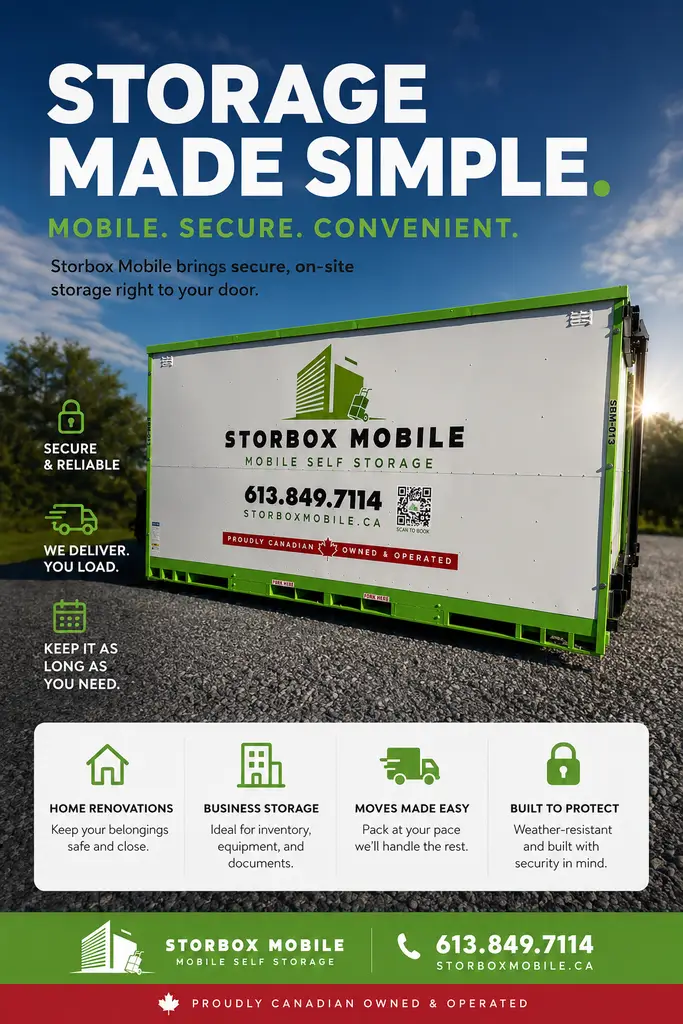
Storbox Mobile uses 16-by-8-foot mobile storage units that are delivered at ground level. That means less lifting than a high truck bed and no need to navigate a loading ramp for every box, chair, or appliance. You pack once, at your own pace.
Delivery placement matters more than most people expect
Estate properties do not always have wide, open driveways. There may be mature trees, narrow access, slopes, parked vehicles, or a tight turn near the house. Conventional roll-off delivery trucks often require a long, straight approach to slide a container into place, which can limit where it goes.
The Superior Mule Placement System is designed for tighter properties. The unit stays level during placement, and the operator can walk it carefully into position. This gives homeowners more placement flexibility while helping protect driveways and making loading easier. For homes in Belleville, Prince Edward County, and surrounding communities where lot layouts can vary widely, that practical difference matters.
Give every item a temporary home
The hardest part of an estate cleanout is often not the physical work. It is making decisions when there are too many items in front of you and too little room to sort them.
Start by creating simple zones inside the home: immediate keep, family review, donate, sell, recycle, and discard. As each room is sorted, move the immediate keep items and boxed family-review items into the storage container. The home becomes easier to assess, and you avoid mixing important belongings with material that is ready to leave.
Use clear labels on every box, including the room it came from and a short description of the contents. If several relatives are involved, take photos of boxes or larger pieces before loading them. This can prevent confusion later, especially when the container is moved off-site before final distribution.
For documents, photographs, jewelry, medications, and small valuables, use a separate plan. Important paperwork and irreplaceable items are usually better kept with the estate representative or in a secure, immediately accessible location rather than packed deep in a container.
When on-site storage is the better choice
Keeping the container at the property works well when the cleanout will happen over several days or weeks. It is particularly useful if family members are arriving at different times, if you are holding a sale, or if contractors need the house cleared before repairs, painting, or staging can begin.
On-site storage also makes it easier to work room by room. You can clear a bedroom, then move to the basement or garage without filling hallways with boxes. That creates safer walking paths and gives cleaners, real estate professionals, or contractors room to do their work.
There is a trade-off. A container in the driveway takes up space, so consider where visitors, service providers, and family members will park. Before delivery, identify utility access points, low branches, gates, and any area that should remain clear. A moving and storage specialist can help plan a placement that fits the property.
When off-site storage makes more sense
Pickup and facility storage can be the better option when the property must be vacant for listing photos, showings, a closing date, or a landlord inspection. It is also helpful when the home has been sold but the family is not ready to make final decisions about everything inside.
This approach is especially practical for estate items that need to be divided among relatives later. Instead of moving boxes from the home to a truck, then to a storage unit, and then back into another vehicle, you load once. The container is picked up and held securely until you are ready for the next step.
Off-site storage is not always necessary. If you expect to sort and distribute items within a few days, keeping the container at the home may provide easier access. The right choice depends on your timeline, the property’s condition, and how many people need to be involved.
Avoid the common cleanout rush
Many families underestimate how long an estate cleanout will take. A house that appears manageable can contain closets, sheds, attics, file cabinets, and basement storage that have not been touched in years. Rushing often leads to missed paperwork, accidental disposal of meaningful items, and costly last-minute truck rentals.
A few practical habits can keep the process moving. Work one room at a time. Set aside a small table for items that need immediate review. Schedule donation pickups before the final deadline, not the day before. If you plan to sell furniture or household goods, photograph and list those items early, since buyers may not work on your preferred schedule.
It also helps to set a decision deadline for uncertain items. A portable container gives you breathing room, but it should support the process rather than extend it indefinitely. Decide how long the review period will last, then make a final plan for what remains.
A simpler way to handle a difficult transition
An estate cleanout can be physically demanding and emotionally heavy at the same time. The goal is not to make every decision painless. It is to remove unnecessary pressure from an already difficult job.
With a ground-level container delivered where you need it, you can clear the property in an orderly way, protect the belongings that matter, and avoid loading the same items over and over. Ask for a free quote early in the process, then give yourself the space to handle the home one careful room at a time.
