A basement can feel like the obvious place to put extra belongings. It is already part of the house, it is close by, and it does not appear to add another monthly bill. But when you compare offsite storage versus basement storage during a move, renovation, or downsizing project, the basement is not always the easier or safer choice.
The right answer depends on what you are storing, how long you need the space, how often you need access, and whether you can realistically carry everything downstairs and back up again. For many households, the real question is not simply where items will fit. It is whether storage helps create breathing room or turns the basement into another unfinished project.
Offsite Storage Versus Basement Storage: Start With Access
Basement storage wins on immediate access. If you need seasonal decorations, a spare chair, or a box of records every few weeks, having those items downstairs can be convenient. You do not need to schedule a visit or drive anywhere to retrieve them.
That convenience has limits. A basement stairway is rarely designed for moving bulky furniture, large appliances, or stacks of heavy boxes. Getting a sofa, treadmill, freezer, or business inventory downstairs can take several people and create a real risk of scraped walls, damaged steps, or injuries. The same challenge returns when it is time to move those items back out.
Offsite storage is often a better fit when belongings can stay packed for months, when you are between homes, or when you are clearing rooms for a renovation. You make fewer trips through the house, keep living areas open, and separate stored items from the belongings you use every day.
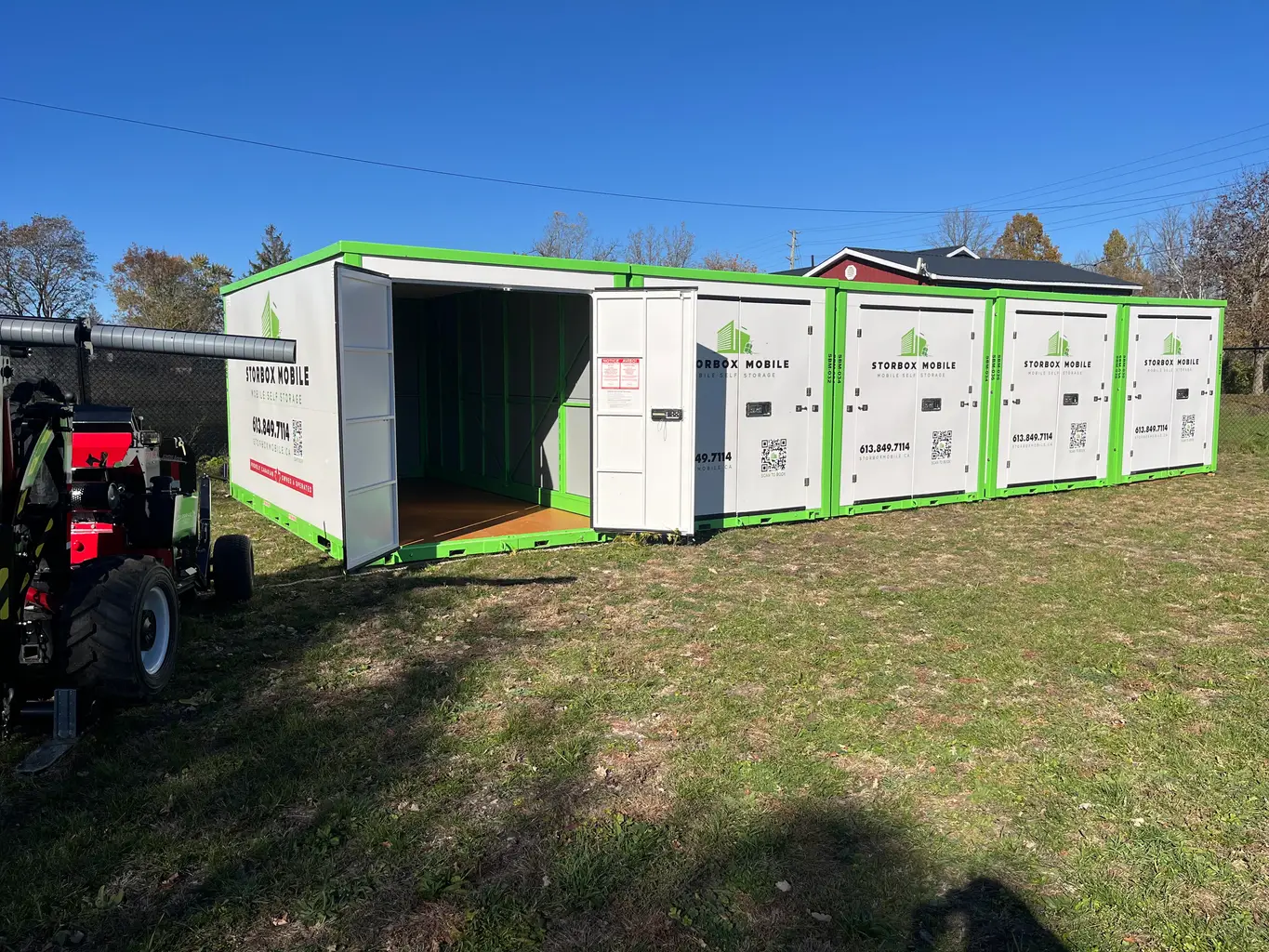
There is also a middle option that works well for many local moves and projects: portable storage. A container can be delivered to your property so you load at ground level, on your own schedule. When you are ready, it can stay on-site or be picked up for storage at a secure facility. That avoids the repeated loading that comes with filling a basement, emptying it into a truck, and unloading it again at a storage location.
Consider the Condition of Your Basement
A clean, dry, finished basement with steady temperatures can handle some storage well. It may be perfectly suitable for plastic bins of holiday items, tools, or household goods that are not especially sensitive to moisture.
Many basements, however, have conditions that make long-term storage less dependable. Humidity, condensation, minor foundation leaks, sump pump issues, and temperature swings can affect cardboard boxes, books, wood furniture, photographs, electronics, fabrics, and documents. Even a small amount of water can ruin items stored directly on the floor.
Pests are another consideration. Basements can have gaps around utility lines, windows, and foundation areas. Once boxes are stacked tightly against walls, it becomes harder to spot an issue early or clean around the stored items.
Offsite storage does not eliminate every storage risk, but a weather-tight storage container gives belongings a dedicated, enclosed space away from the moisture and traffic of the home. It also makes it easier to keep household overflow from spreading into areas that should remain useful.
If you choose the basement, use sturdy bins where possible, keep belongings raised off the floor, leave some space around walls, and avoid storing irreplaceable items in a damp or unfinished area. Those steps help, but they also add work and do not change the basic limitation of the space.
The Cost Is More Than the Monthly Price
Basement storage may seem free because you already own or rent the space. Yet it can carry hidden costs. When the basement becomes a catch-all, you lose room for a workshop, play area, home gym, laundry organization, or future finished space. A packed basement can also make a home feel harder to maintain and harder to show when preparing to sell.
There is a time cost as well. Moving boxes down narrow stairs takes longer than loading at ground level. If a renovation is underway, storing materials and furniture downstairs can mean moving them again to make room for contractors, inspections, or cleanup.
Offsite storage has a direct rental cost, so it is not automatically the best-value choice for every box. It makes the most financial sense when it prevents a larger problem: needing to rush a move, renting a truck more than once, delaying a renovation, paying for moving labor twice, or losing usable space in the home for months.
For a short project, flexible rental terms matter. You should not have to commit to a long storage arrangement when the timeline is still changing. Ask about delivery, pickup, facility storage, transportation, and any access considerations before choosing a provider. A clear quote makes it easier to compare the true cost with the work of doing everything yourself.
When a Basement Is the Better Choice
A basement is usually the practical choice for items you use regularly and can safely carry in and out. Think of seasonal clothing, pantry overflow, hobby supplies, a few labeled bins, or tools needed for household maintenance.
It can also work when your storage need is small. If you are holding a handful of boxes for a few weeks and your basement is dry, organized, and accessible, paying for another storage solution may not be necessary.
The key is to set a boundary. A basement works best as active household storage, not as a permanent parking lot for furniture and boxes you have not touched in years. If you cannot walk through it, find what you need, or use the space for its intended purpose, the storage plan is likely costing more than it saves.
When Offsite Storage Makes More Sense
Offsite storage is especially useful during major life changes. A family waiting for a closing date may need belongings out of the home without committing to moving them into the next house too soon. Someone downsizing may need time to decide what to keep, sell, donate, or pass along. A homeowner renovating a kitchen or main floor may need furniture protected and completely out of the work zone.
It is also a smart choice for home staging. Clearing excess furniture, personal collections, and packed closets can make rooms feel larger and easier for buyers to picture as their own. Sending those items downstairs may not help if buyers will inspect the basement too.
Small businesses and contractors face similar challenges. Inventory, supplies, displays, tools, and jobsite materials can take over valuable work space quickly. A dedicated storage container can keep equipment closer to the job without forcing workers to make repeated trips to a distant facility.
For customers with a tight driveway or limited site access, placement matters as much as the container itself. Storbox Mobile uses a ground-level 16-by-8-foot unit and a Mule placement system that keeps the container level while it is positioned. That makes a practical difference on narrow driveways, tight turns, sloped properties, and confined jobsites where a conventional roll-off delivery may be difficult.
Think About Loading Once, Not Three Times
The biggest advantage of portable offsite storage is often simple: you can load your belongings once. With traditional self-storage, you load a vehicle or truck at home, unload at the facility, then repeat the process when you are ready to retrieve everything. With basement storage, you may still need to move it all again when the house sells, the renovation starts, or the clutter becomes too much.
Ground-level loading is easier on the body and more forgiving of a changing schedule. You can pack room by room, keep a clear path through the home, and avoid the pressure of finishing everything in a single truck-rental window. For families balancing work, school, contractors, or a closing date, that control can be worth far more than it first appears.
Before deciding, walk through your basement honestly. Consider the stairs, the humidity, the amount of usable space you would give up, and whether the stored items are likely to stay there longer than planned. If storage is meant to make a transition easier, choose the option that leaves your home calmer, your belongings protected, and your next step manageable.
