A retail back room fills up fast. A contractor’s tools end up scattered between trucks. A renovation forces office furniture into hallways and inventory into places it should not be. Temporary business storage solutions give you a practical way to clear space without stopping the work that needs to happen.
For many local businesses, the right answer is not a long-term warehouse lease or multiple trips to a storage facility. It is a secure container delivered to the property, where your team can load it at ground level and access what they need on their schedule.
When Temporary Business Storage Makes Sense
Business storage is most useful when the need is real but not permanent. You may be remodeling a storefront, preparing for a busy season, relocating offices, or managing supplies for a jobsite. In each case, the priority is the same: protect your materials while keeping them close enough to use.
A portable storage container can work especially well for contractors, property managers, retailers, event organizers, and small offices. It gives you a designated place for equipment, boxed records, fixtures, seasonal displays, furniture, and surplus inventory without taking over valuable working space.
The benefit is not just extra square footage. It is fewer interruptions. When supplies are organized in one secure location, your team spends less time searching, driving across town, or moving the same items more than once.
On-Site Storage vs. Off-Site Storage
The best storage setup depends on how often you need access to your items. On-site storage is a strong choice when tools, materials, or inventory need to stay within reach. A contractor working through several project phases, for example, can keep supplies at the jobsite instead of loading them into a truck each evening.
Off-site storage makes more sense when you need to clear the property completely. A business moving to a new location may need a temporary place for desks, files, shelving, and equipment while lease dates or renovations are being finalized. The container can be loaded at your location, then picked up and stored at a secure facility until you are ready for it.
There is a trade-off. On-site storage offers immediate access, but it uses space on your property. Facility storage frees up the site, but you will need to arrange access when you need your contents. A good storage provider should help you choose based on your timeline, work area, and how frequently your team needs the items inside.
Why Mobile Storage Reduces Disruption
Traditional self-storage often creates more work than business owners expect. You rent a truck, load it, drive to a facility, unload it, and repeat the process when it is time to retrieve everything. That is time away from customers, projects, and payroll-producing work.
With mobile storage, the container comes to you. Your staff can load over several days or weeks rather than rushing through everything in one rental-truck window. Ground-level loading also makes heavy equipment, boxed inventory, and office furniture easier to handle than a steep truck ramp.
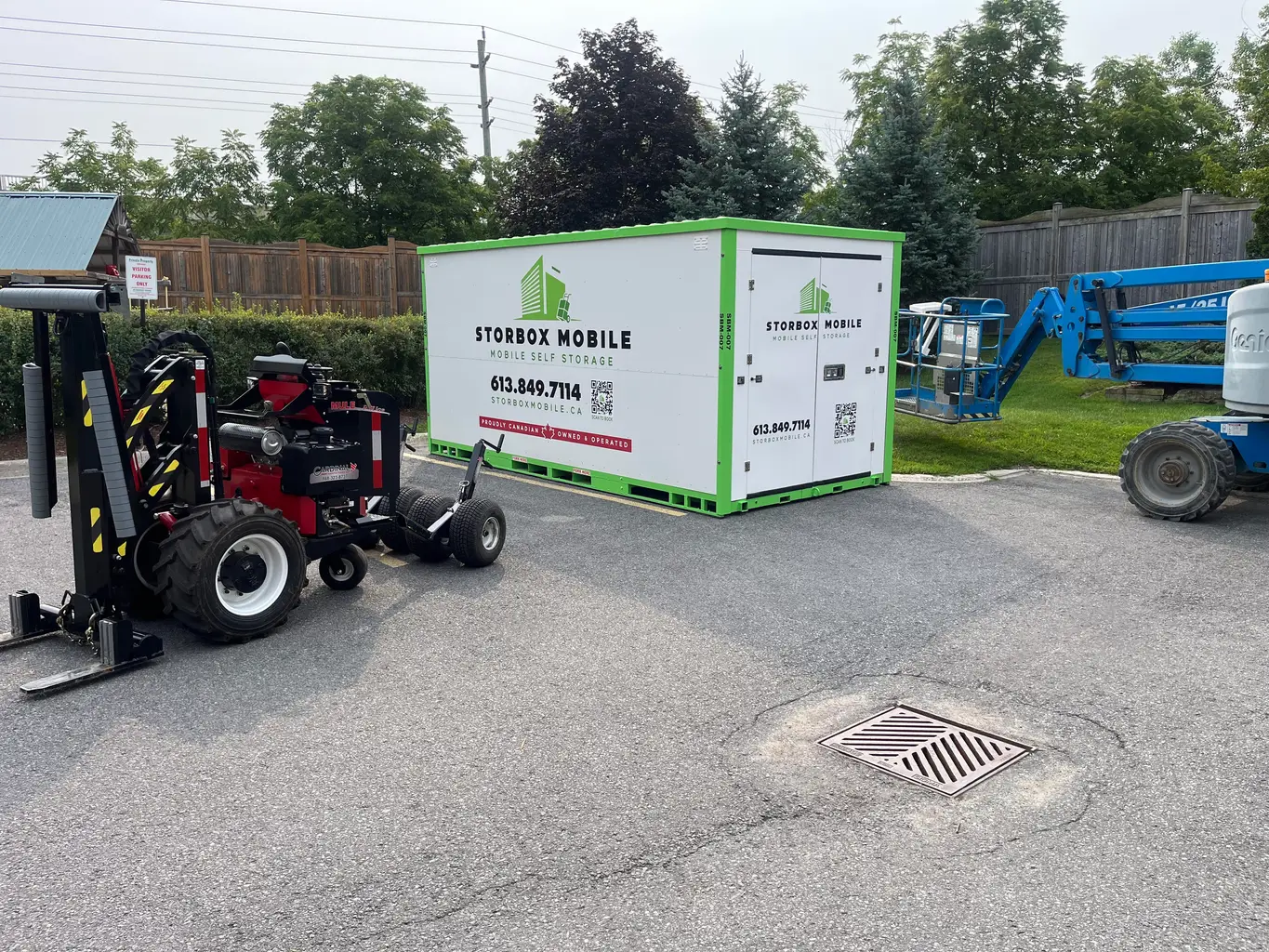
Storbox Mobile provides 16 x 8 weather-tight storage containers that can be delivered where you need them, when you need them. You load once, then choose whether the container remains on-site or is picked up for storage. For a busy operation, avoiding repeated loading and unloading is often the biggest advantage.
What to Store in a Business Container
A well-planned storage container can hold more than most businesses initially expect. The key is storing items that are taking up needed space but do not need to be displayed, installed, or used every hour of the day.
Common examples include:
- Construction tools, power equipment, fasteners, and building materials
- Retail inventory, seasonal merchandise, displays, and packaging supplies
- Office desks, chairs, files, electronics, and furniture during a move or renovation
- Restaurant furniture, small equipment, supplies, and décor during an update
- Event materials, signage, tables, tents, and promotional items
Before loading, separate items by how often they will be needed. Put daily-use tools and supplies near the doors. Place long-term items, such as archived files or off-season displays, toward the back. This simple step prevents a storage container from becoming a place where important items disappear.
How to Keep Your Container Organized
Temporary storage works best when it is treated like a small extension of your workplace. Start by making a basic inventory of what goes inside. It does not need to be complicated. A shared spreadsheet or a written list posted inside the office can help your team know what is stored and where.
Use sturdy, clearly labeled boxes for smaller items. Label more than one side, since boxes may be stacked. Keep equipment and larger materials grouped by project, department, or customer job. If you will access the container frequently, leave a center aisle rather than filling every inch from wall to wall.
For jobsite storage, make a habit of returning tools at the end of each day. That protects your equipment and gives the next crew a cleaner start. For retail or office storage, review the contents before the container is removed from your site so no essential item gets stored by accident.
Security and Weather Protection Matter
Business items are valuable, whether they are expensive tools, customer records, inventory, or office equipment. Temporary storage should never mean taking chances with the condition of those items.
Choose a container that is solid, weather-tight, and positioned on level ground. Keep the doors closed and secured whenever the container is not in use. If the container stays on-site, decide who has access and make that responsibility clear. A simple key-control process can prevent confusion when several employees, subcontractors, or vendors are involved.
Not every item belongs in a storage container. Avoid storing hazardous materials, perishable goods, illegal items, or anything prohibited by your storage agreement. If you are unsure about a particular item, ask before loading it. It is much easier to plan properly than to deal with a problem later.
Plan Around Your Project Timeline
The best temporary business storage solutions fit the actual pace of your project, not an arbitrary deadline. Renovations run long. Deliveries get delayed. A move can shift by a week because a new space is not ready. Flexible rental terms give you room to adjust without rebuilding your entire plan.
When requesting a quote, be ready to discuss the delivery address, the space available for placement, the number of containers you may need, and your estimated rental period. If access is tight or the property is especially busy, schedule delivery for a time that minimizes interference with customers, crews, and deliveries.
Businesses across Belleville, Prince Edward County, Quinte West, and nearby communities often need storage that can adapt to changing project conditions. Working with a locally owned and operated provider can make a difference when delivery timing, site access, or rental needs change quickly.
A Practical Way to Create Room to Work
Temporary storage should make your operation easier, not add another task to your team’s list. The right container gives your business a clean place to put what is in the way, a secure place to keep what matters, and the flexibility to retrieve it when the time is right.
Whether you are clearing a retail floor, staging a renovation, or keeping a jobsite organized, start with the space you need now and the work you need to keep moving. A free quote can help turn that immediate problem into a straightforward plan.
