
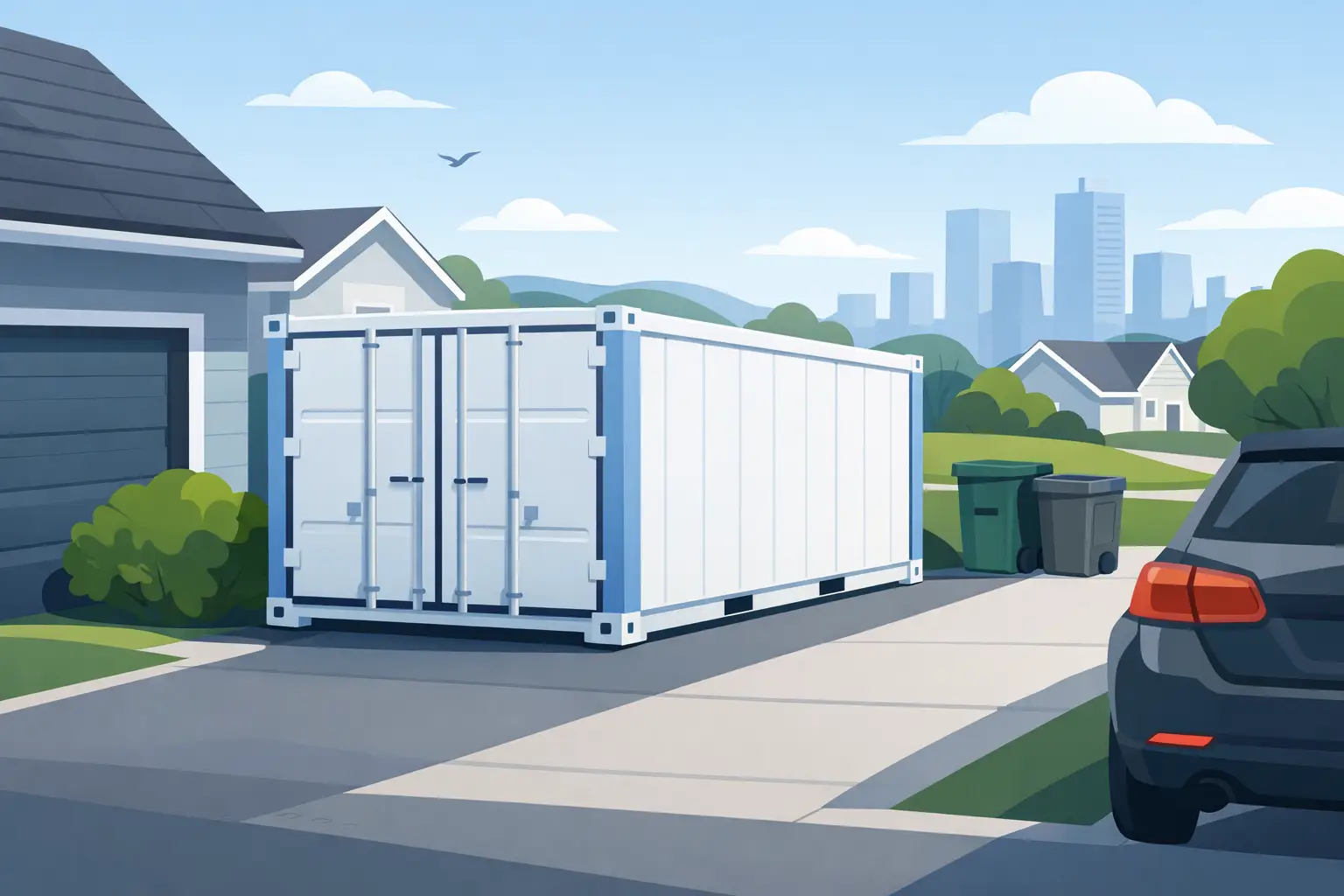
Can storage containers stay in driveway spaces while you renovate, move, or clear a home for sale? Often, yes. But the answer depends on your municipality, the length of your rental, the condition of the driveway, and any rules set by your neighborhood or property manager.
A portable storage container can make a busy project much easier. It is delivered at ground level, so you can load on your own schedule without renting a truck or hauling everything to a storage facility. Before delivery day, though, take a few minutes to confirm that your driveway is a suitable and permitted place for it.
Can Storage Containers Stay in a Driveway Legally?
There is no one rule that applies to every home. Municipal zoning and property standards bylaws can regulate where temporary storage units may sit, how long they can remain on a residential property, and whether a permit is required. A container that is allowed for a short-term move may be treated differently from one used for several months during a major renovation.
Start with your local municipal office or bylaw department. Ask specifically about a portable storage container placed temporarily in a residential driveway. Explain the approximate unit size, intended dates, and whether it will stay on-site or be picked up for storage. Clear details lead to a clearer answer.
If you live in a condominium, townhouse community, rental property, or neighborhood with a homeowners association, check those rules too. Private property rules can be more restrictive than municipal requirements. Your landlord or property manager may also need to approve the placement before the container arrives.
For customers in Belleville, Prince Edward County, Quinte West, and nearby communities, local rules can vary from one municipality to the next. Do not assume a container approved at a previous address will automatically be approved at your new one.
The Rental Period Makes a Difference
Temporary placement is usually easier to justify than open-ended storage. A unit used for a two-week move, a kitchen renovation, or home staging has a defined purpose and finish date. A container left in the driveway through an entire season may attract more attention from neighbors or bylaw staff, even if it initially seemed acceptable.
When you call to confirm the rules, ask whether there is a maximum number of days for temporary storage. Also ask whether the municipality distinguishes between a mobile storage unit and a shipping container. They are not always treated the same way. A purpose-built portable storage container delivered and later removed may be permitted under different conditions than a permanent steel container placed as a long-term structure.
If your project timeline is uncertain, it helps to choose a provider with flexible rental terms. That gives you room to keep the unit while work is underway without rushing your packing. It also means you can arrange pickup once the space is no longer needed instead of keeping a container on-site longer than necessary.
Make Sure the Driveway Can Handle It
Permission is only one part of the decision. The driveway needs enough room for the container and the delivery equipment to arrive, place it safely, and leave without creating a problem for your household.
A 16 x 8 mobile storage unit offers substantial storage space, but it also needs a level, accessible placement area. The driveway should be reasonably firm and clear of vehicles, basketball nets, bins, trailers, and other obstacles on delivery day. Avoid placing a container on a steep slope, soft ground, or a surface that is already cracked or sinking.
Think beyond the footprint of the unit itself. The delivery vehicle needs space to maneuver, and the driver must be able to place the container without hitting branches, wires, fences, garages, or parked cars. Low-hanging tree limbs and overhead utility lines are especially important to flag in advance.
In winter, clear snow and ice from the driveway before delivery. In wet weather, consider whether spring thaw or heavy rain leaves your driveway soft or prone to pooling. A weather-tight container protects what is inside, but safe placement still starts with stable ground underneath it.
Protect the Surface Where Possible
A container can concentrate a significant amount of weight, especially once loaded. If you are concerned about pavers, fresh asphalt, decorative concrete, or another delicate surface, discuss it before scheduling delivery. Protective materials may be appropriate depending on the driveway and delivery method.
Do not place a unit where it blocks drainage, covers a cleanout or utility access point, or prevents a service vehicle from reaching essential equipment. It is much easier to choose a better spot before the unit arrives than to move a fully loaded container later.
Keep Safety and Access in Mind
The most convenient spot is not always the safest one. A container should not block the sidewalk, extend into the street, interfere with sightlines at an intersection, or make it difficult for drivers to see pedestrians. It also should not prevent access to your front door, garage, fire hydrant, or emergency exits.
Consider daily life while the container is in place. Can you still park safely? Can children get in and out of the vehicle without stepping into traffic? Will a delivery driver, caregiver, or visiting family member have a clear route to the door? These practical details matter more when the unit will remain for several weeks.
Keep the area around the container clear as you load. Avoid stacking loose items outside, and keep tools, packing materials, and moving boxes out of the driveway overnight. A tidy loading area reduces trip hazards and helps neighbors see that the storage unit is part of an organized temporary project, not permanent clutter.
A Simple Check Before You Book Delivery
Before committing to a delivery date, confirm four things: local placement rules, any private-property approval, driveway suitability, and a clear route for the delivery vehicle. Taking photos of your driveway, gate, overhead clearance, and preferred placement area can help a storage specialist identify concerns early.
Be upfront about anything unusual, such as a narrow shared drive, a sharp turn, a steep grade, a low branch, or a busy road. A dependable provider will help you think through placement rather than making assumptions. Storbox Mobile can coordinate delivery timing and discuss the practical details of your location so you know what to expect before moving day.
If driveway placement is not permitted or does not make sense for your property, you still have options. You may be able to use an approved side-yard location, arrange a different temporary placement area, or have the container picked up and stored at a secure facility after you load it. The right choice depends on your space, timeline, and local rules.
When a Driveway Container Is Worth It
For many households, on-site storage is most useful when access matters every day. During a renovation, it keeps furniture close by without filling the garage. During a move, it lets you pack room by room instead of trying to finish everything in a single truck-rental window. For home staging or downsizing, it creates breathing room without forcing quick decisions about what to keep.
There are trade-offs. On-site access is convenient, but it uses part of your driveway and requires you to manage permits, parking, and loading space. Facility storage keeps the container off your property, but you will not have immediate access to it. Neither option is automatically better. The best fit is the one that keeps your project moving with the least disruption.
A driveway storage container works best when it is planned as carefully as the move or renovation itself. Confirm the rules, choose a stable location, protect access and sightlines, and set a realistic pickup date. With those details handled early, you can spend your time packing, renovating, or settling into the next step instead of dealing with avoidable delivery-day surprises.
