
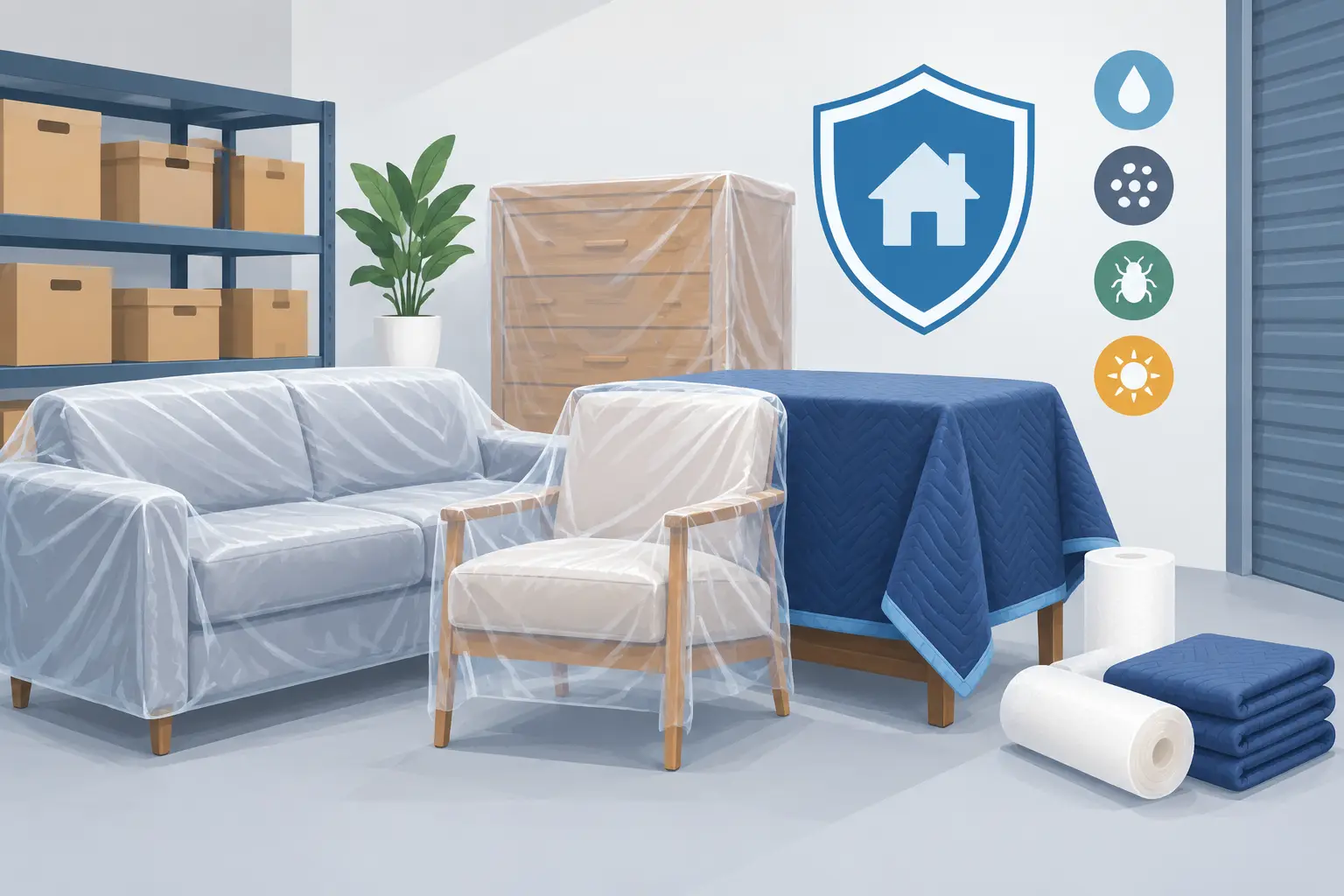
A sofa that looks perfect on moving day can come out of storage with mildew, crushed cushions, scratched wood, or a musty smell if it was packed in a hurry. The good news is that it does not take expensive specialty supplies to protect stored furniture. It takes dry conditions, smart wrapping, and enough room for air to move around each piece.
Whether you are renovating, downsizing, staging a home, or waiting for a new place to be ready, a little preparation protects the furniture you want to keep for years. Start before the first blanket goes on. Storage problems are much easier to prevent than repair.
Start With Clean, Completely Dry Furniture
Dust, food residue, body oils, and pet hair can attract insects and leave stains behind during a long storage period. Wipe hard surfaces with the cleaner recommended for their material. Vacuum upholstered pieces thoroughly, including under cushions and along seams. For leather, use a suitable leather cleaner and conditioner if the manufacturer recommends it.
The key word is dry. Do not wrap a recently cleaned sofa, table, or mattress while any moisture remains. Even a small amount of dampness can become trapped under a cover and create a mildew problem. Give every piece time to air-dry fully, especially after steam cleaning upholstery or wiping down wood furniture.
Before packing, inspect for existing damage. Take a few photos of valuable pieces and note scratches, loose legs, or worn areas. This gives you a clear record of each item’s condition and helps you decide where extra protection is needed.
Disassemble What You Can, But Keep Hardware Together
Large furniture is easier to move and less likely to get damaged when it is broken down into manageable pieces. Remove table legs, headboards, detachable shelves, and glass panels when practical. A disassembled dining table is less likely to have a leg bent or a corner chipped while being carried into storage.
Put screws, bolts, brackets, and assembly instructions in a labeled zip-top bag. Tape the bag securely to the underside of the main furniture piece, not to a finished wood surface or upholstery. If the item has several types of hardware, label each bag clearly rather than trusting memory months later.
Disassembly is not always the right answer. Older furniture, particleboard pieces, and items with fragile fittings may not tolerate repeated assembly. If taking something apart could weaken it, protect it in one piece and plan a clear path for moving it safely.
Use the Right Covers to Protect Stored Furniture
Furniture pads and moving blankets are the workhorses of storage protection. They cushion wood, metal, and upholstered pieces against scuffs, dings, and friction. Wrap corners, arms, legs, and other exposed edges first, then secure the blanket with stretch wrap, packing tape on the blanket only, or moving straps.
Avoid wrapping furniture directly in plastic for a long storage period. Plastic can trap condensation, particularly when temperatures shift. It may be useful as an outer layer during a rainy move or for short-term protection, but it should not seal in moisture around wood, fabric, or leather.
Breathable furniture covers, cotton sheets, and clean moving blankets are better choices for long-term storage. Cover upholstered furniture loosely enough that air can circulate. For wood pieces, use pads between surfaces so table leaves, drawers, and bed rails do not rub together.
Glass, mirrors, and framed artwork need their own protection. Wrap each piece in packing paper or bubble cushioning, cover it with a moving blanket, and store it upright. Never lay heavy boxes against glass, even if it appears well padded.
Choose a Dry, Level Storage Space
The condition of the storage space matters as much as the wrapping. Furniture needs protection from standing water, high humidity, direct weather exposure, and sudden temperature swings. A weather-tight portable storage container can make the process simpler because you can load at ground level and organize items once, rather than unloading and reloading them at a facility.
Before loading, check that the floor is clean and dry. Keep furniture off the floor with pallets, boards, or blocks when possible. This creates a buffer if moisture ever enters at ground level and allows more air to circulate beneath heavy pieces.
Do not place furniture directly against container walls. Leave a small gap for airflow and to prevent condensation from transferring to fabric or wood. This is especially useful during seasonal storage in the Belleville and Quinte area, where warm and cold weather can change quickly.
If you are storing furniture on-site during a renovation, choose a stable, accessible placement area for the container. Keep it away from overhanging branches, active construction debris, and areas where water naturally pools after rain.
Load Heavy Pieces First and Avoid Tight Pressure Points
A well-loaded storage container protects furniture because it prevents shifting. Place the heaviest, sturdiest items along the walls and toward the back, then build outward with lighter belongings. Keep weight low and balanced from side to side.
Stand mattresses and box springs on their long edges when space requires it, but do not bend them. Cover them with a breathable mattress bag or moving blanket, and avoid stacking heavy items against them. Sofas and upholstered chairs should stay upright whenever possible so cushions and frames keep their shape.
Create stable sections instead of one tall, crowded pile. Use boxes of a similar size for stacking, and do not place loose items on top of furniture. A cardboard box can collapse over time, particularly if it was overfilled or exposed to humidity.
Leave an aisle if you may need access during storage. It is tempting to fill every inch, but forcing your way through a packed container later often causes the scratches and broken corners you worked to avoid. Put items you may need first near the door, including seasonal furniture, business inventory, or renovation supplies.
Prevent Moisture, Pests, and Odors
Moisture is the most common long-term threat to stored furniture. Use moisture absorbers in enclosed storage, especially if your belongings will be stored through humid weather. Check them periodically and replace them as directed. A small hygrometer can also be useful for longer storage periods because it shows when humidity is becoming a concern.
Never store wet rugs, damp towels, freshly washed textiles, or open containers of liquid beside furniture. If you are storing a refrigerator or freezer, clean it, dry it completely, and leave the door slightly open so odors and mildew do not build up.
Pests are easier to deter when food and scented household products are kept out of storage. Do not store pet food, birdseed, candles, potpourri, or unwashed kitchen items in the same space as furniture. Vacuum fabric pieces before storage, and inspect containers and boxes for gaps or damage before loading.
Avoid strong mothballs and heavily scented deodorizers around upholstered furniture. Their smell can linger in fabric and wood long after storage ends. Clean, dry materials and good airflow are more effective solutions.
Check Long-Term Storage Occasionally
If your furniture will be stored for several months, inspect it from time to time. Look for signs of moisture, pest activity, damaged covers, or a shifted stack of boxes. Early action can prevent a small issue from becoming permanent damage.
When you retrieve furniture, unwrap it and let it air out before bringing it into a finished room. Wipe hard surfaces, vacuum upholstery if needed, and check joints and hardware as you reassemble. This is also the right time to replace felt pads on chair and table legs before they touch new flooring.
Storbox Mobile gives local homeowners and businesses the flexibility to pack on their own schedule, with a secure, weather-tight container delivered where it is needed. That means fewer handling steps and fewer opportunities for furniture to be bumped, dropped, or exposed during a move. Storbox Mobile has moving blankets, dollies and tie down straps available when booking a unit.
The best storage plan is the one you can follow without rushing. Give yourself enough time to clean, wrap, and load each piece properly, and your furniture will be ready to use when the next chapter begins.
