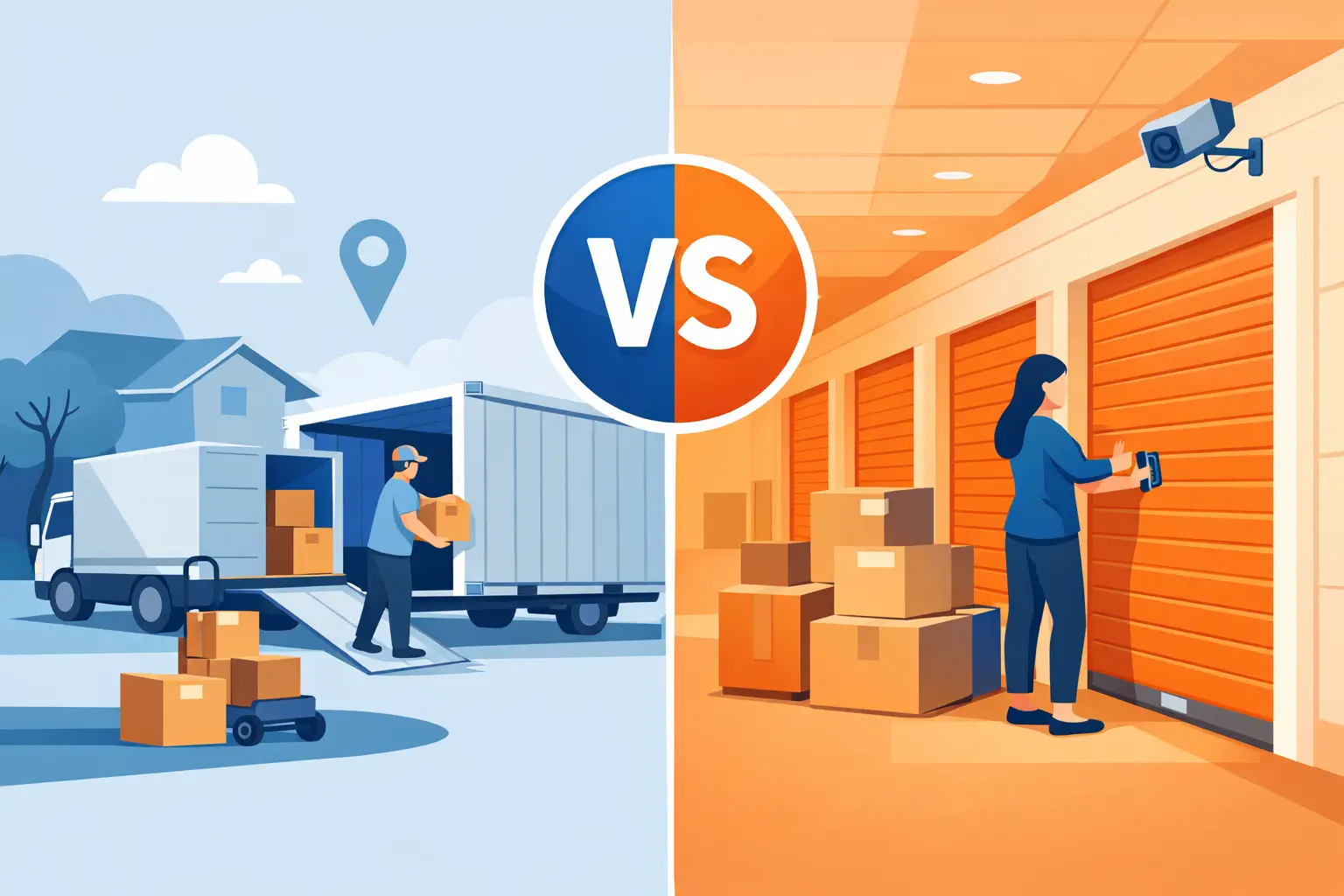
A move can turn into a long weekend of truck rentals, borrowed help, and lifting the same box twice. That is the real difference in portable storage vs self storage: it is not only about where your belongings sit. It is about how much work it takes to get them there, how long you need them, and whether the storage plan fits the way your project is actually unfolding.
For many homeowners, renters, and business owners, there is no single right answer. A traditional storage facility can be a practical choice in some situations. A portable container can save a significant amount of time and physical effort in others. The best option comes down to access, location, timing, and how much moving you want to do yourself.
Portable Storage vs Self Storage: The Basic Difference
Self storage means you bring your belongings to a storage facility. You rent a unit, load a vehicle or moving truck, drive to the facility, unload, and repeat until the job is done. You typically visit the facility whenever you need something, subject to its access policies and hours.
Portable storage brings the unit to you. A large, ground-level container is delivered to your home, business, or jobsite. You load it at your own pace, then keep it on-site for convenient access or arrange to have it picked up and stored at a secure facility.
That difference changes the entire workflow. With self storage, your possessions travel from your home into a truck and then into a unit. With portable storage, you generally load once. If the container is being moved or stored off-site, it is transported without requiring you to unload and reload your belongings.
When Portable Storage Makes More Sense
Portable storage is built for situations where the storage itself needs to come to the work. Moving is the most obvious example. Instead of racing through a one-day truck rental, you can pack room by room on a schedule that works for your household. When your new home is ready, the container can be delivered there for unloading.
It is also useful during renovations. Furniture, boxes, and equipment can stay close by without crowding bedrooms, hallways, garages, or work areas. Having storage on the property makes it easier to retrieve an item when plans change, which they often do during a renovation.
For contractors and small businesses, on-site storage can reduce unnecessary trips. Tools, supplies, seasonal inventory, or job materials stay at the location where they are needed. A weather-tight container can help keep the workspace more organized while giving the team practical access throughout the project.
A portable unit is especially convenient when you need a little breathing room rather than permanent storage. Home staging, downsizing, estate cleanouts, temporary relocations, and insurance-related repairs all tend to have uncertain timelines. Flexible rental periods give you room to make decisions without forcing everything into a rushed moving day.
Storbox Mobile delivers 16 x 8 ground-level containers, giving local customers a practical way to load without ramps or repeated trips across town. That level loading is a meaningful advantage for heavy furniture, boxes, tools, and appliances.
The loading advantage: one less moving cycle
Repeated handling creates more than extra work. It can also create more chances to damage furniture, lose track of boxes, or strain your back. With a self-storage unit, a typical move may involve loading a truck, unloading at the facility, loading again later, and unloading at the final destination.
Portable storage simplifies that sequence. You load the container where your belongings already are. If it is transported to your next location, you unload there. Fewer transfers can mean less time spent coordinating help and less disruption to an already busy transition.
When Self Storage May Be the Better Choice
Traditional self storage still has a place. If you live in an apartment or neighborhood where a large container cannot be placed safely or legally, a facility may be more practical. Some properties have limited driveway space, narrow access, shared parking, homeowners association rules, or local restrictions that make on-site delivery difficult.
Self storage can also work well when you need frequent access to a small number of items and the facility is close to your daily routine. A business owner who regularly rotates documents or inventory may prefer visiting a nearby unit rather than keeping a container at the business location.
It may be the right fit for long-term storage when you have no need to move the contents again and do not have a suitable spot for a container. In that case, the extra effort of transporting items to the facility happens once, and the unit can serve as an off-site extension of your home or business.
The trade-off is convenience during loading and unloading. A self-storage facility requires you to arrange transportation and handle the trip yourself, whether that means a truck rental, multiple vehicle loads, or a moving crew.
Comparing Cost Without Missing the Full Picture
The monthly rate matters, but it is not the whole cost of storage. A self-storage unit may appear less expensive at first glance, yet the full project can include truck rental, fuel, mileage, insurance, moving equipment, and the time required to make several trips.
Portable storage pricing often includes different elements, such as container delivery, pickup, transportation, and the rental period. The right comparison is not simply unit rent versus unit rent. Ask what the entire plan will cost from the first box packed to the final box unloaded.
For a short move or renovation, avoiding a truck rental and multiple loading cycles can offer real value. For someone storing a few boxes indefinitely, a small self-storage unit may be the more economical route. It depends on the amount you are storing and how much transportation you would otherwise need.
Before committing, request a clear quote and ask what is included. It is reasonable to confirm delivery distance, rental terms, pickup timing, storage options, and any charges that could apply if your schedule changes. Straight answers early make a stressful project easier to manage.
Access: On-Site Convenience vs Facility Convenience
Access is one of the biggest practical differences between these options. With a portable container on your property, your belongings are nearby. Need your winter coats, business display materials, or a specific tool? You do not need to drive to a facility and unload your vehicle just to retrieve one item.
That convenience is valuable during active projects, but it requires space. You need a reasonably level, accessible location for delivery and enough room to open and load the container safely. It is smart to measure the driveway or placement area in advance and discuss any access concerns before booking.
With self storage, access depends on the facility. Some locations offer extended hours, while others have more limited entry times. Climate-controlled units, indoor hallways, elevators, and long walks from the loading area can also affect how convenient a facility feels on moving day.
Neither model is automatically better. If you need daily access at your home or jobsite, portable storage usually has the edge. If you want belongings completely off your property and do not expect to retrieve them often, an off-site unit may be a better fit.
Security and Protection for Your Belongings
Both options should give you confidence that your belongings are protected. When comparing providers, look beyond a general claim of security. Ask how the container or unit is secured, whether the facility has controlled access, and what steps are taken to protect against weather and moisture.
For portable storage, container condition matters. A sturdy, weather-tight unit helps protect furniture, equipment, and packed boxes while they are on-site or in storage. Packing well matters too. Use quality boxes, keep items elevated when appropriate, distribute weight evenly, and protect furniture with covers or moving blankets.
If a container will remain at your property, think about where it will sit and who will have access to it. If it will be stored at a facility, confirm how retrieval works if you need an item later. Clear expectations are better than discovering a limitation after the container has been picked up.
A Simple Way to Choose
Choose portable storage when your priority is loading once, packing on your own schedule, keeping belongings close during a project, or moving contents between locations with less handling. It is a strong fit for household moves, renovations, staging, construction work, and temporary business storage.
Choose self storage when you have limited space for a container, need a small unit for long-term overflow, or prefer to keep everything off-site from the start. It can also make sense if you need frequent facility access and the location is convenient.
The most useful question is not, “Which option is cheaper?” Ask, “Which option creates the least work for the way I need to store?” A storage plan should reduce the pressure on your move, renovation, or business project, not add another complicated task to the list.
