A missing saw, wet drywall, and a crew waiting for materials can turn a profitable day into an expensive one. The best storage for contractors is not simply the biggest space available. It is storage that protects valuable equipment, keeps frequently used supplies close to the work, and does not add another truck run to an already full schedule.
For many small contractors and construction crews, that means looking beyond a traditional storage facility. A unit miles from the job site may be secure, but it is not always practical when someone needs fasteners, ladders, flooring, or a replacement tool before lunch. The right setup depends on the project, crew size, site access, and how often inventory needs to move.
What Makes the Best Storage for Contractors?
Contractor storage has to work under real job-site conditions. That means early starts, changing delivery dates, tight driveways, muddy lots, and projects that rarely follow the original schedule exactly. Convenience matters, but security and access matter just as much.
A useful storage solution should give your crew a dry, lockable place for tools and materials. It should also reduce handling. Every time equipment is loaded into a truck, unloaded at a facility, and loaded again for the next day, there is more labor, more chance of damage, and more opportunity for something to be misplaced.
The best choice usually has five practical qualities: it is secure, weather-tight, easy to load, available for the length of the project, and located where the crew actually needs it. Price matters too, but the lowest monthly rate is not always the lowest total cost once truck rentals, fuel, staff time, and repeated trips are added.
Compare Storage Options Before You Commit
There is no single right answer for every contractor. A remodeling crew working inside occupied homes has different needs than a builder managing a multi-week addition or a landscaper rotating equipment between properties.
Traditional self-storage units
A facility unit can be a good fit for long-term inventory, seasonal equipment, or items that do not need to be accessed every day. It provides a fixed location and may work well when your shop or regular service area is nearby.
The trade-off is transportation. Your crew must drive to the facility, load what is needed, bring it to the site, then return items at the end of the day. For bulky materials or changing job sites, those trips can consume more time than expected. Facility hours, narrow hallways, elevators, and distance from the project can also limit usefulness.
Warehouse or shop space
A dedicated warehouse offers room to organize bulk inventory, receive large deliveries, and maintain a central base for a growing business. It makes sense for established contractors with steady volume and staff who can manage inventory.
However, warehouse space comes with a lease commitment, utilities, insurance considerations, and the ongoing task of moving materials from the shop to individual projects. It is an investment in a permanent operation, not necessarily a flexible answer for a temporary job.
Truck or trailer storage
A work truck or enclosed trailer keeps basic tools mobile, and many contractors rely on one every day. It is an excellent solution for hand tools, small equipment, and materials needed for the next stop.
It becomes less effective when large orders arrive or a project requires room for demolition debris, cabinets, flooring, insulation, or multiple tool sets. Overpacking a trailer also makes it harder to find what the crew needs and can create loading and weight-distribution issues.
On-site portable storage containers
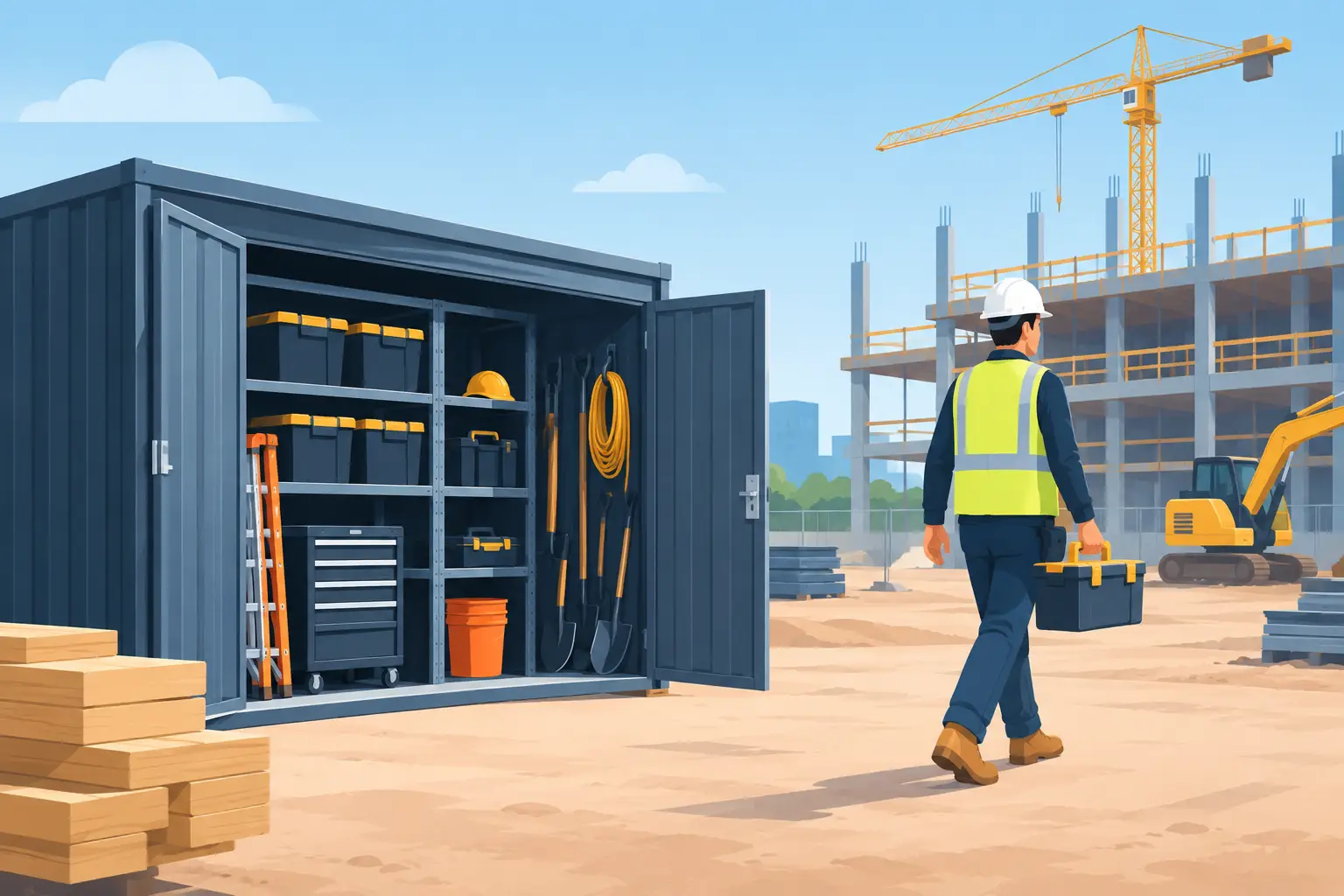
A portable storage container brings the storage space to the project. It is often the most practical option for renovations, additions, restoration work, commercial fit-outs, and construction projects where tools and materials need to stay close by.
With a ground-level container, crews can walk items in rather than carry them up a ramp. A 16 x 8 unit provides meaningful room for equipment, boxed materials, ladders, and job-site supplies without taking up the footprint of a larger shipping container. When the project ends, the container can be picked up instead of requiring the crew to empty everything into a truck first.
When On-Site Storage Saves the Most Time
Portable storage is especially valuable when a project will run for several weeks or longer. The longer a crew stays in one place, the more repeated driving and loading it can eliminate. It also helps keep customer garages, hallways, and work areas clearer during residential projects.
Consider a kitchen renovation with appliances, cabinets, tile, and tools arriving in stages. Storing everything inside the home can create clutter and raise the risk of damage. Keeping everything at a distant facility creates daily travel. A secure container placed in an approved location near the work gives the crew a practical middle ground.
On commercial jobs, on-site storage can help separate tools and materials by phase. Framing supplies can stay accessible early in the project, while finish materials remain protected until they are needed. This does require discipline. A container becomes valuable only when it is organized well enough for the crew to find items quickly.
Plan the Placement Before Delivery
The container itself is only part of the decision. Before arranging delivery, walk the site and identify a firm, level placement area with enough clearance for the delivery vehicle. Avoid soft ground, steep slopes, low branches, overhead wires, and locations that block emergency access or regular traffic.
Talk with the property owner, site supervisor, or general contractor before the unit arrives. Some residential developments, commercial properties, and municipalities have rules about temporary containers, street placement, or how long equipment can remain on site. Confirming those details early prevents a rushed relocation later.
Think about daily workflow as well. The best spot is not always the closest spot to the front door. Place the unit where crews can load safely, deliveries can reach it, and it will not interfere with trades, dumpsters, customer parking, or excavation activity.
Store Tools and Materials for Fast Access
A storage container should not become a pile of boxes that no one wants to search. A simple layout can save minutes throughout the day, which adds up quickly across a crew.
Keep high-use tools near the door and group them by trade or task. Store heavier items low and distribute weight across the floor. Stack boxed materials carefully, leaving a narrow center aisle so someone can reach the back without moving half the contents. Shelving, labeled bins, and a basic sign-out process for expensive tools can make a major difference.
Protect materials based on their condition requirements. Keep moisture-sensitive products such as drywall, hardwood flooring, adhesives, and finish materials off the floor on pallets or dunnage. Do not store fuels, propane, hazardous chemicals, or anything prohibited by the storage provider. If a material has special temperature, ventilation, or safety requirements, use storage designed for that product rather than assuming a container is suitable.
Security Is More Than a Lock
A strong lock is necessary, but job-site security starts with habits. Lock the container whenever it is unattended, even during short breaks. Keep tool inventories current, avoid leaving high-value items visible near the doors, and limit key or code access to the people who need it.
Weather protection matters too. A weather-tight container helps keep rain, windblown debris, and road dust away from stored items. Still, inspect the contents periodically, particularly after severe weather or when materials will be stored for an extended period. Good storage protects your equipment, but routine checks protect your schedule.
Ask your insurer what coverage applies to tools and materials in temporary on-site storage. Coverage can vary based on ownership, location, and whether equipment is left unattended overnight. A quick conversation before a loss is far easier than sorting out a claim afterward.
Choose Flexible Terms for Uncertain Schedules
Construction schedules change. Inspections get delayed, weather intervenes, materials arrive late, and a customer may add work halfway through the project. Storage terms should leave room for that reality.
Look for a provider that can deliver on a schedule that works for the site, keep the unit as long as needed, and arrange pickup when the work is complete. Local support is useful when a delivery window changes or you need clear answers about placement. Storbox Mobile provides portable, ground-level units for contractors who need on-site storage without repeated loading and unloading.
Before booking, ask what is included in delivery and pickup, how rental periods work, what site conditions are required, and whether the unit can be moved once placed. Clear answers help you compare the real cost instead of focusing only on an advertised starting price.
The right storage setup should make the job site calmer, not create another item for the foreman to manage. Choose a space that keeps the crew moving, protects the materials you have already paid for, and gives you room to adjust when the project takes a turn.
