
A well-staged home should feel open, calm, and easy to picture living in. That is hard to achieve when closets are packed, kitchen counters are crowded, and every room still reflects the day-to-day needs of a busy household. When you store belongings during home staging, you are not just clearing space. You are helping buyers see the home itself.
The challenge is deciding what leaves, where it goes, and how to keep the process from creating more work when it is time to move. A portable storage container can make that transition simpler by giving you a secure place to pack at ground level, on your own schedule, without loading a truck and then unloading it again at a storage facility. Repeat load and unload is avoided with Storbox Mobile.
Why storage makes staging more effective
Buyers look for space. They open closets, check cabinets, and imagine where their own furniture and belongings would go. An overflowing coat closet can make useful storage look limited. A crowded family room can make a generous layout feel smaller than it is.
Staging is not about making a home look empty or impersonal. It is about removing distractions so the best features are easier to notice: natural light, flooring, room size, built-in storage, and a practical flow from one space to the next. Temporary storage gives you room to make those features stand out while keeping the items you need for your next home organized and protected.
It can also reduce last-minute stress. If an offer comes quickly, much of the packing is already done. Instead of starting from zero during a short closing period, you will have a clear inventory and fewer rooms left to tackle.
What to store during home staging
Start with the items that make rooms feel smaller, more personal, or harder to keep ready for showings. The goal is not to pack every possession. Keep enough furniture and everyday essentials to make the house feel comfortable and lived in, but remove the excess.
Family photos, collections, trophies, and highly personal decor are usually good candidates for storage. They may mean a great deal to you, but buyers need space to imagine their own lives in the home. Store extra artwork as well, especially if several pieces compete for attention on the same wall.
Bulky or duplicate furniture often makes the biggest visual difference. A second sofa, oversized chair, extra dining chairs, unused bookcase, or spare bedroom set can take up valuable floor space. If a room has a purpose that is hard to read, removing a few pieces may make it immediately clearer. A home office should read as an office, not a storage room with a desk in it.
Closets, cabinets, and shelves deserve special attention. You do not need to empty them completely, but aim to leave visible breathing room. Pack off-season clothing, excess linens, small appliances, duplicate cookware, hobby supplies, and rarely used pantry items. This gives you a head start on packing while making built-in storage look more useful.
Children’s toys can be especially challenging because they return quickly. Keep a small rotation available and store the rest in labeled bins. The same approach works for pet supplies, sports equipment, seasonal decorations, and paperwork that does not need daily access.
Decide what stays accessible
Before packing, separate belongings into three groups: items for staging, items for daily life, and items for the move. This small decision prevents a common problem: packing something you need before a showing or a weeknight dinner.
Keep daily essentials close at hand. That may include a limited set of dishes, basic cookware, toiletries, medication, work materials, school items, and a few changes of clothing. If you are living in the house for several weeks while it is listed, create a simple reset routine so those essentials can be put away quickly before a viewing.
For the staging group, keep only what supports the room. A clean bed with neutral bedding, a dining table set for four, or a few carefully chosen living room accessories can help buyers understand the space. If your real estate agent or stager has recommendations, follow them before committing items to storage. They may see an opportunity in a room that is difficult to spot when you live there every day.
Everything else can become part of your move plan. That includes possessions you know you will want in the next home, even if you do not need them right now.
Pack for the next move, not just the next showing
Home staging storage is temporary, but careless packing can create a frustrating move later. Pack with the expectation that your containers may stay closed until closing day.
Use sturdy, similarly sized boxes where possible. They stack better and make better use of the storage container. Label each box on at least two sides with the room and a short description, such as Kitchen – serving bowls or Main bedroom – winter clothes. Avoid labels like Miscellaneous, which are not helpful when you need one item in a hurry.
For fragile items, use proper packing paper, padding, and boxes designed for dishes or glassware. Fill empty spaces so items do not shift. Heavy books and tools belong in smaller boxes, while lighter linens and pillows can go into larger ones.
A simple inventory on your phone or on paper can save time later. Note the box number, its contents, and where it sits in the container. You do not need a complicated system. The point is to avoid opening ten boxes because you cannot remember where you packed the coffee maker or tax files.
Use your container space carefully
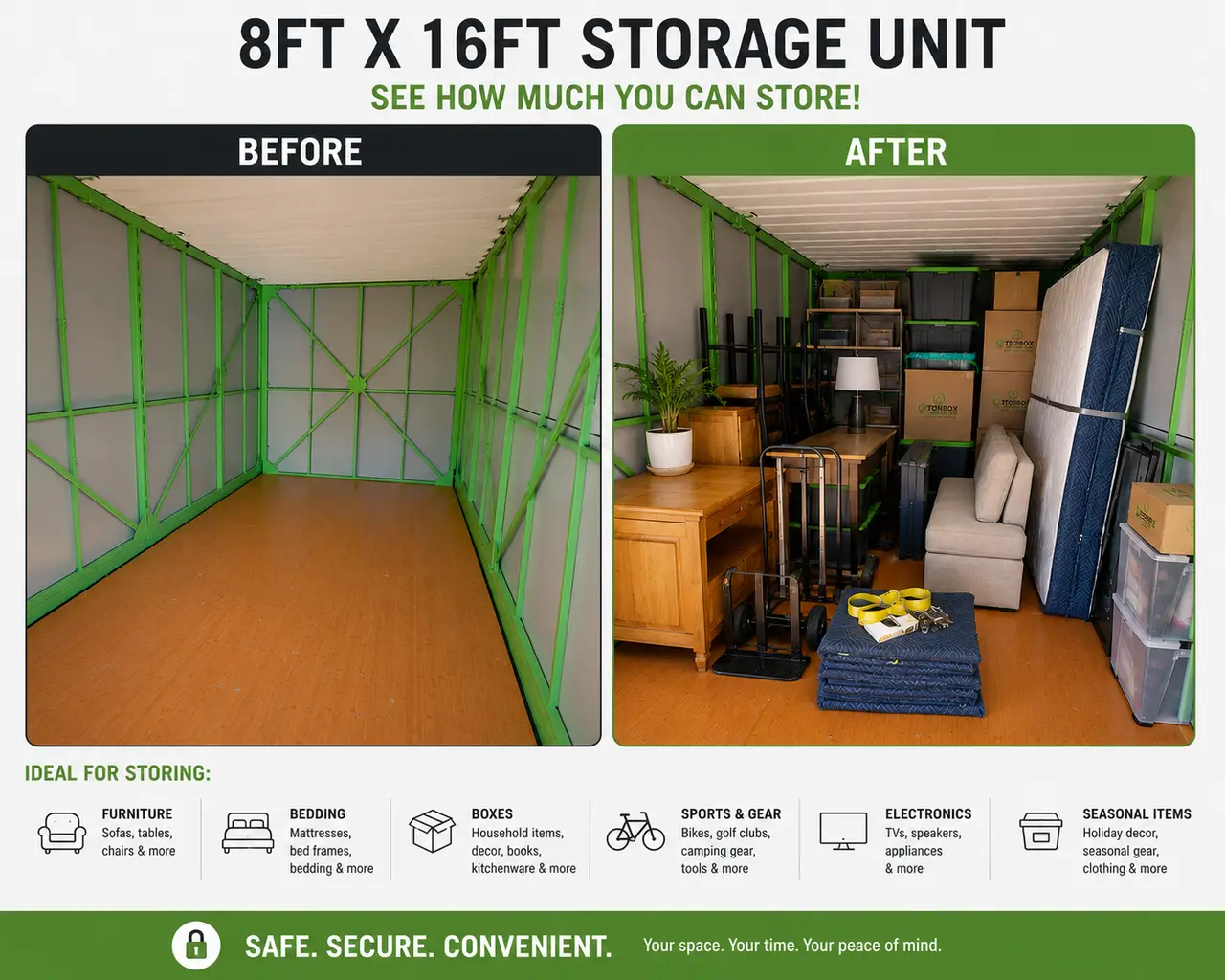
A 16 x 8 portable storage container offers generous room for household belongings, but good loading keeps your items safer and easier to retrieve. Place heavier boxes and furniture along the bottom, distributing weight across the floor. Keep lighter boxes on top and use straps, tie-downs, or furniture pads where needed to prevent shifting.
Think about access before you start. Items you may need during the listing period, such as seasonal clothing or extra cleaning supplies, should be loaded near the door. Belongings you will not touch until moving day can go toward the front. Leave a narrow path only if regular access is truly necessary. Otherwise, maximizing stable, secure loading is usually the better choice.
Protect furniture with moving blankets or covers, especially wood pieces, upholstered seating, and mirrors. Avoid placing mattresses directly against areas where they can bend or collect dust. Keep liquids, hazardous materials, perishable food, and anything sensitive to extreme temperatures out of storage unless you have confirmed it is suitable for your particular situation.
Weather-tight portable containers are helpful for staging because your belongings can stay protected without taking over your garage, basement, or spare room. Just remember that not every item belongs in any type of storage. Valuable documents, irreplaceable heirlooms, and temperature-sensitive possessions may require a different plan.
Choose on-site or off-site storage based on your sale timeline
The right location depends on how you expect the sale to unfold. On-site storage can be practical if you need occasional access, have space for the container, and want to keep your packed items close by. It is particularly useful when you are still sorting, making repairs, or preparing for several rounds of showings.
Off-site storage may be a better fit when driveway space is limited, when you want the property to look completely clear, or when the home could sell quickly. Once your container is packed, it can be picked up and stored at a secure facility until you are ready for delivery at your new address.
This is where portable storage avoids repeated handling. You load your belongings once. Rather than loading a rental truck, unloading at a storage unit, loading another truck later, and unloading again at the new home, the container moves with your plan. Timing and availability still matter, so arrange delivery and pickup early if your listing date or closing date is firm.
Keep the home ready without living in a box
A staged home still has to work for the people living in it. Be realistic about your household routine. Families with young children, pets, or busy work schedules may need a little more flexibility than a vacant property. That is okay.
Set aside one cabinet, closet, or a few lidded bins for quick cleanup before showings. Put away chargers, mail, school bags, pet items, and countertop clutter in minutes. The larger items are already out of the house, so the daily reset becomes manageable instead of exhausting.
For homeowners across Belleville, Prince Edward County, and the surrounding area, Storbox Mobile provides locally owned and operated portable storage with flexible delivery timing and a Best Price Guarantee. A moving and storage specialist can help you choose a plan that fits your home, timing, and available space.
A good staging plan should make the selling period easier, not turn your home into a place you barely recognize. Store what distracts from the space, keep what supports daily life, and pack each box as one less task waiting for you on moving day.
